

You've done everything right.
You learned the calming exercises. You practiced them until they became second nature. Now, when anxiety rises-maybe your sister-in-law calls with concerning news about someone's cancer diagnosis, maybe a health worry crosses your mind-your techniques kick in automatically. Breathe. Ground. Center. And within 2-3 minutes, you're calm again.
You've achieved dramatic reductions: 90% less triggered when anxious situations arise. 90% reduction in health worries. 93% reduction in family coping worries. By any measure, this is remarkable progress.
So why does something feel incomplete?
Maybe you've read about "safety behaviors" and started wondering: Am I building real confidence, or just getting really good at suppressing symptoms? Maybe you've noticed that your calming exercises deploy so automatically now that you never actually experience anxiety without immediately reaching for your toolkit.
If you're at this crossroads-successful by the metrics, but sensing there's a next level you haven't reached-you're not alone. And more importantly, you're not doing anything wrong. You're ready for a shift that most anxiety advice never addresses.
Why Standard Anxiety Treatment Stops at 90%
Here's what conventional anxiety treatment teaches, and what you've likely been practicing:
- Learn effective calming techniques (breathing exercises, grounding, thought reframing)
- Practice until they become automatic responses
- Deploy them immediately when anxiety begins to rise
- Measure success by how quickly you return to calm
- Avoid triggers when possible, cope when unavoidable
This approach works. The research supports it. Your own results prove it. The problem isn't that this method is wrong-it's that it was designed to get you from overwhelmed to functional, not from functional to truly confident.
Think about it: If your calming exercises activate immediately every time anxiety rises, when do you ever discover what would happen if you didn't use them?
When Your Anxiety Skills Become Safety Behaviors
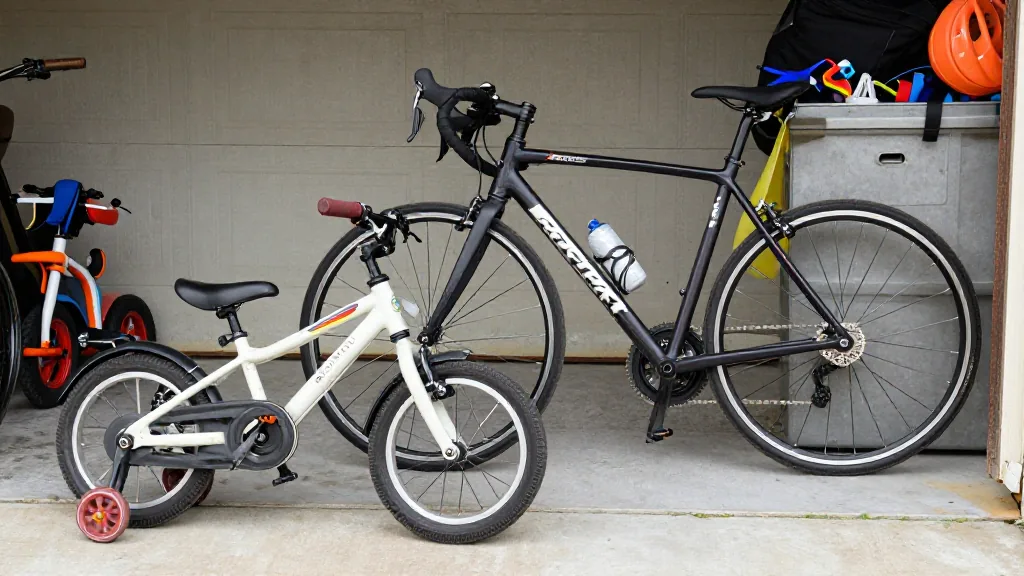
"Are my exercises like training wheels I'm keeping on too long?"
That question-whether you've articulated it exactly this way or just felt it as a nagging sense of incompleteness-points to a critical distinction that separates symptom management from capacity building.
There's a difference between skills and safety behaviors. It's the same exercise, the same technique, but serving an entirely different function depending on when and why you use it.
When your daughter Eva was learning to ride a bike, training wheels were essential. They allowed her to practice pedaling, steering, and balance without the overwhelming fear of falling. They were adaptive tools that built confidence.
But imagine she's now riding smoothly, confidently navigating turns, never wobbling. The training wheels aren't preventing falls anymore-they're preventing learning. Specifically, they're preventing her from discovering that she can balance on her own.
The same technique that was once a skill-building tool has become a crutch that prevents the very confidence it was meant to create.
Your calming exercises may have reached this same inflection point.
What Calming Immediately Prevents You From Learning
Here's what most anxiety treatment doesn't tell you: anxiety has a natural shape. It's not a steadily rising threat that will overwhelm you without intervention. It's a wave.
Research on the natural anxiety curve shows that when people experience anxiety without intervention, it typically peaks within 10-20 minutes and then subsides on its own. The wave builds, crests, and crashes-whether you do anything about it or not.
But here's the thing: if you've spent months or years deploying calming techniques immediately when anxiety rises, you've never actually witnessed this natural resolution. You've never ridden the wave all the way to shore.
This matters because of how your brain updates its threat assessment.
Your brain makes predictions: This health worry will spiral me into panic for hours. This triggered feeling will get worse and worse until I can't function. If I don't calm myself down right now, something terrible will happen.
When you immediately use your calming exercises, you never collect evidence that these predictions are wrong. Your brain's narrative remains: "I almost spiraled, but I caught it just in time with my breathing exercises. I needed those techniques to prevent catastrophe."
Neuroscientists call this "inhibitory learning"-the process by which your brain needs disconfirming evidence to update its threat assessment. When your brain predicts disaster and reality contradicts that prediction, your brain has to recalibrate.
But immediate intervention prevents the contradiction from ever occurring.
It's like someone who's terrified of elevators always taking the stairs. They never discover that elevators are safe because they never stay in one long enough to find out. Their avoidance confirms their fear.
Your immediate calming-even though it doesn't feel like avoidance-may be functioning the same way.
How to Build Real Anxiety Tolerance (The Delay Protocol)
So what's the alternative? Just sit there panicking with no purpose?
Not at all. That would be flooding-overwhelming your system without structure, which isn't therapeutic. Instead, there's a counterintuitive approach that builds on your success rather than abandoning it.
It's called the delay protocol, and it works like this:
Next time anxiety rises, instead of immediately deploying your calming exercises, you wait. Not indefinitely. Not until you're overwhelmed. Just 2 minutes.
During those 2 minutes, you're observing. What does the anxiety actually do? Does it keep climbing, or does it plateau? What sensations do you notice? What thoughts arise? You're becoming a scientist of your own experience, collecting data rather than immediately intervening.
After 2 minutes, you can absolutely use your calming exercises if you need them. They're still in your toolkit. You're not abandoning your skills-you're learning when you actually need them versus when your brain is overestimating the threat.
Then, over subsequent weeks, you gradually increase that delay. 5 minutes. Then 10 minutes. This way you're building evidence that:
- Anxiety peaks and subsides naturally
- You can tolerate discomfort without immediate intervention
- The catastrophic outcome you fear doesn't materialize
- Your capacity is larger than your alarm system suggests
This is fundamentally different from white-knuckling through anxiety with no framework. You're in control. You're choosing the delay duration. You're building gradually. And you still have access to your tools-you're just testing whether you need them every single time they want to activate.
Research shows that people who occasionally experience full anxiety curves without intervention develop better long-term tolerance than those who always intervene immediately. It's like the mental gym concept: muscles need to experience tension (not just relief) to get stronger. If someone helped you lift every weight, your muscles wouldn't develop.
The same principle applies neurologically with anxiety.
The Passive Exposure Mistake That Keeps You Defensive
There's another reversal that's equally important: the shift from passive to active exposure.
Right now, you're probably practicing what researchers call "passive exposure"-waiting for anxiety-provoking situations to happen to you, then coping with them. Your sister-in-law calls with concerning news. A health article pops up in your feed. Eva mentions a scrape she got at school. These situations arrive randomly, and you respond as best you can.
This keeps you in a reactive position. Anxiety feels like it's happening to you. You're powerless, just waiting for the next wave to hit.
Active exposure flips this entirely.
Active exposure means deliberately choosing to approach anxiety-provoking situations on your own terms. Maybe that looks like intentionally reading a health news article you'd normally avoid. Maybe it's letting yourself think about the cancer situation without immediately distracting yourself. Maybe it's having Eva tell you about her day including the minor injuries and close calls, rather than steering conversation away from anything that might trigger worry.
Here's why this matters: studies on exposure therapy show that self-directed exposure produces better generalization-meaning the learning transfers to new situations-than passive exposure. When you're in the driver's seat, choosing when to practice and controlling the difficulty level, you build systematic confidence rather than just developing better reactive coping.
It's the difference between randomly encountering waves at the beach versus practicing in a wave pool where you control the settings. The former keeps you defensive and fearful. The latter builds competence and mastery.
The Therapeutic Window Nobody Talks About
There's a concept in anxiety treatment research called the "therapeutic window"-an optimal zone of anxiety for learning.
Too low, and there's no learning. If you avoid everything or immediately calm every anxiety signal, your brain never updates its threat assessment.
Too high, and you're overwhelmed. If you're flooded with anxiety that exceeds your capacity to process, you can't learn-you're just surviving.
But in the middle-when anxiety is high enough to matter but not so high that you can't function-that's where capacity gets built.
Your 2-3 minute fear response before calming? That's actually in a really functional range. Not too low, not too high. The question is whether you're giving yourself a chance to discover what happens if you extend that window just a bit.
Most anxiety advice focuses exclusively on reducing symptoms. Almost no one talks about the therapeutic window or the importance of building tolerance in that middle zone. It's a forgotten factor that determines whether you're managing symptoms or building capacity.
From Tool Dependency to Real Discernment
The goal isn't to never use your calming exercises. They're valuable tools, and there are absolutely situations where you genuinely need them.
The goal is discernment-the ability to distinguish between moments that actually require intervention and moments where your brain is overestimating the threat.
Right now, your exercises deploy automatically at the first sign of anxiety. Every situation gets the same response. There's no calibration, no assessment of whether this particular trigger actually warrants full intervention or whether you could ride it out.
Building discernment means asking:
- Is this anxiety signaling a real threat, or is my alarm system miscalibrated?
- Do I need my tools right now, or can I tolerate this discomfort and see what happens?
- Am I using this technique because it's genuinely helpful, or because I'm afraid to find out what happens without it?
This is the shift from dependency to mastery. From reactive symptom management to proactive capacity building. From needing your tools every single time to having your tools available when you actually need them.
Two Experiments to Try This Week
If this resonates with where you are in your journey, here are two concrete experiments to try:
Experiment 1: The Delay Protocol
Next time you feel anxiety rising, set a mental timer for 2 minutes before deploying your calming exercises. During those 2 minutes:
- Notice what the anxiety actually does (Does it keep climbing? Plateau? Start to decrease?)
- Observe the physical sensations without trying to change them
- Note what thoughts arise
- Collect this data like a scientist studying your own experience
After 2 minutes, use your calming techniques if you want them. You're not abandoning your skills-you're testing whether you always need them as urgently as your alarm system suggests.
Experiment 2: Active Exposure
Choose one anxiety-provoking situation you'd normally avoid and deliberately approach it this week. Start with something that feels like a 4 or 5 out of 10 in difficulty-enough to matter, not so much that you're overwhelmed.
Maybe that's:
- Reading a health news article you'd typically skip
- Letting yourself think about a worry without immediately distracting
- Having a conversation about a topic that usually triggers anxiety
The key is that you're choosing when and how to practice. You're in the driver's seat, building confidence systematically rather than waiting for situations to knock you down.
Document what you notice. How long did the anxiety last? When did it peak? What did you learn about your capacity?
What This Makes Possible
You've already proven you can reduce symptoms to 90%. That's the foundation.
This next phase isn't about getting better at calming yourself down. It's about discovering that you don't always need to. It's about building evidence that anxiety peaks and subsides on its own. It's about developing the confidence that comes from tolerating discomfort and finding out you can handle more than your alarm system suggests.
It's about loosening the life jacket straps and discovering you can swim.
The training wheels helped you get here. Now it's time to find out what you can do without them.
And here's what most people don't realize until they try it: the confidence that comes from riding out anxiety and discovering it passes naturally feels fundamentally different from the relief that comes from successfully deploying a calming technique.
One is borrowed confidence-"I can handle this as long as I have my tools."
The other is earned confidence-"I can handle this."
That shift-from dependency to mastery, from symptom manager to capacity builder-is what transforms 90% reduction into genuine freedom.
What's Next
Stay tuned for more insights on your journey to wellbeing.




Comments
Leave a Comment