

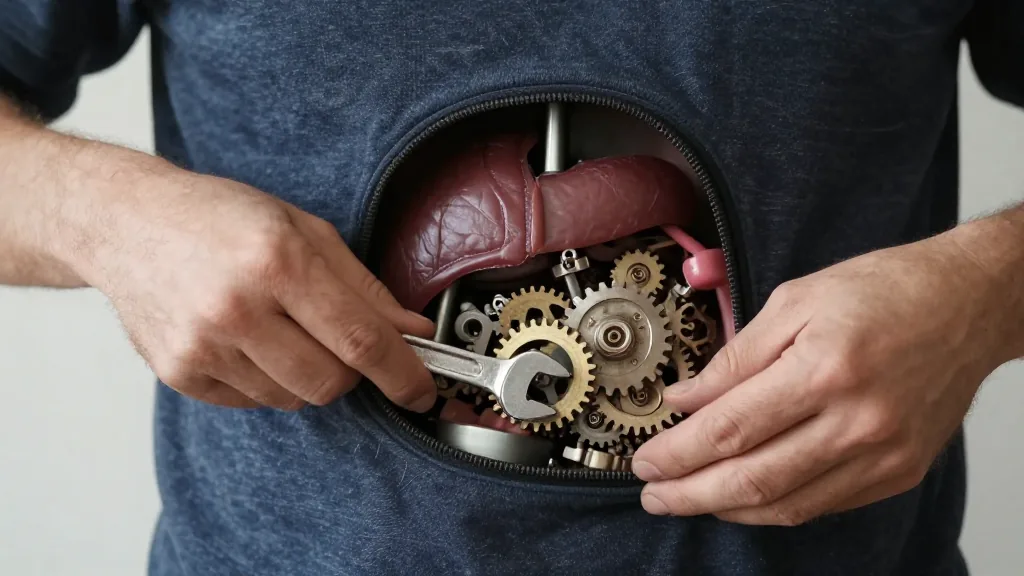
You've been practicing your anxiety management techniques-the grounding exercises, the delayed intervention, the attention training. And they're working. Your confidence is growing. You're getting better at letting anxiety exist without immediately doing something about it.
So why does it still feel like needing these tools means something is wrong with you?
You look around and see people who just seem... naturally calm. They don't appear to need grounding techniques when they're anxious. They don't seem to practice delaying their checking behaviors. They just handle things.
And a quiet voice whispers: If you were actually resilient, you wouldn't need all this practice. You'd just be okay, like they are.
That thought creates its own anxiety-a secondary layer of worry about having anxiety in the first place. The perfectionist pattern kicks in: I should be better at this by now. I shouldn't need so much support.
Here's what that voice is missing.
What Calm People Don't Show You
Think about the last time you saw someone staying calm in a stressful situation. Maybe they got difficult news and just... handled it. No visible panic. No obvious coping strategies. Just steady presence.
What you witnessed was the end result. What you didn't see was the neural work happening behind the scenes.
Because here's what neuroimaging studies consistently show: emotional regulation requires active, effortful activation of prefrontal control regions to modulate amygdala responses. Every single time. For everyone.
That calm person? Their ventrolateral prefrontal cortex was actively working to regulate their amygdala's threat response. They were doing sophisticated regulatory work-you just couldn't see it.
This is what researchers call "the invisibility of emotional labor." When you learn to play an instrument, people can see you practice. When you build physical fitness, people can see you at the gym. But when someone practices emotional regulation, the work is entirely internal. Invisible.
So you see their calm exterior and assume it came naturally. You don't see the years of practice that made their regulatory work more automatic. You don't see the neural pathways they've strengthened through repeated use.
You're comparing your internal experience-where you're acutely aware of every technique you're using-to their external presentation, where all the work is hidden.
The Brain Science of Staying Calm
You mentioned thinking emotional regulation should be "more automatic" than other skills. But let's look at what "automatic" actually means in the brain.
When someone has practiced emotional regulation extensively, they've strengthened specific neural pathways. The connections between their prefrontal cortex and amygdala have become more efficient through neuroplasticity. The regulatory work requires less conscious effort.
But it's still active regulation. It's still neural work.
Think about your own experience: you said your attention training is becoming less necessary as your tolerance for uncertainty has increased. What's happening there isn't that you've stopped doing regulatory work. It's that the neural pathways supporting that work have become more efficient.
You're building the same kind of automatic-but-still-active regulation that looks "natural" when you see it in others.
The difference between you and someone who appears "naturally resilient"? They've likely been practicing these patterns for so long that the neural work has become highly efficient. But their prefrontal cortex is still modulating their amygdala. They're still doing the work-you just can't see it, and they may not be consciously aware of it anymore.
The Weakness Story You Learned
For most of your life, you've probably operated on a simple belief:
People who are mentally healthy just... handle things. People who need coping strategies are less resilient. Weaker. Defective in some way.
This belief creates a clear division: there are the naturally strong people, and then there are people like you who need help.
Under this framework, every time you use a grounding technique, it confirms that you're on the "needs help" side of that line. The tools work, but using them feels like evidence of inadequacy.
You mentioned finding self-compassion phrases challenging to accept because they feel like "letting yourself off the hook" or "making excuses." That response makes perfect sense within this framework. If the problem is that you're not naturally resilient enough, then being kind to yourself about it does feel like avoiding the real issue.
The logical solution, from this perspective, is to be tougher on yourself. Push harder. Be more critical. That's what drives improvement, right?
Except here's where this entire framework falls apart.
Why Self-Criticism Backfires
Studies directly comparing self-compassion and self-criticism have found something that contradicts everything the perfectionist voice tells you:
Self-compassion predicts greater motivation for personal improvement, better persistence after setbacks, and less fear of failure.
Self-criticism, conversely, correlates with avoidance and reduced effort following mistakes.
Wait-how can that be true? How can being kind to yourself lead to more growth than being hard on yourself?
Here's the mechanism:
Self-compassion activates the mammalian caregiving system in your brain-the neural networks associated with feelings of safety and secure attachment. This activation creates the psychological safety necessary for taking risks, trying new approaches, and persisting through difficulty.
Self-criticism activates threat-defense systems. When you're in a threat state, your brain narrows its focus and promotes protective behaviors. Like avoidance. Like giving up to avoid further failure.
You described experiencing "perfectionist patterns creating secondary anxiety about having anxiety." That's this threat-system activation in action. The self-criticism isn't solving your anxiety problem-it's adding an additional stressor that your nervous system now has to manage.
The voice saying "you should be tougher on yourself to improve" is actually triggering the exact neural state that makes improvement harder.
The Truth About Your Coping Tools
You mentioned something revealing in your conversation: you understand that physical rehabilitation requires adjusting exercises based on how your body feels. You don't judge yourself on hard pain days for needing to modify your physical therapy.
But with anxiety management, you judge yourself for needing techniques.
What creates that double standard?
Most likely, it's this: you can see your physical pain as a legitimate condition requiring treatment. But anxiety feels like something you should just control better mentally.
Here's what neuroscience reveals: chronic anxiety involves the same kinds of neural sensitization patterns as chronic pain.
In chronic pain, the central nervous system develops lower thresholds for triggering pain signals. The pathways become sensitized, firing more easily in response to stimuli.
In chronic anxiety, the central nervous system develops lower thresholds for triggering threat responses. The amygdala and associated fear circuits become sensitized, firing more easily in response to uncertainty or perceived danger.
When you practice tolerance for uncertainty, when you delay checking behaviors, when you use grounding techniques-you're retraining those sensitized pathways. You're doing neuroplasticity work. You're treating the actual neural condition.
This isn't a character issue requiring more willpower. It's a nervous system issue requiring appropriate therapeutic intervention.
Your anxiety management tools aren't compensating for weakness. They're the appropriate treatment for a real neurological condition.
Let that sink in for a moment.
The grounding techniques you sometimes resent needing? They're therapeutic neuroplasticity work. The delayed intervention practice? You're literally retraining sensitized threat-detection circuits. The attention training that's becoming more automatic? You're strengthening the prefrontal-amygdala connections that support emotional regulation.
You're not defective for needing these tools. You're doing sophisticated neural rehabilitation.
What This Changes About Your Progress
You mentioned worrying whether your progress will hold up during periods of increased stress or life changes.
That's actually a sophisticated concern about what psychologists call "stress-related regression"-the tendency to fall back on older patterns when under pressure.
Here's something surprising from longitudinal research: people who acknowledge they have learned skills and might need to return to deliberate practice during high-stress periods actually maintain better long-term outcomes than those who believe they've achieved permanent, effortless resilience.
Why?
Because when stress increases and they notice they need more support, they don't panic. They don't interpret it as failure. They just see it as normal maintenance and scale up their practice.
People expecting permanent effortless resilience, on the other hand, experience the return of symptoms as a catastrophic failure. That interpretation itself becomes an additional stressor.
This is meta-cognitive awareness-knowing about your own thinking and regulation processes. Your awareness that stress might require renewed effort isn't pessimistic. It's protective.
It positions you to respond flexibly rather than rigidly to changing demands.
How to Match Your Tools to Stress
In chronic condition management, clinicians use "stepped care" approaches-matching intervention intensity to current need.
You can build this same framework for yourself.
Baseline Maintenance (Low-Stress Periods):
- 3-4 core practices you maintain consistently
- Maybe weekly attention training sessions
- Daily brief grounding check-ins
- Regular practice with cancer-related conversation tolerance in natural settings
- Periodic use of self-compassion phrases, even when challenging
Intensified Protocol (High-Stress Periods):
- Return to structured delayed intervention practice
- Increase grounding technique frequency
- More deliberate attention to physical symptoms vs. anxiety-induced sensations
- Explicit self-compassion work as treatment (not optional)
- Possible consultation with your healthcare team about medication adjustment
Having this framework in advance does something important: it removes the judgment from needing more support.
You're not "failing" when you need the intensified protocol. You're appropriately matching treatment intensity to current symptoms-exactly what you'd do with physical rehabilitation during a pain flare.
The Secret to Consistent Practice
Here's what changes when you view your coping strategies as legitimate treatment rather than shameful crutches:
You stop resenting them.
You use them more consistently.
You don't experience every technique usage as evidence of failure.
Instead, each time you practice delayed intervention or use a grounding technique, you're doing therapeutic work. You're strengthening neural pathways. You're treating sensitized circuits.
Just like physical therapy.
You mentioned developing insight that "needing tools for anxiety management reflects strength rather than weakness." That's not just a nice thought to make you feel better. It's neurologically accurate.
The willingness to learn and practice regulatory skills-despite the voice saying you shouldn't need them-is precisely what builds the neural infrastructure for long-term resilience.
3 Ways to Practice This Week
Three concrete applications of this new paradigm:
1. Relabel Your Technique Usage
When you use a grounding technique or practice delayed intervention, explicitly label it: "I'm doing therapeutic neuroplasticity work right now."
Not "I need a crutch." Not "I'm not strong enough to handle this naturally."
"I'm treating sensitized neural pathways with appropriate intervention."
Do this relabeling at least once daily for two weeks. Let the new framework become familiar.
2. Build Your Physical Rehabilitation Bridge
You already have a compassionate approach to physical pain management. When you notice self-criticism about anxiety management, ask yourself:
"How would I respond if this were about my physical pain management?"
Then apply that same attitude. The same flexibility. The same understanding that some days require more support than others.
3. Track the Invisible Work
Once this week, after you successfully use a coping strategy, pause and imagine what someone observing you would have seen.
Probably nothing dramatic. Maybe you just got quiet for a moment. Maybe you took a few breaths. Maybe there was no visible sign at all.
That's what you're seeing when you observe others' "natural" calm. The work is invisible. But it's happening.
Building awareness of this invisibility helps dismantle the unfair comparisons.
What We Haven't Talked About Yet
You're building excellent awareness of anxiety tolerance and self-compassion as legitimate therapeutic work. Your tools are becoming more automatic. Your confidence in handling future stressors is growing.
But there's something we haven't explored yet-something that could dramatically reduce both the effort required for management and increase the sustainability of your progress.
You mentioned that physical pain levels continue impacting daily functioning and sleep patterns. And you're working on anxiety management. Right now, you're treating these as separate challenges requiring separate tools.
But what if they're not separate?
Chronic pain and chronic anxiety share neural mechanisms-the same sensitization pathways, the same threat-detection circuits. There are targeted techniques that work at the intersection of pain science and anxiety neuroscience, treating the shared architecture rather than addressing each condition separately.
Most anxiety-only approaches completely miss these integrated opportunities. Most pain management completely misses the anxiety connection.
Understanding this intersection could change both your pain experience and your anxiety patterns in ways that treating them as parallel issues never could.
That's what we'll explore next.
What's Next
Stay tuned for more insights on your journey to wellbeing.





Comments
Leave a Comment