Free PDF Guide:
GRAB ITFREE PTSD QUIZ
10 Reasons Why People Who Are Charismatic May Not Be Trustworthy
Updated 11 Nov 2026

Beyond the Charming Smile.
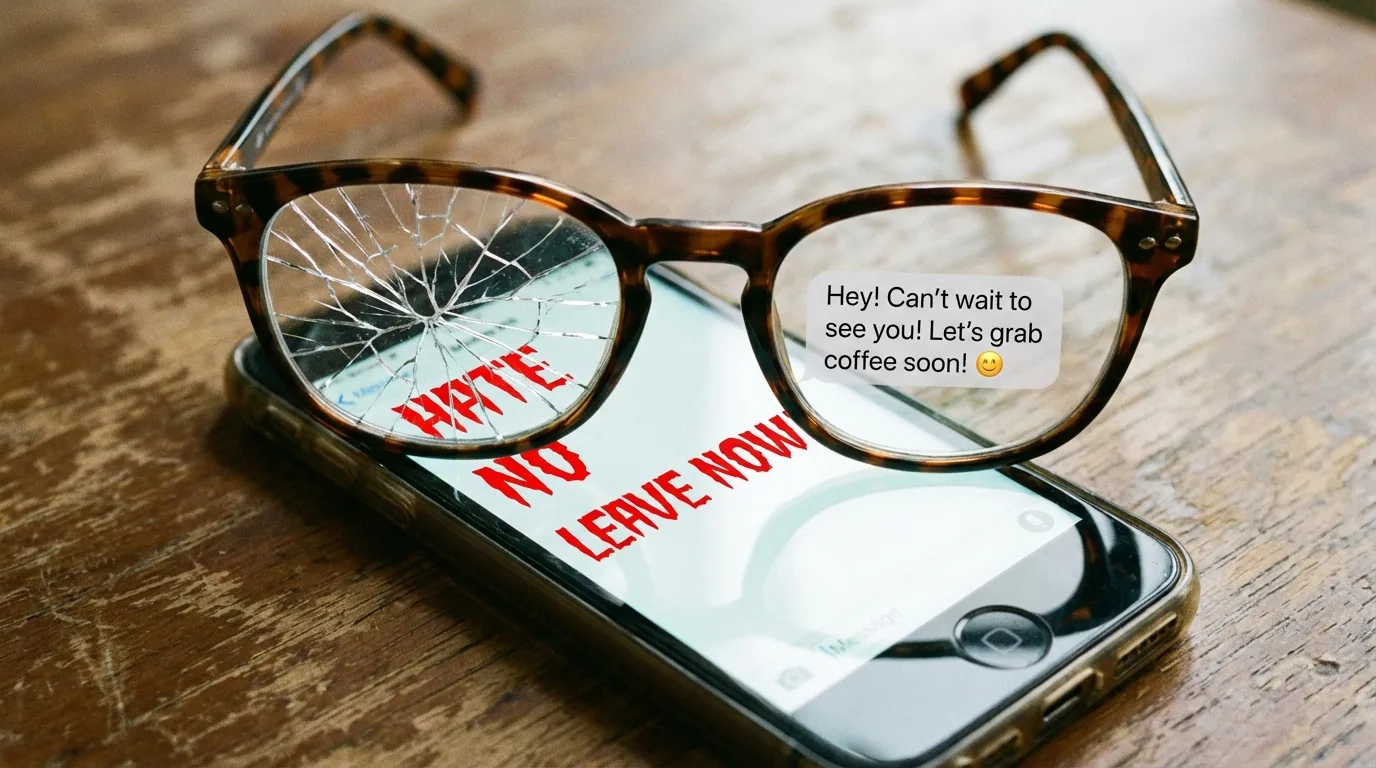
Is it ever too easy to let a charming personality cloud your judgment?
You see how magnetic someone is and how everyone gravitates toward them. With a warm smile and a quick sense of humor, they have a way of making everything feel effortless.
Eventually, though, the mask starts to slip. They might make a cutting remark or go back on their word without thinking twice.
Suddenly, you are left wondering what they are actually after.
That initial warmth felt so real, yet they have a habit of dodging accountability and pointing fingers elsewhere. They know just what to say, even when there is very little behind their words.
Listen to your gut. Those quiet doubts are usually a sign that something isn't adding up, even if you can't quite name it yet.
They may have won over plenty of other people, but you get to look past the surface and make up your own mind. You decide how much access they get to your life.
In this guide we'll reveal 10 reasons why charisma doesn't guarantee trustworthiness. More importantly, you'll discover the red flags that can help prevent heartache.
It is completely fair to slow down and keep your guard up around someone who fills a room with their presence but rarely follows through.
They often say what you want to hear, not what they truly believe
It is easy to mistake charisma for good character, though the reality is often much more complicated.
Being likable and being dependable are two very different things. Someone who knows how to work a room might make grand promises in public and do the exact opposite behind closed doors.
For some people, charm is simply a way to get what they want rather than a reflection of who they are.
You might find that "nice guys" and "gals" are just as manipulative or deceitful as those with more obvious ulterior motives. So charisma isn't always what it seems, especially if you're not paying attention to underlying actions.
A habit of telling people what they want to hear can mask a lot of dishonesty, and we often miss the warning signs when we want someone to be as good as they seem.
A good storyteller can be a great liar too
Charming people tend to get a pass on behavior nobody else would get away with, and that rarely happens by accident.
Likability and integrity don't always go hand in hand. Putting on a great show in front of an audience is very different from being honest when the spotlight is off.
A magnetic personality often helps people get ahead because they know how to play the part, not necessarily because they do the right thing.
Plenty of us have been won over by a smooth talker, only to realize later that we couldn't count on them when it mattered. Someone can be brilliant at selling themselves while still falling short on real commitment and honesty.
Once you look past the polished surface, a very different picture often emerges. They might act as though everything is wonderful even when it isn't, leaving the people closest to them unsure of what to believe.
It takes one set of skills to tell a great story and keep a room entertained, and another to show up with real integrity. Charming people often get the benefit of the doubt simply because we like them, which makes it easy to miss what is actually happening right in front of us.
After they move on, the people left behind often wonder if the whole thing was just an act. Learning to separate a winning personality from true reliability is the best way to protect yourself, whether in your personal life or at work.
You don't need to be a perfect judge of character, just willing to notice the gap between how someone acts in public and who they are in practice.
Charisma doesn't equal competence or intelligence
Being charming and being dependable are two very different things. People who struggle to keep their promises are often the best at talking us into trusting them right away.
They know how to say all the right things, hold steady eye contact, and appear completely open and welcoming.
When someone says exactly what you want to hear at a vulnerable moment, it is easy to walk away thinking they are completely reliable. Still, if their actions do not match their words, you have a good reason to be cautious.
Just because someone can win us over in conversation does not mean they have earned our trust.
What really counts is how they show up day after day.
You might have friends or family members who effortlessly win everyone round but still manage to mess things up repeatedly; like forgetting commitments at short notice, lying under stress and so on. Their smooth talk can make us feel confident that they're reliable too.
We all want to believe the best in people. Even so, a winning personality is not enough to build real success or trust, especially when it comes to lasting friendships, partnerships, or work relationships.
It pays to watch how someone actually behaves rather than just listening to what they say. With smooth talkers, you also have to consider what is driving their behavior in the first place.
So what is the takeaway here?
Not everyone's charm and charisma equates to trustworthiness. So do your research: take time, put up a wall guard against what they say before jumping into anything; ask them questions that matter in long-term about their commitments - not just with words alone but also test if you feel right.
Does anyone really see it differently?
People with charm are more likely to take advantage of those who trust them easily
People with charm are more likely to take advantage those who trust them easily. Charm and charisma often make you feel like someone is trustworthy, but what if it's all just a show?
Their smooth talk might not be as genuine as they seem. This kind person can actually wear down your natural boundaries with ease.
Charm and charisma are frequently used to get a specific result without much regard for the other person's actual needs or feelings.
Before you know it, you can end up in an uncomfortable spot, like feeling pressured into lending money to someone who has no intention of paying it back.
They often hide their true intentions behind a mask of kindness and empathy
People like this often hide their real motives behind a warm, sympathetic front.
It is easy to treat charisma as a stand-in for character, but the two do not always go hand in hand.
We tend to mistake a pleasant manner for real substance, and it helps to tell the difference.
Anyone can be likable in short bursts, and a polished exterior can easily cover up questionable motives.
You might find yourself won over by someone who acts caring on the surface while quietly looking out only for themselves. Once you look past the flattery, what is actually left?
Is it a lack of integrity, or just a habit of telling people whatever they want to hear? The reality can catch you off guard.
When we focus too much on how likable someone is, we forget that real trust comes from keeping your word and following through. You cannot build genuine relationships on good impressions alone.
Being real matters far more than being smooth. A warm smile is no guarantee that someone will keep their word.
Nor does it mean they will look out for your best interests when it counts.
Their persuasive abilities can be used for manipulation, not just good
The Harder Side of Charisma.
Charismatic people can easily convince you to trust them just by saying the right words.
When you look a little closer, though, the reality doesn't always match up. They just have a knack for winning you over quickly.
What they say sounds great in the moment, only to turn out empty later on.
We often assume that a smooth talker is also dependable, which simply isn't true. Charisma can easily be used to steer people into believing whatever is most convenient for the speaker.
Over time, you end up second-guessing everything around them because you can never tell if their promises are real. You can see this playing out across social media every day, from influencers pushing overnight success courses to motivational speakers running questionable businesses.
It is especially frustrating when people make a living by pretending to help others while mostly helping themselves. At the end of the day, being charming and being trustworthy are two very different things.
Charisma is a skill that can be learned, so don't assume they're naturally trustworthy
We all know people who can walk into a room and instantly win everyone over. Still, a great first impression can hide some uncomfortable realities.
Being likable does not automatically make someone reliable. Sometimes, an easygoing charm is just a polished front used to cover up deeper personal problems.
This is especially true people who've honed art "emotional intelligence" – they often have uncanny social skills but struggle to connect on a deeper level. Their polished charm comes from learning how to expertly read others' emotions and mirror them back, creating instant connection.
Behind all that outward confidence, some people are actually hiding deep insecurities or a poor track record with keeping their word.
If you pay attention, you might notice they struggle to keep long-term relationships, bounce from one friend group to another for validation, or use their likability to get their way without even realizing they are doing it.
Try not to let a warm smile do all the convincing. Give it time, look past the first impression, and see how they actually show up as a whole person.
Those who are charming may prioritize their own needs over others' well-being
It is easy to confuse charisma with character. When someone is warm and outgoing, most of us naturally assume we can count on them.
In reality, those two traits have very little to do with one another, and charm can easily cover up purely self-serving motives.
When someone consistently puts their own interests ahead of everyone else's, it is easy to get burned if you only pay attention to how polite and engaging they are. People who rely on charm are often very good at reading the room and telling you exactly what you want to hear, especially when they want a favor.
Think of the person who is always first to ask for a loan or an extra pair of hands on moving day, yet always seems to have a last-minute conflict whenever you need a hand in return. That pattern rarely happens by accident.
Charm might be a great tool for getting ahead in the short term, but real dependability is what actually counts over time.
A charismatic person's charm can wear off when they're under pressure or stress
It is easy to assume that a warm smile and an outgoing personality mean someone can be trusted. In reality, charm is often just a pleasant surface covering up deeper flaws.
We have all met people who dominate the conversation without ever really listening, or who crack a joke the moment they need to own up to a mistake.
Real trust comes from showing up day after day.
It means keeping your word and following through on what you promised, even when the work is tedious or difficult. That kind of steadiness is what holds relationships together, because people never have to guess where they stand with someone who does what they say they will do.
When things fall apart, smooth talkers tend to disappear. Dependable friends are the ones who stay in your corner and help you through it, no matter how messy things get.
Do not mistake charm for character. Lasting relationships are built on patience, honesty, and follow-through—not a polished first impression.
Their true character may be revealed in times of crisis or difficulty
You usually find out who someone really is when things go wrong. A lot of people still treat charisma as proof that a person is dependable.
That is a mistake. Someone with a gift for conversation can easily talk their way out of a tight spot, which is very different from actually being reliable.
Real pressure has a way of stripping away the act. Being pleasant to be around and being worthy of trust are two completely different things.
Just because someone knows the right things to say does not mean they are looking out for you. You have to pay attention to what lies past the charm.
The Dark Side of Charisma
Still, is there another angle we should be looking at? When we talk about charismatic people, the line between someone who is fun to be around and someone you can actually count on gets blurry fast.
Some people are simply great at selling a rosy picture of the future. So what really happens when we let ourselves get carried away by a magnetic personality?
We forget how easy it is for someone with all charm and no substance to walk away at the first sign of trouble and run the same routine on a new crowd.
That does not mean you have to become cynical; it is just a reminder to look past the surface. Plenty of outgoing, likable people are genuinely good individuals.
The real test is whether someone stays honest when things get uncomfortable, or whether they only care about looking good when everyone is watching.
We'd love your input - has this ever happened to anyone in real life? Have any of these scenarios played themselves out for someone close to you or yourself personally.
Let us know what you think in the comments below.


DFMMasterclass
How to deal with a difficult family member
References
- Paulhus, D. L., & Williams, K. M. (2002). The Dark Triad of personality: Narcissism, Machiavellianism, and psychopathy. Journal of Research in Personality, 36(6), 556–563. https://doi.org/10.1016/S0092-6566(02)00505-6
- Hogan, R., Raskin, R., & Fazzini, D. (1990). The dark side of charisma. In K. E. Clark & M. B. Clark (Eds.), Measures of Leadership (pp. 343–354). Leadership Library of America.

Related Articles