


Why can’t I get out of bed when I’m depressed?
OPENING
You used to be capable. You could code for hours, push through projects, go for runs before work. Now you can barely get yourself to the kitchen to order food on your phone. You know what you should be doing-you can see the work piling up, the dishes in the sink, your running shoes gathering dust-but when you try to move, it’s like your body just… won’t.
And the worst part? You’re wondering if you’re just weak now. If something fundamental has changed about who you are.
You’re not weak. But everything you think you know about what’s happening to you is probably wrong.
WHAT EVERYONE BELIEVES
For as long as most of us can remember, we’ve been told that depression is a mental condition. It’s about thoughts, feelings, mood. The physical stuff-the exhaustion, the inability to get out of bed, the heaviness in your limbs-that’s just a side effect of feeling sad. Or worse, it’s interpreted as laziness dressed up with a diagnosis.
When you can’t make yourself do basic tasks, the conventional wisdom says it’s a motivation problem. A willpower issue. After all, you could do these things before, right? You have the same body, the same brain. The only thing that’s changed is… you. Your character. Your strength.
This is what most people believe: that if you just tried harder, pushed through, forced yourself to act, you’d be able to do what you used to do. That the gap between “I should get up” and “I can’t get up” is a failure of will.
You might have believed this too. You probably still do, at least a little. It’s why you beat yourself up for ordering delivery instead of cooking. Why calling in sick feels like admitting defeat rather than managing an illness.
THE CRACK IN THE FOUNDATION
But here’s what doesn’t add up.
You said something important: it feels physical. There’s actual heaviness in your limbs. When your brain sends the signal “get up,” it’s like the message gets lost somewhere between thought and action. You compared it to having the flu-not just not wanting to move, but genuinely feeling unable to.
If this were really just about motivation or willpower, you’d expect:
- The difficulty to be about not wanting to do things
- To feel mentally resistant but physically capable
- That forcing yourself would eventually work
But that’s not what’s happening. When you sit down to code-something you used to love-there’s no satisfaction. Even when you force yourself to play video games from bed, it feels flat. No reward for completing a function, no enjoyment from activities that used to absorb you.
And the exhaustion isn’t the tired you get from a long day. It’s the exhaustion of being sick. Of fighting something.
So why does a “mental” condition create physical symptoms that feel indistinguishable from physical illness? Why doesn’t trying harder work?
THE NEW TRUTH
Because depression isn’t just mental. It’s neurological.
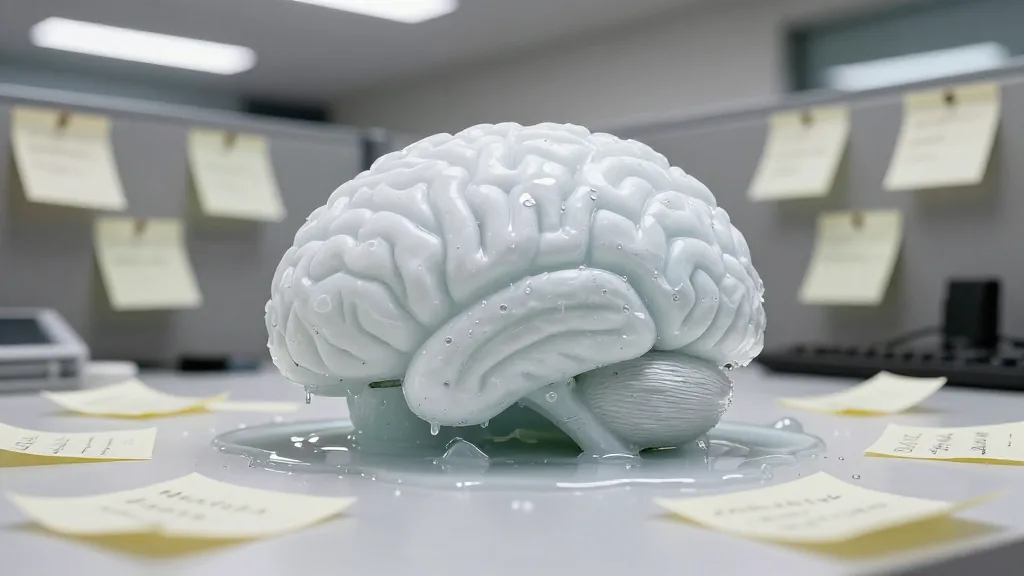
Research on mood disorders has revealed something most people still don’t understand: depression causes measurable, physical changes in the specific brain regions that control movement, motivation, and energy regulation.
Up to 70% of people with major depressive disorder experience something called psychomotor disturbance. Not “feeling unmotivated,” but actual disruption in the brain’s motor planning and initiation systems.
One of the key regions affected is the cingulate motor area-think of it as a bridge between your emotional brain and your motor brain. It integrates information from your limbic system (emotions, motivation) and connects it to the areas that plan and initiate movement. In depression, this bridge gets disrupted. Functional connectivity between the cingulate motor area and other motor planning regions becomes altered. Studies show that the degree of this connectivity change correlates directly with how severe the motor symptoms are.
Your brain is sending the signal “get up,” but the bridge that should translate that intention into action is malfunctioning.
This isn’t metaphorical. It’s measurable. Brain imaging shows it. It’s as real as a broken bone, just harder to see.
When you can’t get out of bed to order food, that’s not you being lazy. That’s a disrupted neural circuit failing to initiate motor action.
WHY THE OLD WAY NEVER WORKED
For years, you’ve probably been told-or told yourself-that you just need to push through. Try harder. Use more willpower.
But here’s what was actually happening when that didn’t work:
You weren’t fighting a motivation problem. You were fighting biological systems that had fundamentally changed how they operate.
Research shows three specific disruptions that create the physical inability you’re experiencing:
First: Your brain’s reward system has been dysregulated. Studies on depression and anhedonia reveal that the striatum-the brain region that processes reward-shows reduced activation when you do things that should feel good. Scientists call this an “anti-reward state.” It’s not that you’re choosing not to enjoy coding or gaming. The neurochemical machinery that creates the feeling of satisfaction is literally not firing properly. Your reward circuits have been biochemically suppressed.
This is why even when you force yourself to do something you used to love, it feels flat. The dopamine system that should activate and motivate you to keep going isn’t working. Without that reward signal, your brain has no reason to prioritize the action. Every task becomes equally unrewarding, so initiating any of them requires fighting against a system designedto make you pursue rewarding activities.
Second: Your executive function system is impaired. The prefrontal cortex-which handles planning, decision-making, and task initiation-shows functional deficits in depression. Recent research identified that fatigue is the critical bridge between depression and poor executive functioning. Not just feeling tired, but actual energy depletion mediated by inflammatory and dopaminergic pathways.
You’re not overthinking whether to get up. Your brain’s “initiate complex task” function is genuinely impaired. It’s like trying to run software on a computer with 100% CPU usage from background processes-the system is maxed out even when you’re doing nothing visible.
Third: Your body is mounting an inflammatory response. Studies on depression and fatigue show that depression involves inflammatory processes similar to physical illness. Pro-inflammatory cytokines activate stress hormone systems and affect neurotransmitter function. Depression symptoms-including fatigue, anhedonia, and psychomotor slowing-are mediated by the same biological pathways that create “sickness behavior” when you have the flu.
Your body isn’t fighting nothing. It’s fighting a biological illness state. The exhaustion is real. The heaviness is real. Just because you can’t measure it with a thermometer doesn’t mean it’s not physiological.
This is why “just try harder” never worked. You were asking a disrupted motor planning system to work normally, asking suppressed reward circuits to generate motivation, and asking an inflamed, energy-depleted body to function as if it were healthy.
THE ELEMENT EVERYONE MISSED
Almost every conversation about depression mentions the emotional symptoms, the thought patterns, maybe even the fatigue. But there’s one piece that gets completely overlooked:
Your brain is burning energy fighting a malfunctioning system-and it’s genuinely exhausting.
Here’s what research on depression neurobiology reveals: the anterior cingulate cortex-that bridge between emotional and motor systems-is not just disrupted in depression. It’s working overtime. But inefficiently. Think of it like running buggy code that uses 100% CPU but produces no useful output.
Your brain is spending enormous resources trying to integrate emotional information, regulate stress responses, and initiate action-but the circuits are dysregulated, so it’s burning energy without achieving results. This explains why “doing nothing” is exhausting. Your system is taxed at baseline.
Add to that the inflammatory processes (which directly cause fatigue), the dopamine dysregulation (which eliminates the energy boost from anticipated rewards), and the prefrontal cortex working inefficiently (burning resources on executive function that should be automatic)-and you get the picture:
Your body and brain are in a state of biological crisis. They’re fighting to function. The exhaustion isn’t because you’re not doing anything. It’s because your systems are working desperately hard just to maintain basic function.
This is why simple tasks feel like climbing a mountain. The energy required to overcome disrupted motor initiation, generate action without reward system support, and push through biological fatigue is genuinely immense. When you successfully get out of bed and order food, you’ve actually accomplished something that required significant neurological effort.
And here’s the kicker: studies comparing depression motor symptoms to Parkinson’s disease found that patients with psychomotor slowing show similar patterns of basal ganglia disruption to parkinsonian bradykinesia. The motor slowness in depression isn’t just “in your head”-it involves the same brain structures that, when damaged, cause recognized movement disorders.
You’re not weak for struggling to move. You’re dealing with neurological impairment of movement systems.
WHAT YOU CAN NOW FORGET
You can stop carrying the belief that you’re lazy.
You can release the idea that your inability to do what you used to do is a character flaw or personal failure.
You can put down the shame about ordering delivery instead of cooking, about calling in sick, about not being able to code for hours like you used to.
You can forget the story that you’re weak now, that something fundamental has changed about who you are as a person.
You can stop beating yourself up for not being able to “just push through” or “try harder” when your brain’s motor initiation bridge is literally malfunctioning.
You can let go of comparing your current capacity to your pre-depression capability and judging yourself for the gap. Your brain is not operating the same way it was. That’s not your fault.
You can abandon the myth that depression is “just mental” and therefore the physical symptoms are somehow less real or less deserving of accommodation.
WHAT REPLACES IT
Here’s what you hold instead:
You’re managing a biological condition that creates measurable disruption in motor planning systems, reward circuits, and energy regulation.
When you can’t get out of bed, that’s a symptom-as real as a fever or a racing heart. It’s disrupted connectivity in the cingulate motor area making movement initiation objectively more difficult.
When coding feels impossible and gives no satisfaction, that’s your reward system in an anti-reward state. The dopamine circuits that should fire to motivate and reinforce the behavior aren’t activating properly.
When even basic tasks exhaust you, that’s your brain and body fighting inflammatory processes and running inefficient, overtaxed neural circuits just to maintain baseline function.
Ordering delivery isn’t giving up-it’s an adaptation to biological impairment. Like using crutches for a broken leg. You’re recognizing that your brain’s “initiate complexmulti-step task” function is temporarily dysregulated, and you’re finding a workaround that gets you fed.
Calling in sick isn’t weakness-it’s acknowledging that your prefrontal cortex is functionally impaired and your body is in a biological crisis state. You wouldn’t judge someone with the flu for not going to work. This is the same.
The gap between who you were and what you can do now isn’t about character-it’s about neurobiology. Your brain’s motor systems, reward circuits, and energy regulation have changed. Understanding this removes the layer of self-blame that makes everything harder.
WHAT OPENS UP
Once you understand that you’re dealing with disrupted neural circuits rather than personal weakness, everything changes.
You can approach tasks differently. Instead of expecting yourself to have pre-depression capacity for large projects, you can break tasks into tiny pieces-working with your impaired motor initiation system rather than fighting it. Opening your laptop is one task. Opening the file is another. Writing one line of code is a third. This isn’t lowering your standards-it’s adapting to your brain’s current functional state.
You can adjust your expectations around reward and motivation. Knowing that your reward circuits are dysregulated means you can stop expecting the satisfaction hit you used to get from completing functions or finishing games. The flatness isn’t permanent or a sign you’ve lost your passion-it’s a symptom of suppressed reward system activity. This makes it easier to do things purely for the outcome rather than the feeling, knowing the feeling will return as the circuits recover.
You can reframe “accommodations” as medical adaptations. Delivery food, simplified tasks, external structure (like pairing with someone for coding since your internal motor planning is impaired)-these aren’t crutches you should be ashamed of. They’re intelligent responses to temporary neurological impairment.
You can view movement differently. You mentioned you used to run. Even five minutes of walking influences some of these same circuits-the motor areas, reward systems, inflammatory markers. Not as a cure-all, but as medicine for the specific broken circuits. It stops being a moral imperative (“you should exercise”) and becomes a treatment option. Even walking to the kitchen is doing something, not nothing.
You can pursue treatment without shame. If medication, therapy, or other interventions can help restore function to these disrupted circuits, that’s not a crutch-it’s treating the biological condition. These neurological changes are reversible with appropriate treatment.
Most importantly: you can stop adding self-blame on top of depression. The depression is hard enough. The belief that you’re weak or failing makes it immeasurably worse. Understanding the mechanism doesn’t make the symptoms disappear, but it removes the layer of shame that was crushing you.
You’re not weak. Your cingulate motor area connectivity is altered. Your reward circuits are in an anti-reward state. Your body is fighting inflammatory processes. These are real, measurable, biological disruptions-and they can be treated.
The task isn’t to force yourself back to your old capacity through sheer willpower. It’s to recognize you’re managing a neurological condition, adapt your approach accordingly, and pursue treatment for the underlying circuit dysfunction.
Your body hasn’t stopped listening because you’re weak. It’s struggling to function because the systems that translate intention into action are temporarily impaired. That’s not a character flaw. That’s biology.
And biology can heal.
What’s Next
In our next piece, we’ll explore how to apply these insights to your specific situation.



Comments
Leave a Comment