

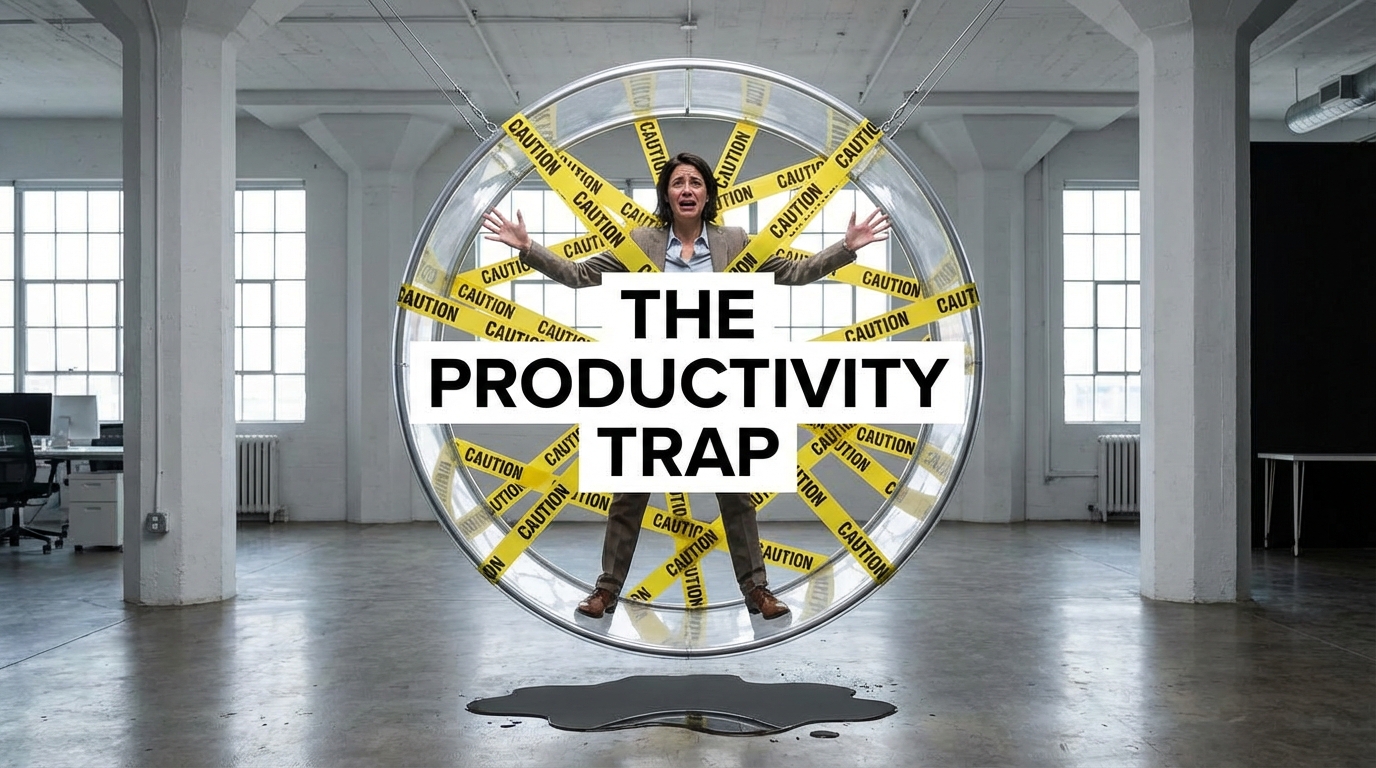
The Triggers You've Taught Yourself to Fear
There are three handles in your kitchen you've stopped using normally.
One is near the bin—people touch it right after throwing rubbish away. The other two are by the laundry area, where hands meet handles after touching dirty clothes. You've watched it happen. You've seen the contamination.
So now you wash your hands immediately after touching them. Or you open drawers from the edge, avoiding the main surface entirely. The other handles in the house don't bother you nearly as much. Why? Because you haven't witnessed the contamination.
But here's what's strange about that distinction: germs don't care whether you're watching.
The handles you use all the time are probably touched by unwashed hands just as often. The only difference is you haven't seen it happen. Your brain treats witnessed contamination as more threatening than probable contamination you didn't see.
That's not logic. That's your alarm system making the rules.
Why Your Fear Never Gets Smaller
When you see someone touch the bin handle and then touch the drawer, something happens in your brain. An alarm fires. It screams DANGER. It feels urgent—like you have to do something immediately.
So you do. You wash your hands. Or you avoid the handle entirely.
And it works. The anxiety drops. You feel okay again.
This is why you keep doing it. Because it works.
But here's the question that changes everything: You've been avoiding these handles and washing after touching them for months now. Has your alarm system learned that they're safe?
Has the fear gotten smaller?
If the avoidance was teaching your brain anything useful, you'd expect the problem to shrink over time. Instead, more handles are starting to bother you. The list keeps growing.
After months of protecting yourself, the problem is actually bigger.
What Nobody Tells You About Playing It Safe
What most people don't see when they avoid a trigger is what's happening behind the scenes in their brain.
Every time you avoid a handle or wash immediately after touching it, you're sending your alarm system a message. The message is: "That was a close call. Good thing you protected yourself."
Your alarm system interprets this as confirmation. It thinks it just saved your life. So it does what any good alarm system would do—it stays vigilant. It starts scanning for more threats. It gets better and better at its job.
Unfortunately, getting better at its job means more false alarms for you.
You've been running an invisible training program. But instead of training your brain to relax, you've been training it to see danger everywhere. Every avoidance teaches your brain that the threat was real. Every immediate wash confirms there was something to fear.
You've been training your brain to be more anxious by trying to make yourself less anxious.
Research confirms this pattern. Studies show that avoidance behaviors are a prominent feature in OCD specifically because they maintain the disorder. People with contamination fears actively plan their days to avoid situations that might provoke anxiety—and in doing so, they prevent their brain from ever learning the truth.
The Truth About What Actually Reduces OCD
The standard approach to anxiety goes like this: feel scared, avoid the threat, feel better.
But after decades of research and clinical work, something counterintuitive has become clear. When it comes to OCD, the standard approach is completely backwards.
What actually reduces OCD over time is the opposite: feel scared, approach the trigger, don't do the protective behavior, and let the anxiety run its course.
This isn't about white-knuckling through misery for its own sake. It's about what happens in your brain when you touch that handle, delay washing, and... nothing bad happens.
Your brain learns.
Research published in 2024 found that exposure-based treatment produces large, meaningful improvements in OCD symptoms. The effect sizes were substantial—not just statistically significant, but noticeable changes in people's actual lives. Studies show this approach works because it changes what the brain believes.
But here's the part that surprises most people: exposure doesn't erase the fear.
How to Build a Voice That Overrides Fear
Your old fear memory isn't going anywhere. You can't delete it. When you touch that handle and sit with the discomfort, you're not wiping out the alarm.
You're building something new.
Research on inhibitory learning shows that exposure creates a competing memory. Now your brain has two associations with that handle: the old one that says "danger" and a new one that says "nothing happened."
These two memories compete for attention. At first, the threat memory is louder. It's been reinforced for months. But every time you touch, delay, and survive, the new memory gets stronger.
You're not trying to make the fear disappear. You're building a louder voice that says "you're fine."
This is why the research shows such strong results—not because people stop feeling anxious, but because they learn to function despite the anxiety. Studies from 2024 found that improvements in distress tolerance actually account for reductions in OCD symptoms. The mechanism of change isn't eliminating discomfort. It's learning to tolerate it.
Two Skills That Change Everything
Think about your new job. You mentioned you're finding the structure helpful, enjoying the daily routine.
Imagine if every time a small problem came up at work, you left the building immediately. What would happen?
You'd never learn how to solve anything. And you'd start dreading work because you'd see it as a place full of problems you can't handle.
But that's not what happens. You face challenges at work and push through them. Then the next similar problem doesn't feel as scary because you've done it before.
This is the same principle. Two skills are operating:
First: Sitting with discomfort—letting the alarm ring without rushing to silence it.
Second: Carrying on with life despite the discomfort.
Both matter.
If you could only tolerate discomfort but couldn't do anything else, you'd just be stuck feeling awful. That's not progress. But when you're uncomfortable and doing things you care about—checking your phone, having a cup of tea, touching your face—you're proving to yourself that the discomfort doesn't have to stop you.
You've already demonstrated you can do this. Your homework practice—moving from washing twice to once, from elbows down to just wrists—shows your brain can learn new responses. You did it consistently, every day. You had small goals. You didn't try to stop entirely; you reduced gradually.
And when you got sick during that week, your OCD tried to say "See? This is what happens when you don't wash enough!" But you recognized it was just an autumn cold your brother had too. You spotted the false connection.
That's not easy to do.
Why Your OCD Brain Isn't What You Think
Here's something worth reframing.
You've been treating this like there's something broken in your brain. But when you do homework, you do it more thoroughly than your peers. You notice details others miss. You check things. You want it to be right.
That's the same wiring.
The brain that's hypervigilant about contamination is the same brain that's exceptional at noticing details, spotting potential problems, being thorough. These are genuinely useful abilities—in academics, in your job, in solving problems.
The issue isn't the ability itself. It's that your brain applies this skill to contamination threats that aren't real.
Think of it like having a superpower but not knowing how to aim it. In an exam? Useful. Double-checking important work? Useful. Scanning kitchen handles for invisible germs? That's the superpower misfiring.
You're not trying to become less careful. You're learning to aim your care where it actually helps. That's a different project entirely—and a more empowering one.
Your Practice Plan for This Week
You're already down to about eight hand washes a day, which represents real progress.
This week, focus on those three specific handles—the ones you've been avoiding.
At least once a day:
- Deliberately touch one of the handles. The bin one. One of the laundry ones. Your choice.
- Then touch something you'd normally protect. Your phone. A snack. Your face. Your hair.
- Sit with the discomfort for at least five minutes before doing anything else. Don't wash. Don't avoid. Just notice.
- Pay attention to what your brain predicts will happen. Then notice what actually happens.
- Carry on with something normal. Have a cup of tea. Text someone. Do a task. Life continues despite the alarm.
Every time you do this and nothing bad happens, that new memory gets stronger. You're not trying to stop feeling anxious. You're building a competing pathway that says "this is safe."
You've already proven you can reduce washing through consistent practice. This is just the next level.
How Do You Know When to Trust the Alarm?
You now understand something most people with OCD never quite grasp: the protective behaviors that feel essential are actually feeding the problem. Your alarm system has been trained by your own attempts to feel safe.
But this raises a practical question that takes time to answer: How do you know, in the moment, whether an alarm is worth listening to or worth overriding?
Real hygiene matters. Washing hands after using the bathroom, before eating—these aren't OCD, they're just good practice. So where's the line? How do you distinguish genuine health behavior from OCD-driven compulsion when both feel urgent in the moment?
That skill—the ability to read your own alarm system and know when to trust it—develops as you practice. Each exposure teaches you something new about the difference between your brain crying wolf and your brain responding to something real.
For now, you have what you need to start: the knowledge that avoidance maintains the problem, the understanding that new memories compete with old ones, and a concrete protocol for this week.
Touch. Delay. Carry on.
Your alarm system has been running the show. It's time to show it who's actually in charge.
What's Next
How do I know when the OCD alarm is a real threat worth responding to versus a false alarm I should override?





Comments
Leave a Comment