

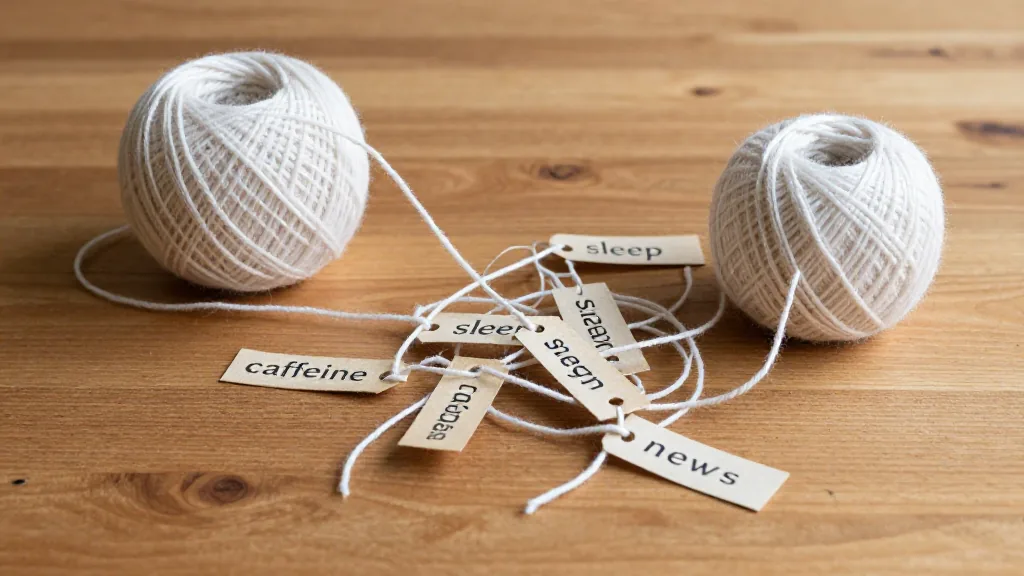
What's actually happening is your body responding to something your conscious mind missed entirely.
When Anxiety Strikes Without Warning: What Your Body Is Actually Doing
You're walking during your lunch break. No presentation looming. No difficult conversation ahead. Nothing particularly stressful happening at all.
Then it hits: chest tightening, heart racing, sweat breaking out. That familiar surge of anxiety-intense and physical and completely unexplained.
And the most frustrating part? You can't figure out why.
With other anxiety, you can at least trace it back to something. The upcoming social event. The work presentation. The difficult phone call. But this? This just... happens. And when you can't identify the trigger, you can't fix it. You're left feeling helpless, wondering what's wrong with you, hoping no one notices you're sweating.
If this sounds familiar, what I'm about to share might completely change how you understand these episodes.
The Random Anxiety Mistake That Makes You Feel Broken
When anxiety appears without an obvious cause, most of us land on the same conclusion: something must be broken.
It makes perfect sense. Anxiety is supposed to have a reason, right? You get anxious before a job interview. You feel nervous meeting new people. There's a cause-and-effect relationship that, while uncomfortable, at least makes logical sense.
But anxiety that strikes during a simple lunch walk? Anxiety that has no identifiable trigger? That feels chaotic. Random. And if it's random, how can you possibly fix it?
This is where most people-maybe even the people trying to help you-focus their energy: hunting for hidden triggers. What did you eat? What happened that morning? Are you sure there's nothing stressful going on?
And when that search comes up empty, the conclusion feels inescapable: "If I can't even figure out why I'm anxious, I must really be broken."
But here's what's remarkable: what if the absence of a trigger isn't a problem to solve? What if it's actually valuable information about what's really happening in your body?
What Your Cells Know About Stress Recovery
Let me share something from cellular biology that most people never hear about.
When you're under stress-even social stress at work, even the low-grade tension of navigating relationships and responsibilities-your body's cells experience what researchers call "oxidative stress." Think of it like tiny injuries happening at the cellular level.
Now here's the part that changes everything: your body has an incredibly sophisticated repair system. Just like when you cut your finger and your body immediately begins healing processes you can't see or control, your nervous system initiates repair sequences after periods of stress.
And sometimes-this is the piece almost no one talks about-these repair processes themselves create physical sensations. The tightness. The rapid heartbeat. The sweating.
These sensations aren't your body failing. They're signs that your nervous system is recalibrating.
Think about what happens when you've been holding your shoulders tense all morning during work. When do you notice the ache? Often, it's when you finally relax them. The relaxation itself brings awareness to what was already there.
Your lunchtime walk might be working the same way. During work tasks, you're in "doing mode"-focused outward, staying on task. The walk is unstructured time. And that's often when your nervous system says, "Okay, now I can deal with this backlog of stress responses."
Your body isn't choosing random moments to malfunction. It's choosing moments when you have the capacity to process.
Why Random Anxiety Doesn't Mean You're Broken
Let's sit with this for a moment, because it completely flips the script:
What if these seemingly random anxiety episodes aren't evidence that you're broken?
What if they're evidence that your body feels safe enough to heal?
Research on post-stress recovery shows something fascinating: the body doesn't release stored stress hormones and inflammatory markers all at once. That would be overwhelming. Instead, it parcels them out in manageable chunks. It's actually a protective mechanism.
So when you experience these anxiety episodes that feel "random," they're not random to your nervous system. Your system is choosing moments when you have capacity to process accumulated stress.
You mentioned that your work life is actually improving. You're better at small talk. You successfully attended social events. You're even sleeping better because you're not lying awake worrying about upcoming social situations.
Here's what most people expect to happen: "Once the situations improve, the anxiety should just... stop."
But nervous systems aren't machines with on-off switches. They're more like ecosystems that need time to restore equilibrium. Your conscious mind has made progress with specific anxieties, but your body has months-maybe years-of stored stress responses that it's still working through.
Imagine you've been carrying a heavy backpack all day. When you finally set it down, sometimes your shoulders and back ache more intensely than when you were actually carrying it. That ache isn't new damage. It's your body finally registering and responding to the strain that was there all along.
These anxiety episodes during your walks might be your nervous system's version of that-finally feeling safe enough to "set down the backpack" and process what's been accumulated.
The Stress Response Secret Nobody Talks About
Now here's where this gets really interesting-and actionable.
Recent research has uncovered something remarkable: your beliefs about stress actually change how your body responds biochemically.
When people view their stress response as helpful-as their body rising to a challenge rather than as pathological-their blood vessels stay relaxed instead of constricting. Their cortisol patterns look healthier. Their cardiovascular system literally responds differently based on the meaning they assign to these sensations.
This isn't just "positive thinking." This is biochemistry.
When you interpret the physical sensations as "my body is broken and everyone can see it," your threat system amplifies. More cortisol. More adrenaline. Blood vessels constrict. You create a feedback loop that intensifies the very symptoms you're worried about.
But when you interpret the same sensations as "my nervous system is processing and recalibrating," you're sending completely different signals to your regulatory systems. The sensations might not disappear immediately, but your body's response to them becomes more adaptive.
Have you ever noticed whether your anxiety lasts longer when you resist it versus when you're distracted by something else? Many people discover that the episodes where they panic most about the symptoms being visible are actually the worst episodes. When they're absorbed in a podcast or conversation, the sensations fade faster.
That's not coincidence. That's you accidentally discovering what happens when you stop adding a second layer of anxiety about the anxiety itself.
How to Reframe Your Lunchtime Anxiety
So what changes when you understand all this?
First, it takes the pressure off. You're not walking into your lunch break thinking, "This is relaxation time, anxiety shouldn't happen here." Instead, you're recognizing that your walk might be exactly when your body has chosen to do some processing work. Not because anything is wrong, but because it's safe enough.
Second, you stop fighting what's happening-and fighting it is probably making it worse.
Third, you have actual tools that work with your physiology instead of against it.
3 Ways to Work With Your Anxiety
Here's what you can do when the sensations arise:
Use your exhalation to activate your parasympathetic nervous system. When you breathe out longer than you breathe in, you directly stimulate the vagus nerve-the master cable of your "rest and digest" system. During your walk, try breathing in for a count of four, then out for a count of six or seven. You're not forcing relaxation. You're giving your body a physiological signal that it's safe to continue the recalibration process without the emergency override.
Give permission instead of fighting. This might sound strange, but instead of trying to hide the sweating or control the shaking, deliberately loosen your shoulders. Unclench your jaw. Let your body do what it needs to do. Paradoxically, giving permission for the sensations often allows them to complete their cycle faster than fighting them.
Acknowledge what's happening. When the anxiety sensations arise, you might literally say to yourself: "Okay, body, I notice you're doing some recalibration work right now. I'm going to keep walking and let you do what you need to do." It's not suppression. It's not indulgence. It's collaboration with your own physiology.
You're the person walking. Your autonomic nervous system is the one doing the background processing. Both can happen simultaneously.
Why Does Recovery Take So Long
You mentioned feeling impatient with the therapeutic process. Wanting faster results.
Now that you understand these episodes might be part of your recovery rather than evidence you're not making progress, does that change anything?
If this is your body working through accumulated stress, then having these episodes doesn't mean you're failing. It means the process is working-just not on your preferred schedule.
Your progress in social situations, your improved sleep, your growing enjoyment of small talk-these are all evidence that the system is healing. These anxiety episodes aren't separate from that progress. They're part of the same process.
As you continue to practice this new understanding, pay attention to whether the episodes change. Do they become less intense? Shorter in duration? Less frequent? That data will tell you a lot about how your nervous system is responding to being worked with rather than fought against.
What You Can Try Next
Once you understand that your nervous system is designed to process stress in its own protective timeline, a question naturally emerges:
If the body releases stress in waves to avoid overwhelming you, and if it chooses safe moments to do this processing work, what else might influence how efficiently this happens? Are there ways to support your nervous system's natural regulation patterns? To help it feel safe enough to process more efficiently?
That's a question worth exploring-but first, try approaching your next few lunchtime walks with this new framework. Not as moments when anxiety "shouldn't" happen, but as moments your body might have chosen specifically because they're safe enough for some maintenance work.
You might be surprised by what changes when you stop seeing these episodes as evidence of malfunction and start recognizing them for what they actually are: your body doing exactly what it's designed to do during recovery.
What's Next
Stay tuned for more insights on your journey to wellbeing.
References
- Crum, A. J., Akinola, M., Martin, A., & Fath, S. (2017). The role of stress mindset in shaping cognitive, emotional, and physiological responses to challenging and threatening stress. Anxiety, Stress, & Coping, 30(4), 379-395. https://doi.org/10.1080/10615806.2016.1275585
- Crum, A. J., Salovey, P., & Achor, S. (2013). Rethinking stress: The role of mindsets in determining the stress response. Journal of Personality and Social Psychology, 104(4), 716-733. https://doi.org/10.1037/a0031201




Comments
Leave a Comment