

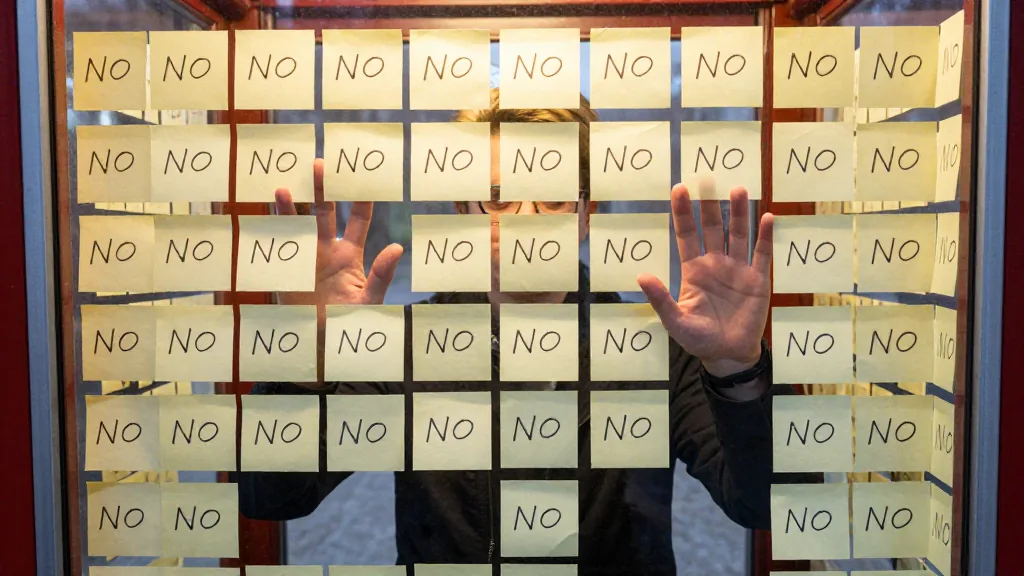
You know the pattern. Someone asks you for help—your mum needs something picked up, your daughter has a last-minute school project, a friend suggests plans—and you automatically say yes. But inside, you're already feeling that familiar tension building.
This is unfair. Why are they placing all this on me? Why do I have to drop everything?
You don't say any of this out loud, of course. You just go quiet. Get a bit grumpy. Withdraw into yourself while you handle whatever needs handling. The people around you notice something's off, but you're already dealing with it, so what's the point of bringing it up now?
If this sounds familiar, you've probably tried the standard advice: "You need to set boundaries. Learn to say no. Stop being such a people-pleaser."
But here's what makes this so frustrating—that advice assumes you're being pressured by demanding, inconsiderate people. That the problem is them asking too much.
And that's not quite right, is it?
What Nobody Tells You About Feeling Forced
When you feel forced into things and resentful about always being available, the natural conclusion is that other people are the problem. They're asking too much. They're not respecting your time. They're taking advantage of your helpfulness.
So the conventional wisdom says: Build walls. Protect your time. Say no more often. Create distance.
But if external pressure were really the problem, you'd expect saying "no" to feel empowering. You'd expect that setting boundaries would make you feel more in control.
Instead, most people find that saying "no" feels terrible. It triggers guilt. It creates conflict. It goes against who they want to be—someone who helps the people they care about.
And more importantly: even when you DO help, even when you say yes and complete the task, you still feel resentful. You still feel forced. You still end up grumpy and withdrawn.
So if the problem were really external pressure, why would helping still feel bad?
The Truth About Who's Forcing You
Here's what I've discovered working with people who struggle with this pattern: The person forcing you isn't your mum, or your friend, or your daughter.
It's you.
Not in a "blame yourself" way. But in a very specific, fixable way.
Let me show you what I mean. Think about the last time someone asked you to help with something. Maybe your mum mentioned she needed meat collected from Gloucester on Saturday. What happened in your head between hearing that request and responding?
For most people caught in this pattern, there's an invisible assumption layer that gets added immediately:
What they said: "I need the meat collected Saturday."
What you heard: "You need to drop everything Saturday morning and drive to Gloucester immediately, regardless of what else you had planned."
Notice the difference?
The actual request was probably something like "this needs to happen sometime Saturday." But you translated it into "this must happen immediately on Saturday morning at the expense of everything else."
You assumed:
- The urgency (right away vs. at some point)
- The timing (morning vs. afternoon vs. evening)
- The non-negotiability (must be you vs. could be someone else)
- The priority (above all your other plans)
And here's the crucial part: you never checked whether any of those assumptions were actually true.
Why Their Urgency Isn't Real
There's fascinating research on something called "organizational citizenship behaviors"—the helpful things people do beyond their formal roles. Studies show these behaviors predict burnout when they're expected rather than voluntary.
Read that again: The same helpful behavior that sustains you when it's voluntary depletes you when it's expected.
But here's what's surprising. In most cases, the "expected" part isn't coming from the other person. It's coming from you.
When you skip the step of clarifying what's actually needed and when it's actually needed, you convert every request into an assumed obligation. You remove your own agency. You force yourself.
Think about your work life for a moment. When someone comes to you with an IT problem, what do you do?
You probably ask:
- "What specifically isn't working?"
- "When do you need this fixed by?"
- "What's the impact if it's delayed until tomorrow?"
- "What's the minimum solution versus the ideal solution?"
These questions aren't resistance. They're professionalism. They help you understand the actual requirements so you can deliver what's genuinely needed.
Now notice what you DON'T do at work: You don't hear "the system is down" and immediately assume it means "drop everything and fix it in the next five minutes regardless of what else is happening."
You clarify. You gather requirements. You negotiate timelines.
But with family? You skip all of that. You hear a request and you manufacture urgency, impose immediate timelines, and create non-negotiable terms that the other person never actually stated.
Then you feel forced by requirements you invented.
Why Asking Matters More Than the Answer
There's research from organizational psychology on something called "idiosyncratic deals"—personalized arrangements people negotiate about their work conditions. People who actively negotiate these arrangements report higher autonomy and lower stress.
But here's the surprising part: the benefit comes not just from getting what you want, but from the act of negotiating itself.
This is counterintuitive. You'd think what matters is the outcome—getting a better timeline, reduced scope, more flexibility. But the research shows that the process of discussion is what restores the sense of agency.
In other words: Asking "When do you actually need this by?" is valuable even if the answer is "today."
Because when you ask and they answer and you agree, you've participated in defining the terms. You've chosen. You haven't been forced.
It's the same action (helping today) with a completely different psychological experience.
When you skip the negotiation:
- You assume obligation → "I have to do this now" → Resentment
When you include the negotiation:
- You discuss and agree → "I'm choosing to do this now" → Willing participation
The actual task might be identical. The emotional experience is completely different.
The Helping Mistake That Burns You Out
Researchers studying workplace helping behaviors have found something else surprising: people who use what they call "strategic helping"—being selective and boundaried about when and how they help—actually maintain their helping behaviors long-term without burning out.
The people who help indiscriminately? They crash.
You might think being boundaried means helping less. But it's actually the opposite.
When you help indiscriminately (automatic yes to everything without clarification), you experience:
- Resentment buildup
- Emotional withdrawal (going grumpy and isolating)
- Eventual burnout
- Reduced total helping over time
When you help strategically (clarifying before committing), you can:
- Help more sustainably
- Maintain consistent availability
- Actually increase total helping over time
- Preserve the relationships while you're helping
The paradox: Being more precise about how you help enables you to help MORE.
The One Question That Stops Resentment
So what does strategic, boundaried helping actually look like?
It starts with treating personal requests the same way you treat professional ones: gather requirements before committing.
Specifically, before you automatically say yes, ask one clarifying question:
"When do you actually need this by?"
That's it. One question.
Not "I can't do that." Not "That doesn't work for me." Just a simple clarification of the actual timeline versus the assumed timeline.
Here's what this question does:
1. Reveals the gap between assumed and actual urgency
- You assume: "immediately Saturday morning"
- They answer: "Oh, whenever you're next over, no rush"
- The manufactured urgency dissolves
2. Opens space for negotiation
- Even if they say "Saturday," you can ask: "Morning or afternoon?"
- "I could do Sunday instead if that works?"
- "Is there someone closer who could grab it?"
3. Converts obligation into collaboration
- You're not refusing
- You're being precise about how to help effectively
- You're bringing professional competence to personal relationships
4. Restores agency through participation
- The negotiation itself (not just the outcome) creates choice
- You're shaping what you're agreeing to
- You're choosing rather than being forced
Being Precise vs. Setting Boundaries
I know what might be running through your mind right now: "But won't asking questions make me seem difficult? Won't they think I don't want to help?"
This is the belief that keeps people trapped in the resentment cycle.
But consider this: At work, when you ask clarifying questions, people don't think you're being difficult. They think you're being professional. They appreciate that you're taking the request seriously enough to understand it properly.
Why would family be different?
When you ask "When do you actually need this by?" you're communicating:
- "I'm taking your request seriously"
- "I want to understand exactly what would be helpful"
- "I'm being thoughtful about how to help you effectively"
That's not resistance. That's respect.
The reframe that changes everything: You're not "setting boundaries" (which sounds adversarial and protective). You're "being precise" (which is professional and helpful).
Same behavior, completely different frame.
What This Looks Like in Real Life
Let's make this concrete. Think about your daughter asking for help with something school-related at the last minute.
Old pattern:
- She mentions she needs help
- You assume this means "right now, drop everything"
- You feel frustrated ("why is this always last-minute?")
- You don't say anything
- You help while feeling resentful
- You go a bit grumpy and withdrawn afterward
- She's confused about why you're upset
New pattern:
- She mentions she needs help
- You ask: "When do you actually need this by?"
- She says: "It's due Thursday"
- You realize: It's Tuesday. There's no actual emergency.
- You say: "I can help you tomorrow evening after dinner"
- You've created a plan that works for both of you
- You help willingly at the agreed time
- No resentment, no withdrawal, clearer relationship
Or even if she says "tonight":
- You've participated in understanding the actual timeline
- You can still negotiate: "I can give you 30 minutes at 7pm, will that work?"
- You're shaping HOW you help rather than being forced into an assumed all-or-nothing
The difference isn't always dramatic in terms of when things happen. The difference is in how you experience what happens.
Chosen helping feels completely different from forced helping, even when the actions are similar.
The Skill You Already Have
The powerful thing about this approach is that you don't need to learn anything new.
You already know how to clarify requirements. You do it every day in your technical work. You already know how to negotiate timelines, manage expectations, and push back professionally on unrealistic demands.
The only barrier is permission.
You've told yourself that behaviors appropriate at work are inappropriate with family. That bringing professional competence to personal relationships would be cold or transactional.
But what if it's actually a sign of respect? That you care enough about your family to give them the same thoughtful, precise service you give colleagues?
What if the skills that make you good at your job could make you better at relationships?
You don't need to become someone new. You need to recognize that you already have this skill, and give yourself permission to use it everywhere, not just at work.
Your Practice for This Week
Here's your experiment for the next week:
Identify one upcoming situation where someone in your family is likely to ask for help. Just one.
When that request comes, before automatically saying yes, ask one clarifying question:
"When do you actually need this by?"
Notice what happens:
- What answer do they give?
- How different is it from what you assumed?
- How does asking the question change how you feel about helping?
- What space does it create for negotiation?
You'll likely discover that the deadlines aren't as immediate as you assumed. That people are more flexible than you thought. That the urgency you've been feeling was largely self-imposed.
And even more importantly: you'll notice that asking the question doesn't make you difficult. It makes you thoughtful.
True dependability isn't about saying yes to everything immediately. It's about understanding what's actually needed and delivering that reliably.
You can be helpful without being resentful. You can be available without being depleted. You can be generous without being forced.
You just need to ask the question.
What Happens When You Start Asking
Once you start clarifying before committing, something interesting happens. The pattern that's been running your relationships becomes visible. You start to see how much of the pressure you've been feeling was coming from inside rather than outside.
You start to reclaim the gap between request and response. That space where your agency lives.
You start to help more sustainably, which means you can help more consistently. You become more helpful by being more precise about how you help.
And you start to notice something else: the people around you probably aren't trying to control your time. They're just making requests, often with flexibility they'd be happy to discuss if you asked.
The assumptions you've been making—about urgency, about non-negotiability, about expectations—start to dissolve when you actually check them against reality.
But there's something we haven't addressed yet. Something that might be hovering at the edge of your mind:
What happens when you DO ask the clarifying question, and people push back? What if they get frustrated? What if they make you feel guilty for not just automatically saying yes? What if asking the question creates the conflict you've been trying to avoid?
That's a different challenge. And it requires understanding something most people miss about the difference between reasonable requests and emotional manipulation.
But that's a conversation for another time.
For now: Ask the question. Notice what happens. See how often the urgency you've been feeling was something you manufactured rather than something they demanded.
You might be surprised by how much control you already have. You just need permission to use it.
What's Next
Stay tuned for more insights on your journey to wellbeing.





Comments
Leave a Comment