

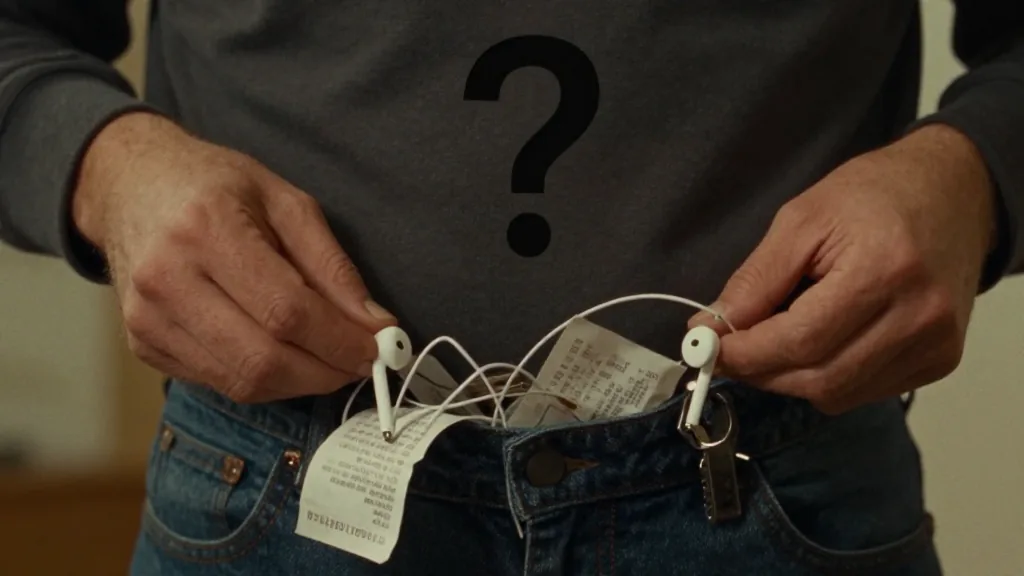
You know you're stressed. You can feel it—the tightness in your chest, the tension climbing into your shoulders, your jaw clenched so hard it aches. But when someone asks you what you're thinking, or worse, when you try to write it down for homework, you draw a complete blank.
It's not that nothing's wrong. It's that the stress shows up as a feeling, not as words. And when therapeutic homework asks you to "track your thoughts when stressed," it feels woolly and unclear—like being handed a complex problem with no defined parameters, no logical process to follow.
If you work well with technical problems that have clear scope, this kind of emotional work can feel maddeningly vague. It becomes one more thing to resist, one more task you don't complete because you don't even know what it's asking you to do.
Here's what most people don't realize: there's a reason this feels hard. And it has nothing to do with being "bad at feelings" or resistant to therapy.
The Body-Reading System Nobody Mentions
Your brain has a network called the interoceptive system that constantly monitors your body's internal state. Right now, it's tracking your heart rate, your breathing, muscle tension, temperature, gut sensations—hundreds of signals streaming in every second.
When something shifts—your heart rate climbs, your muscles tense, your breathing shallows—a region of your brain called the insula detects these physiological changes. But here's where it gets interesting: that same region also helps you become aware of your emotional state and create meaning from those sensations.
The insula is essentially translating body signals into conscious awareness. It's the bridge between "my chest feels tight" and "I'm frustrated that I can't finish this task."
But here's the part almost no one talks about: people vary widely in their ability to perceive and interpret these bodily signals. Research shows that interoceptive awareness—your ability to read your body's data and translate it into identifiable thoughts—exists on a spectrum.
For some people, the pathway from body sensation to conscious thought is like a well-worn trail. They feel something, and the associated thought pops up immediately.
For others, it's like trying to navigate through fog. The signal is there, but the meaning doesn't automatically appear.
You're not doing something wrong. You're working with a different baseline level of interoceptive awareness—and it's a skill you can systematically develop.
Why 'Track Your Thoughts' Advice Fails
Most stress management approaches assume you should be able to access your thoughts directly. "What are you thinking?" "Write down your thoughts." "Notice your mental state."
But if your interoceptive pathway isn't well-worn yet, this is like asking you to read a file that won't open. You know something's there, but you can't access it with the method you're being given.
So the homework sits undone. The feeling of stress gets stronger (now you're stressed about not doing the stress homework). And you conclude that "woolly, feeling, questioning" tasks just aren't for you—you're better with clear, defined problems.
But what if the problem isn't you? What if it's the approach?
Your Body Sensations Are Diagnostic Signals
Here's the shift that changes everything:
Those physical sensations aren't obstacles to identifying your thoughts. They're diagnostic signals that can trigger a systematic process.
That tightness in your chest? It's not static obscuring the signal—it's an error message telling you exactly where to look.
Think of it like technical diagnostics. When a system throws an error, you don't ignore the alert and try to guess what's wrong. You use the alert as your starting point, then work backwards through the logs to find the cause.
Your body works the same way. The physical sensation is the alert. The situation is the context. The thoughts are what you find when you trace backwards.
Most people have this backwards. They think they need to access thoughts first, and the body is just... in the way. But for many people, the body is actually the most reliable entry point.
3 Steps to Identify Your Stress Thoughts
Here's your systematic method—structured like any technical problem with clear parameters:
Step 1: Notice and Name the Physical Sensation
"I feel tightness in my chest."
"My shoulders are tight and raised."
"There's a fog in my head and my limbs feel heavy."
You're not trying to make it mean anything yet. You're just capturing the data.
Step 2: Identify the Situation
What were you doing when you noticed that sensation? What just happened?
"I was trying to finish posting a parcel before collecting my daughter, but the queue was long."
"I just completed the overnight release deployment because my colleague was sick."
Again, no interpretation yet. Just the facts of what was happening.
Step 3: Ask "Why Did I Feel This Way About That Situation?"
Now you work backwards from the situation to extract the thoughts.
Let's take the parcel post example. When you ask "Why did that situation trigger chest tightness and frustration?" what thoughts emerge?
- "I'm frustrated I couldn't just finish this task"
- "I'm being forced to do something I didn't plan for"
- "This is taking time I don't have"
There they are. Three distinct, identifiable thoughts that were filling your stress cup. You found them by working backwards from the physical sensation through the situation.
Or take the overnight release. When you ask why working through the night left you feeling wiped out and foggy:
- "I have to carry this when others can't"
- "There's no slack in the system—if one person is out, everything falls on me"
- "I can't recover because there's already pressure to get on with next year's work"
You just translated physical fog and exhaustion into three concrete thoughts about burden, system fragility, and lack of recovery time.
This isn't woolly anymore. It's a defined procedure with clear steps.
Why the Situation Isn't the Problem
Here's something that seems obvious once you see it, but most people never consciously think about it:
It's not the situation itself causing your stress. It's the way you think about the situation.
Research in cognitive appraisal theory demonstrates that two people can experience the exact same situation with completely different stress responses depending on how they interpret it.
The parcel post queue isn't inherently stressful. Someone with an empty schedule might think "slight inconvenience." But your interpretation—"another time drain I didn't plan for," "being forced to do something I don't want"—those thoughts are what triggered the chest tightness.
This connects to something important: imagine you have a stress cup that can only hold so much. Each thought, each frustration, adds liquid to that cup.
When you'd spent half-term at your parents' house sorting things for your mum instead of getting a break, your cup was already nearly full. So when the parcel post situation came up, even though it was objectively minor, your thoughts about it ("another time drain") pushed the cup over the edge.
When your cup is nearly full, your reactions are more easily triggered and harder to manage. The same situation that would barely register when your cup is empty can overflow everything when your cup is already high.
And here's the powerful part: if thoughts are what fill the cup, and you can identify the thoughts, then you have data you can work with.
The Trainable Skill Nobody Mentions
Most therapeutic homework—most stress management advice in general—assumes that thought identification is intuitive. That everyone can just... do it.
But interoceptive awareness is a specific, measurable skill that varies widely between individuals. Some people have naturally high awareness. Others don't—yet.
The critical factor almost no one mentions is that this skill is trainable.
Your insula and interoceptive system aren't fixed. Research shows that deliberate practice improves your ability to perceive and interpret bodily signals. The pathway from sensation to thought becomes clearer, faster, more automatic.
But you need a method. And for people who work well with technical problems and structured objectives, that method needs clear steps—not vague instructions to "notice your feelings."
How to Practice This Week
Your physical stress signals—the tightness, the clenching, the fog, the tension—are your diagnostic triggers.
When you notice them, run your three-step process:
- Notice and name the physical sensation — "I feel tightness in my chest"
- Capture the situation — "I'm trying to meet the deadline for next year's work"
- Ask "Why did I feel this way about that?" — Extract the specific thoughts
Write down what you find. Not because writing is therapeutic magic, but because you're collecting data.
You're building your interoceptive awareness skill. You're strengthening that pathway between body signal and conscious thought. You're learning to read the error messages your system is already sending.
This isn't woolly. It's a systematic diagnostic process—the kind of clear, defined task you already know how to do well.
What Seeing Your Thoughts Makes Possible
Once you can reliably identify the thoughts filling your stress cup, something becomes possible that wasn't before.
You mentioned that once you could see those thoughts clearly—"I can't finish this task," "I'm being forced to do something unwanted"—your technical mind wanted to test if they're accurate. To problem-solve around them if they are true.
That instinct is exactly right. But you can't test or problem-solve thoughts you can't see.
The three-step diagnostic gives you visibility. It turns vague physical stress into specific thoughts you can examine.
And once you can examine them... well, that's where things get interesting.
But first, you need the data.
What's Next
Stay tuned for more insights on your journey to wellbeing.





Comments
Leave a Comment