

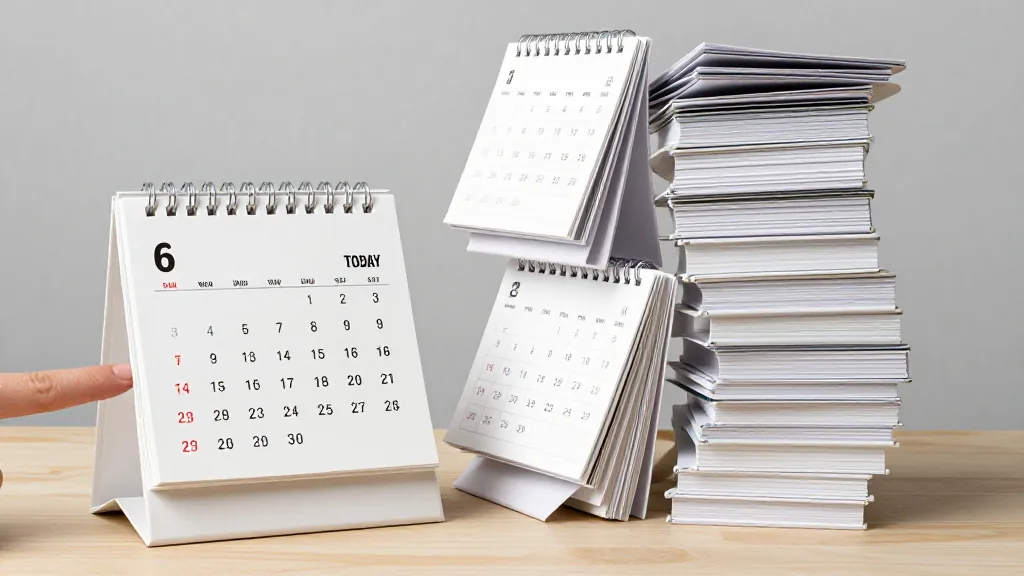
It usually begins with something you know you should do - but somehow can't.
The Procrastination Move That's Making It Worse
You've been sitting with that theory test study material for weeks now. Maybe months. You know you should be preparing. You know the test is coming. You know that postponing it again won't make it easier.
And yet, every time you sit down to study, something happens. Your chest tightens. Your mind starts racing through everything that could go wrong. And suddenly, checking your phone feels urgent. Making tea becomes necessary. Anything but those practice questions.
You've probably called this procrastination. Maybe you've beaten yourself up about it. Called it a bad habit. Told yourself you just need more discipline, more willpower, more focus.
What if I told you that everything you've been doing to fix your procrastination is actually making it worse?
The 'Fix-It' Approach You've Been Using
Let's map out the approach you've been taking-the one most people take when they're struggling with procrastination.
First, you recognize you're avoiding something important. The theory test. The study sessions. The thing that matters.
Then, you try to force yourself to do it anyway. You set intentions. You make plans. You tell yourself "today is the day." You might even open the practice tests.
When the anxiety hits-that chest tightness, that overwhelming dread-you try to push through it. Or you try to talk yourself out of it. "Just focus. Stop being lazy. Other people can do this."
When that doesn't work, when you reach for the distraction anyway, you feel guilty. You criticize yourself. You call it a character flaw, a bad habit, weakness.
And then, because you're already feeling terrible, you try to compensate by doing more. Learning multiple things at once. Rushing through everything. Proving you're not lazy.
Which leaves you exhausted. Depleted. Even less able to handle the discomfort of studying.
So when you sit down to try again, the anxiety feels even more unbearable. The pull toward avoidance gets even stronger.
And the cycle continues.
This is the standard method for dealing with procrastination: recognize it, fight it, feel guilty about it, try harder, deplete yourself further, repeat.
You've been following this method not because you're doing something wrong, but because it's what everyone does. It's what makes sense. It's what "common sense" tells us procrastination requires.
But here's what's fascinating: research on procrastination shows that this approach-the trying harder, pushing through, willpower-based approach-doesn't just fail to solve the problem.
It actively makes it worse.
Warning: Procrastination Isn't What You Think
What if procrastination isn't actually a habit at all?
What if it's a strategy?
Stay with me here, because this flip changes everything.
When you reach for your phone instead of the practice questions, your brain isn't being lazy. It's doing something very specific: it's trying to reduce your distress right now, in this moment.
The chest tightness is real. The dread is real. The overwhelming sense that you can't handle this is real.
And your brain has discovered that distraction provides immediate relief from those feelings.
Research on procrastination has revealed something counterintuitive: procrastination is primarily an emotion regulation problem, not a time management issue. When stressful contexts deplete your coping resources, they lower your threshold for tolerating negative emotions. Procrastination serves as a low-resource way of avoiding those aversive feelings.
In other words: procrastination works.
Not in the long term, obviously. But in the moment? It successfully accomplishes exactly what your brain is trying to do-make the bad feeling go away.
The standard approach of trying harder, forcing yourself, using willpower-that's all based on the assumption that procrastination is a failure of discipline. A character flaw to overcome.
But once you see it as emotion regulation, everything inverts.
Fighting procrastination with willpower is like trying to fix a smoke alarm by smashing it with a hammer. You're attacking the wrong thing.
The reversed approach? Stop fighting the procrastination. Start addressing what makes the emotions so unbearable in the first place.
When you're already running on empty-trying to learn multiple things simultaneously, rushing through everything, depleted and exhausted-your ability to tolerate uncomfortable feelings plummets. The anxiety becomes less bearable. The pull toward avoidance gets stronger.
So the first reversal is this: instead of adding more demands ("try harder, do more, push through"), you reduce the load.
Instead of forcing yourself into hour-long study sessions, you commit to two minutes. Just two minutes.
Two minutes doesn't trigger the overwhelming dread. Two minutes doesn't require the emotional resources you don't have. Two minutes reduces what psychologists call the "activation energy"-the effort needed to get started.
And here's what's strange: once you've started, the anxiety often drops. Because anxiety is usually highest before you begin.
This isn't about lowering your standards. It's about understanding what actually prevents you from starting-and working with that reality instead of against it.
The One Reframe That Flips Procrastination
Once you see procrastination as emotion regulation rather than laziness, your entire relationship with it shifts.
Because now the question isn't "Why can't I just do it?"
The question becomes: "What am I trying to avoid feeling?"
For years, people who struggle with procrastination have believed they're fighting a character flaw. Something wrong with them. A weakness to overcome through discipline and willpower.
But research shows that when anxiety arises from unmet psychological needs-like feeling competent, or feeling in control, or feeling safe-people prioritize immediate emotion regulation through procrastination. It's a maladaptive coping strategy that temporarily reduces distress but creates long-term consequences.
This means your procrastination isn't evidence that you're lazy.
It's evidence that you're anxious.
And anxiety isn't a character flaw either. It's information.
Think about what happens when you postpone the theory test. You feel relief, right? The pressure drops. You can breathe again.
But what message does that send to your brain?
It sends the message that the test really is dangerous. That it really is something you can't handle. That avoiding it was the right call because look how much relief you feel.
Every time you avoid something because it makes you anxious, you're teaching your brain that the anxiety was justified. You're confirming the threat.
This is why the standard approach backfires. Trying to force yourself through anxiety while treating procrastination as a character flaw creates a double bind: you're fighting yourself on two fronts.
The paradigm shift is recognizing that both the anxiety and the procrastination are your brain trying to protect you. They're not the enemy.
The enemy is the pattern where avoidance prevents you from learning what you're actually capable of handling.
Because here's what you don't learn when you postpone the test: that you could survive it. That failing wouldn't destroy you. That the anxiety would peak and then pass. That you might even surprise yourself.
Your success vision mentioned an analogy about anxiety being like rain clouds-a signal that something good is coming. That reframe matters because it shifts anxiety from a danger signal to a growth signal.
But you only learn that anxiety can signal opportunity if you move toward it instead of away from it.
And you can only move toward it if you stop depleting yourself trying to be something you're not.
What's Really Driving Your Avoidance
So if procrastination is emotion regulation, and anxiety is information, what's really driving this pattern?
Most people assume procrastination comes from poor time management or lack of discipline. When they can't get themselves to study, they blame laziness. They try to fix it with better schedules, stricter rules, more accountability.
But in most cases, the real culprit is something deeper: depleted psychological resources combined with an avoidance pattern that maintains anxiety.
Here's how it works.
You're already running on empty. Trying to learn multiple things at once. Rushing through everything. Your attention is fractured. Your energy is scattered.
When you're in that state, your threshold for tolerating discomfort drops dramatically. Things that might be manageable when you're resourced become unbearable when you're depleted.
So when you sit down to study and the anxiety hits, you don't have the capacity to sit with it. The feeling is too big. The resources are too small.
Procrastination becomes the only option that makes sense in that moment.
But here's the hidden part: every time you avoid the test prep, you're preventing yourself from learning that the feared outcome-failing, feeling embarrassed, whatever it is-is either unlikely or something you could manage.
Cognitive models of anxiety show that avoidance and safety behaviors maintain anxiety because they prevent people from experiencing disconfirmation of their unrealistic beliefs. You never get the evidence that your fears are overblown.
And without that evidence, the anxiety stays strong. Which makes the next study session even harder to face. Which makes procrastination even more necessary.
Meanwhile, the repeated failures on mock tests-scoring 38, 39, 40, 41 when you need 43-are creating a self-efficacy crisis.
Research shows that when people with low self-efficacy experience difficulties, stress and anxiety increase, which impairs performance, which lowers self-efficacy even more. It's a negative spiral.
So you're not just dealing with "procrastination as a bad habit."
You're dealing with:
- Depleted resources from spreading yourself too thin
- Anxiety maintained by avoidance patterns
- Declining confidence from repeated failures
- An emotion regulation strategy (procrastination) that works in the short term but prevents long-term learning
The cause behind the cause isn't that you're lazy or undisciplined.
It's that you've created the perfect conditions for procrastination without realizing it.
The Truth About Your 'Bad Habit'
If all of this is true-if procrastination is emotion regulation, if avoidance maintains anxiety, if you've been inadvertently creating the conditions that make procrastination inevitable-then what does that mean?
It means that every time you've blamed yourself for being lazy, you were blaming yourself for trying to manage overwhelming feelings with the only tool you had available.
It means that every time you've tried harder, pushed harder, demanded more of yourself, you were actually making the problem worse by depleting the resources you needed to face the discomfort.
It means that postponing the test isn't protecting you from failure.
It's guaranteeing that the anxiety stays strong, the confidence stays low, and the pattern continues.
And it means that the thing you've been calling your "bad habit"-the procrastination you've spent so much energy fighting and feeling guilty about-has been doing exactly what it was designed to do.
It's been protecting you from feelings you didn't know how to handle.
The uncomfortable truth is that you can't hate yourself into changing this pattern.
You can't discipline your way out of an emotion regulation problem.
And you can't avoid your way to confidence.
Your Next Move (It's Not What You Think)
This might feel destabilizing.
If the problem isn't what you thought it was, if the solution is the opposite of what you've been doing, if the thing you've been fighting is actually trying to help you-where does that leave you?
It leaves you with a choice.
You can keep following the standard method: try harder, feel guilty, deplete yourself further, watch the pattern continue.
Or you can try the reversal.
Recognize procrastination for what it is-emotion regulation, not character failure.
Stop adding more demands when you're already depleted. Focus on the theory test. Just the theory test. Nothing else until you pass.
When you notice the urge to procrastinate, get curious instead of critical. "What am I trying to avoid feeling right now?"
Commit to two minutes when the resistance shows up. Not two hours. Two minutes. Lower the activation energy.
Practice the reframe: when anxiety appears, tell yourself "this feeling means something valuable is about to happen" instead of "this is dangerous."
And keep the test appointment. Even if you don't feel ready. Even if you might not pass.
Because postponing is just more avoidance. And avoidance is what maintains the anxiety.
You don't need to fix yourself. You need to understand how you work, and work with that instead of against it.
Sit with that for a moment.
What would it feel like to stop fighting yourself?
What Happens When You Stop Fighting Yourself
Understanding that procrastination is emotion regulation rather than laziness opens a door.
But it also raises a question.
If the pattern is maintained by avoidance-by not learning that you can handle the feared outcome-then what happens when you do face it?
What happens when you take the test, whether you pass or not, and discover that you survive it?
What happens when the two-minute commitments start becoming ten minutes, twenty minutes, not because you're forcing yourself but because the activation energy dropped?
What happens when you prove to yourself that anxiety can be a signal of growth rather than danger?
What happens when you stop depleting yourself trying to be everything at once, and instead focus on one thing until it's done?
There's a version of you on the other side of this pattern.
Someone who understands their anxiety instead of fighting it.
Someone who recognizes procrastination as information instead of failure.
Someone who knows how to work with their nervous system instead of against it.
The path there doesn't start with trying harder.
It starts with trying differently.
And it starts with the next two minutes.




Comments
Leave a Comment