

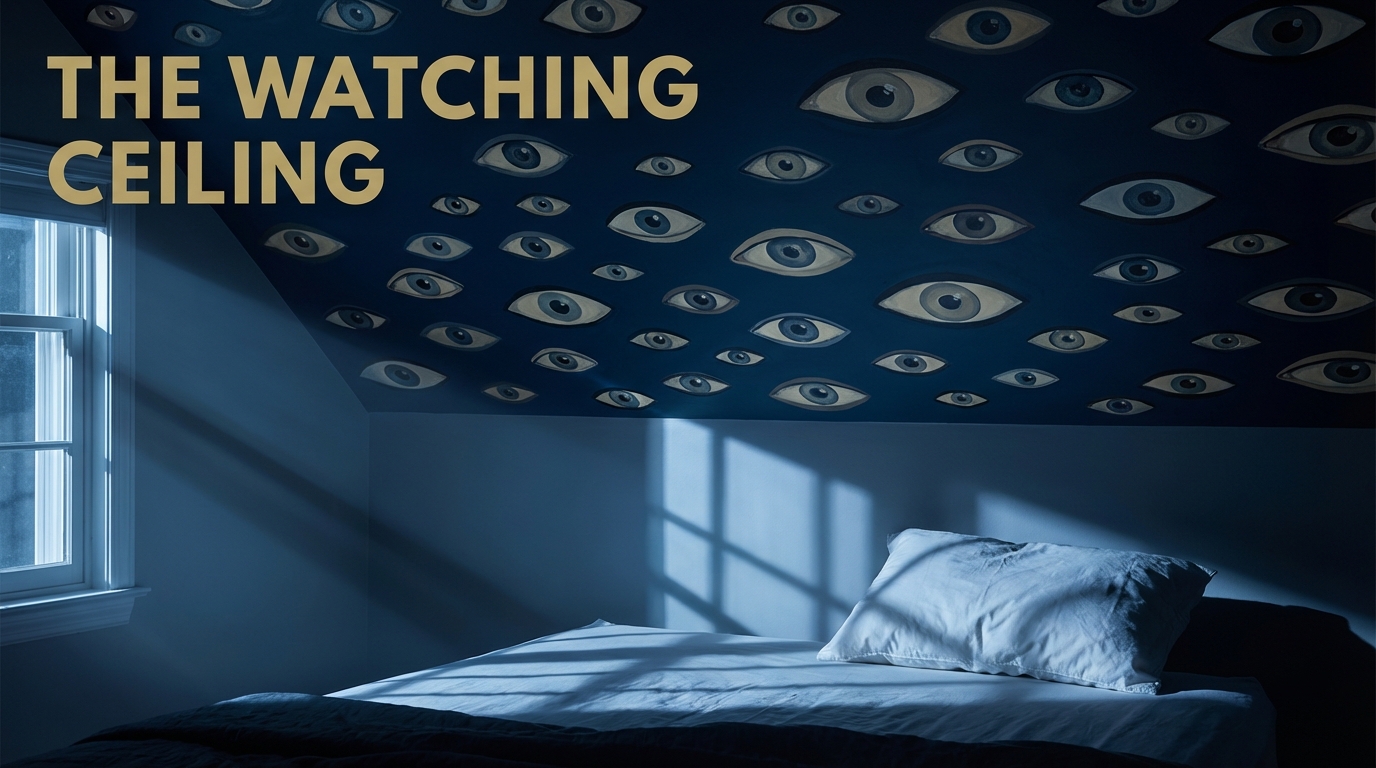
By the end of this page, the fear that keeps you reading until you're too exhausted to stay awake will begin to loosen its grip — so you can finally put down the book, close your eyes, and let sleep take you.
Here's the thing about solving sleep problems — you might be fixing the wrong one.
Why Everything You've Tried to Fix Your Sleep Is Solving the Wrong Problem
You've done everything right.
Dimmed your screens. Adjusted your bedroom temperature. Cut back on caffeine (mostly). Established a wind-down routine. Maybe you read before bed—something calming, with the brightness turned way down.
And still, night after night, the same pattern: sometimes you can't fall asleep until 4am. Sometimes you drift off quickly, only to jolt awake thirty minutes later. Then you're up again at 2am. And 4am. And when your alarm finally goes off, you feel like you never really slept at all.
Five or six hours of broken sleep. Never feeling fully rested. For years. Maybe decades.
Here's what nobody tells you: if you've tried all the standard sleep hygiene advice and nothing has worked, you're probably not dealing with a sleep problem.
You're dealing with something else entirely.
The One Question About Sleep That No One Ever Asks You
Think about what happens when you put down your book or turn off your tablet at night. Not the moment you close your eyes—the moment before that. When you're lying in the dark with nothing to focus on.
What happens in your mind?
For most chronic insomniacs, there's a specific quality to that moment. It's uncomfortable. The mind starts racing. Thoughts intrude. There's an urge to pick the book back up, to check the phone one more time, to do anything other than lie there in the quiet dark.
Most people assume this is just "anxiety" or "a busy mind." Standard advice says to practice relaxation techniques or think calming thoughts.
But what if the discomfort isn't random? What if there's something specific your mind is trying to avoid?
What Does It Mean to Lose Consciousness Every Night?
Consider this: falling asleep means losing consciousness. It means surrendering control. It means—in a very literal sense—switching off.
For most people, this is unremarkable. But for some, that transition carries a weight they've never consciously examined.
When you let go and drift into sleep, where do you go? What happens when you stop being aware? What if you don't come back?
These aren't questions most of us ask ourselves directly. But for people with chronic, treatment-resistant insomnia, these questions often lurk just beneath the surface—shaping behavior without ever being spoken aloud.
The fear of sleep, in many cases, is actually a fear of something that looks like sleep.
Death.
The Truth About Sleep and Death That Your Brain Already Knows
This might sound extreme. You might be thinking: "I'm not afraid of dying. I just can't sleep."
But consider: research shows that death anxiety—what psychologists call thanatophobia—is often unconscious. People experience it as general unease, difficulty "switching off," or a vague sense that something bad will happen if they lose control.
And here's where it gets specific: studies on childhood trauma show that witnessing death during formative years has documented long-term effects on sleep. The nervous system learns a lesson it never unlearns.
If you ever experienced a death that was connected to sleep—a grandparent who "went to sleep and didn't wake up," a family member who died in the night, someone you found in bed in the morning who had passed—your brain may have made a connection you never consciously registered:
Sleep can equal death.
And if that connection exists, your insomnia isn't a malfunction.
It's protection.
Why Your Insomnia Isn't a Problem—It's Protection
Think about it from your nervous system's perspective.
If sleep might mean never waking up, what would a protective system do?
It would keep you alert. It would make falling asleep difficult. It would wake you repeatedly throughout the night to "check" that you're still alive. It would make you feel uncomfortable the moment you try to let go.
This isn't dysfunction. This is your body doing exactly what it believes it should do based on what it learned.
The problem is that the lesson was wrong.
You're not actually in danger. Sleep won't kill you. But your nervous system doesn't know that—because you've never given it the chance to learn otherwise.
The Bedtime Habit That's Actually Making Your Insomnia Worse
Here's where the standard sleep advice becomes counterproductive.
That reading you do before bed? The scrolling, the podcasts, the TV shows? These feel like "winding down." They seem helpful.
But what are they actually doing?
They're keeping your mind occupied so you don't have to feel the discomfort of lying in the dark alone.
In psychological terms, this is called avoidance. And research is clear on what avoidance does to fear: it maintains it.
Here's the mechanism: your brain has a natural process called habituation. When you're exposed to something frightening but nothing bad actually happens, your fear response gradually decreases. This is how fears naturally fade—through repeated exposure without the feared outcome occurring.
But avoidance prevents this process.
Every time you distract yourself to avoid the uncomfortable moment of letting go, you're teaching your brain: This is so dangerous we can't even face it. The fear never gets a chance to fade because you never let yourself sit with it long enough to learn it's safe.
Your reading habit—the thing you thought was helping you wind down—may have been keeping your fear alive for years. Maybe decades.
Sleep Hygiene Not Working? Here's Why It Never Will
This explains why sleep hygiene alone rarely fixes chronic insomnia with psychological roots.
You could have the perfectly dark room. The ideal temperature. Zero caffeine after noon. Organic lavender pillow mist.
And you'd still lie awake—because the problem isn't your environment.
The problem is that your nervous system believes sleep is dangerous, and you've been inadvertently confirming that belief every night by avoiding the transition rather than facing it.
The Proven Method That Actually Works for Fear-Based Insomnia
So what actually works?
The same thing that works for every fear: exposure.
Meta-analyses show that exposure therapy is the most effective treatment for death anxiety. Not medication. Not relaxation techniques. Not years of talk therapy exploring your childhood.
Deliberate, structured exposure to the thing you fear.
This sounds terrifying—and that's partly the point. The fear feels huge precisely because you've been avoiding it. But here's what the research shows: exposure-oriented treatments can produce significant symptom relief remarkably quickly. Some studies show meaningful improvement in as little as one focused session.
That's not to say you'll be cured overnight. But the timeline most people imagine—years of therapy, endless processing, maybe never getting better—is based on approaches that avoid the core fear rather than face it.
When you address the root directly, change can happen faster than you'd think.
How to Change Your Image of Death Without Years of Therapy
One technique with strong research support is called imagery rescripting. It doesn't erase traumatic memories—but it changes your relationship to them.
If your image of death is cold, empty, terrifying—oblivion, void, nothing—then of course your body fights sleep. Who would willingly walk toward that?
But your brain responds to imagery. The picture you hold shapes your emotional response.
What if you reimagined it?
Some people find it helpful to picture death not as darkness, but as arriving at a gathering. A warm room. People you've lost are there—healthy, happy, pleased to see you. The grandmother who passed. The friend who died too young. The beloved figure from your childhood.
Is this accurate? We don't know what happens after death. But accuracy isn't the point. The point is giving your brain a different picture to work with—one that doesn't trigger protective panic every time you try to let go.
For people whose death imagery is rooted in traumatic experiences, this simple reframe can loosen the grip that fear has held for decades.
4 Things You Can Do Tonight to Start Facing the Fear
You don't need to overhaul everything at once. Start small.
First: Tonight, when you put down your book or tablet, don't immediately try to sleep. Instead, lie in the dark for two or three minutes and notice what comes up. Don't fight it. Don't distract from it. Just observe. This is the beginning of exposure—letting yourself feel the discomfort without running from it.
Second: If death-related thoughts arise, try the reframe. Instead of pushing the thoughts away (avoidance), let yourself imagine something warmer. A reunion rather than an ending. This isn't denial—it's giving your brain an alternative to the terrifying imagery it currently defaults to.
Third: Address the supporting factors. If your room is too warm, a cooling blanket lets you and your partner both win. If you're drinking five cups of strong tea daily, know that research shows caffeine reduces total sleep time by 45 minutes even when consumed many hours before bed. These aren't the root cause—but they're not helping.
Fourth: Recognize what you've just learned. If you've had chronic insomnia your entire life and just realized it might be connected to a fear you never consciously acknowledged, that's significant. Understanding why is the first step to addressing it.
What Happens When You Finally Stop Fighting Sleep?
Here's something interesting: research shows that death anxiety is what psychologists call a "transdiagnostic construct." It's linked not just to sleep problems, but to depression, anxiety, even panic. Addressing this one fear often improves more than just your nights.
But that raises a question worth sitting with:
If you've spent years—maybe your whole life—unconsciously protecting yourself from death, what happens when that fear loosens its grip?
What do you actually want to focus on while you're alive?
You might not have an immediate answer. That's okay. For someone who's been in survival mode around sleep for decades, the question of what you're living for might feel surprisingly unfamiliar.
But it's a question worth exploring.
Because fixing your sleep isn't just about getting more rest. It's about reclaiming the nights you've lost—and the energy to actually live your days.
What's Next
Once the fear of death is reduced through exposure, what do you actually want to focus on while you're alive? How do you shift from avoiding death to embracing life?
References
- Menzies, R. E., Brown, J., & Marchant, J. (2025). "To die, to sleep": A systematic review and meta-analysis of the relationship between death anxiety and sleep. Journal of Anxiety Disorders, 112, 103001. https://doi.org/10.1016/j.janxdis.2025.103001
- Iverach, L., Menzies, R. G., & Menzies, R. E. (2014). Death anxiety and its role in psychopathology: Reviewing the status of a transdiagnostic construct. Clinical Psychology Review, 34, 580-593. https://doi.org/10.1016/j.cpr.2014.09.002
- Holmes, E. A., & Mathews, A. (2010). Mental imagery in emotion and emotional disorders. Clinical Psychology Review, 30(3), 349-362. https://doi.org/10.1016/j.cpr.2010.01.001



Comments
Leave a Comment