


You wake up feeling good for the first time in weeks. Actually good - like your old self. Energy is there, focus is sharp, that crushing fatigue has finally lifted.
So you do what anyone would do: you make the most of it.
You tackle that project you've been putting off. Make the phone calls. Go for a longer walk. Finally prove to yourself that you're not broken, that you can still be productive when you try.
By evening, you're completely wiped. By the next morning, you can barely get out of bed. And for the next two or three days, you're non-functional.
What just happened?
Why Pushing Through Backfires
Here's what makes this so frustrating: the crash doesn't happen when you push through on a bad day. It happens when you finally feel good and try to use that energy.
It feels like your body is punishing you for trying. Like the more capable you feel, the harder you'll pay for it later.
Most advice says "listen to your body" and "rest when you need to." But you did listen - your body said it had energy, so you used it. What were you supposed to do, ignore a good day and rest anyway?
If you've asked yourself this question, you're not alone. And the answer involves something most people don't see.
The Two Types of Energy Nobody Explains
In engineering, there's a critical distinction between capacitors and batteries.
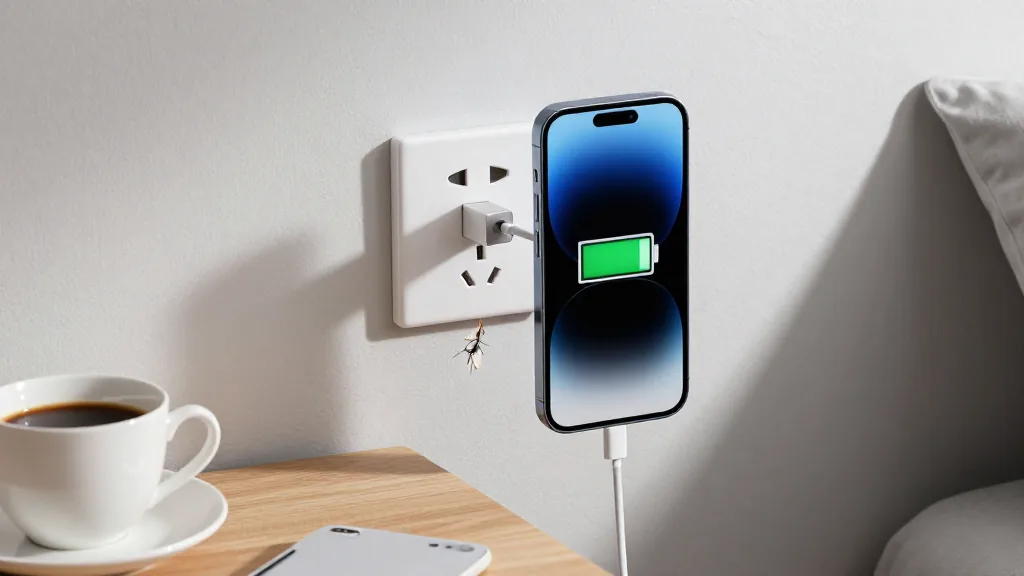
A battery delivers steady, sustainable power over time. It charges slowly and discharges gradually. When a battery shows 70% charge, you can plan around that - it'll give you predictable output until it actually drains.
A capacitor is different. It can deliver massive power instantly - but it drains to zero just as fast. It's a voltage spike, not sustained charge.
Here's the question that changes everything: when you wake up feeling good after weeks of fatigue, which system are you running on?
Most people assume it's the battery. They think: "I'm finally recharged. I'm back to normal."
But what if it's the capacitor?
When Your Battery Indicator Lies
You know how some older laptops would show 80% battery charge, then just shut off ten minutes later?
The voltage detection system was seeing a temporary spike and reporting it as sustained charge. The battery indicator said "plenty of power," right up until there was none.
That's not a metaphor for what happens with chronic fatigue. That's exactly what's happening.
When you wake up feeling good, you're experiencing capacitor energy - likely adrenaline, maybe circadian rhythm alignment, possibly stress hormones compensating. It feels identical to being recovered. The "charge indicator" in your brain reports high energy.
But it's a voltage spike, not a full battery.
And when you discharge a capacitor to zero - which is exactly what you do when you "make the most of" a good day - it doesn't gradually drain. It crashes.
What Actually Causes the Crash
So the crashes aren't punishment for trying. They're not your body failing you.
They're the predictable result of two things:
1. Misidentifying the energy type - treating capacitor energy (temporary spike) as battery energy (sustainable charge)
2. Discharging to zero - using 100% of perceived capacity instead of maintaining reserves
Every time you've crashed after a good day, this is what happened. You read the voltage spike as full charge and drained it completely.
The frustrating part? The feeling is identical. There's no subjective way to tell the difference between "I'm running on a temporary adrenaline spike" and "I'm actually recovered" - they both feel like energy.
Which means your feelings are giving you bad data exactly when you need good data most.
Why You Should Waste Your Good Days
In control systems engineering, when you're working with an unreliable power source, you never discharge to zero. You build in safety margins.
If your battery indicator says 70%, you plan like you have 40%.
Here's the principle applied to you: On a day when you feel 10/10 energy, only spend 70% of what you think you have.
This feels wrong. It feels like leaving productivity on the table. Like wasting a rare good day.
But let me ask you this: what actually happens when you spend 100% on a good day?
You crash. Every single time.
And what happens to your total productive output over a week when you have one 100% day followed by three 0% days?
You get one good day.
Now what happens if you spend 70% on day one, keep 30% in reserve, and have enough left over to manage 50% on day two?
You get two functional days instead of one good day and three crashed days.
The 30% "left on the table" isn't wasted. It's what buys you a second day instead of a crash.
How to Track Energy Without Trusting Your Feelings
But here's the problem: if your subjective feelings can't tell you whether you're running on capacitor or battery energy, what can?
This is where leading indicators come in.
In industrial systems, we don't wait for the boiler to fail. We monitor temperature, pressure, and vibration - signals that predict failure before it happens.
For you, there are behaviors that change before you feel the crash coming:
- Hygiene sensor: You stop shaving, or showering becomes irregular
- Social sensor: You stop texting your brother, or don't return calls
- Diet sensor: You're eating biscuits instead of actual meals
These aren't symptoms of the crash. They're early warning signals.
If two of these sensors trigger - even if you feel fine - you're in pre-crash territory.
This is the forgotten factor that most energy management advice misses: objective behavioral indicators are more reliable than subjective feelings during bounce-back states.
Why Safe Mode Is Success
When two sensors trigger, you don't wait to feel bad. You don't have a debate with yourself about whether you're "really" tired enough to rest.
You activate Safe Mode.
In your technical work, you understand this principle: when a system becomes unstable, you don't load complex processes. You run only essential operations until stability returns.
Safe Mode for you means:
- Sleep (non-negotiable)
- Basic food (not optimized, just eaten)
- Short walk (maintenance level)
- No projects, no obligations, no decision-making about whether you're "sick enough" to rest
The system decides based on sensor data, not feelings.
And here's the paradigm shift: Safe Mode isn't failure. It's proper system operation.
A nuclear reactor going into safe shutdown isn't broken. It's working exactly as designed. The safety protocol is a feature, not a bug.
The same applies to you.
The Traffic Light System
Make this concrete. You need a protocol that operates automatically, without requiring judgment calls when your judgment is least reliable.
Green Light (Energy > 7/10):
- Normal activities permitted
- 70% capacity rule in effect - maintain 30% reserve
- This is not unlimited mode; this is normal operations with safety margin
Amber Light (Energy 4-6, OR two sensors triggered):
- Safe Mode activates automatically
- Essential processes only: sleep, food, short walk
- Disable: projects, social obligations, self-judgment about "deserving" rest
- Triggers on sensor data even if you feel fine
Red Light (Energy < 4, OR system in crash state):
- Emergency Stop protocol
- Sleep, water, survival basics only
- Following this protocol isn't failure - it's the system working as designed
How to Start Right Now
1. Make your Traffic Light card - write Green/Amber/Red with the rules above. Keep it visible.
2. Define your sensors - What specific behaviors tell you you're declining? Be concrete. "Stop shaving" is better than "hygiene gets worse."
3. Run the experiment - For two weeks, on every day that feels "good," artificially limit yourself to 70% of what you think you can do. Track your total functional days versus your previous pattern.
4. Build your Safe Mode list - Right now, write down exactly what "essential processes only" means for you. When you're in pre-crash, you won't have bandwidth to figure this out.
The Truth About Your Crashes
You've been treating crashes as failures. They're not. They're predictable outcomes of misidentifying energy type and discharging to zero.
You've been trusting your feelings on good days. But voltage spikes feel identical to true charge - there's no subjective difference.
You've been oscillating between "I'm finally better" and "I'm broken." Neither is true. You're a system that needs proper energy management and sensor-based protocols instead of feeling-based decisions.
The engineering mindset you use for technical work? Apply it to yourself.
And the next time you wake up feeling good? That's not the end of the crash cycle. That's when the cycle begins - unless you treat it like the voltage spike it might be, maintain your reserves, and let your sensors override your feelings.
You're not leaving productivity on the table. You're building a maintenance schedule that prevents crashes instead of guaranteeing them.
What's Next
Stay tuned for more insights on your journey to wellbeing.




Comments
Leave a Comment