

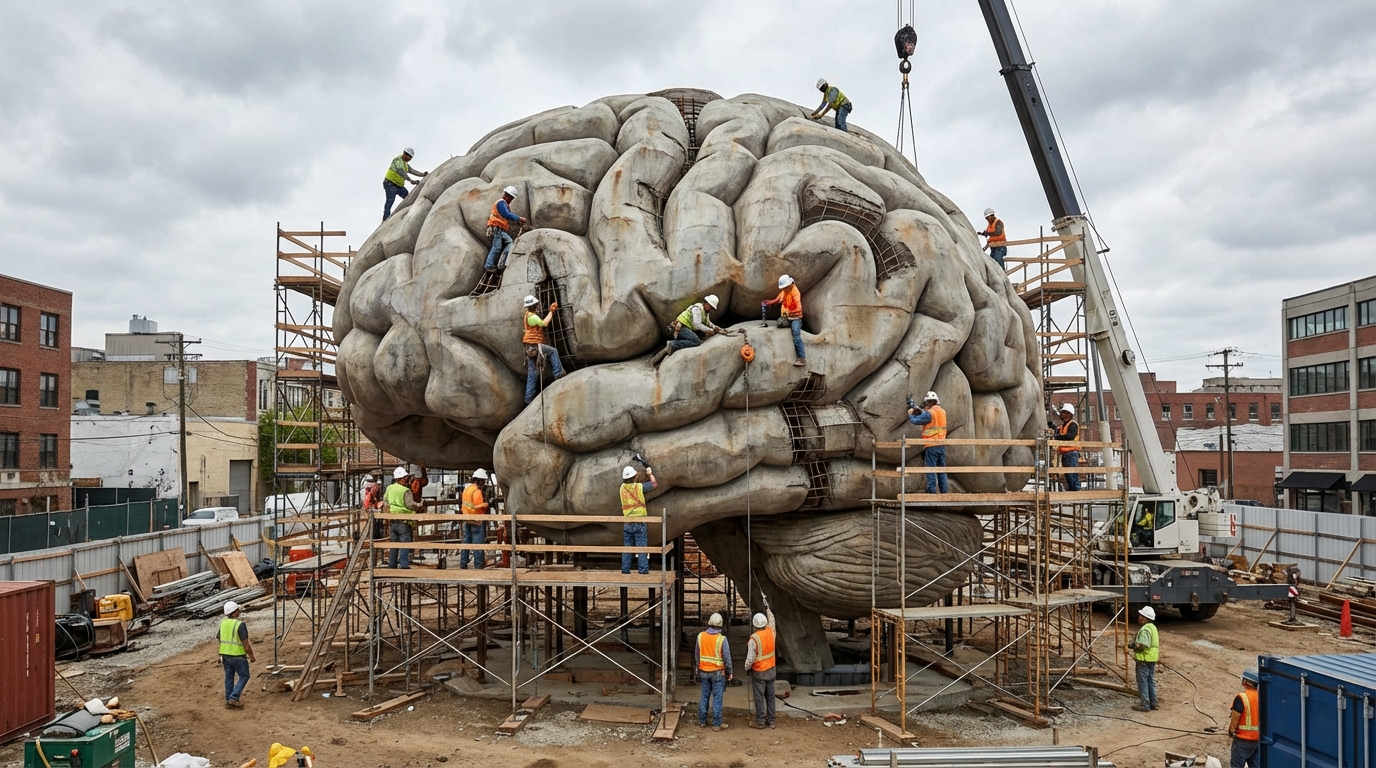
Here's the thing about productivity - it's become the measuring stick for your entire life.
What Nobody Tells You About the Perfectionism Trap
You just moved into your new flat, and everything functions properly. The boxes are unpacked, the systems work, the details are handled. Success, right?
So why do you feel stuck in a groove that's slowly burning you out?
Here's what's happening: You're measuring the productivity value of everything. That walk you took? Could it have been more efficient? The time with family? Was it truly optimized? Even your work emails get scrutinized down to the punctuation marks.
You've turned life into a series of tests you need to pass.
And if you're reading advice on perfectionism, it probably tells you to "lower your standards" or "accept mediocrity" or "be okay with good enough." Which feels impossible when excellence is part of who you are.
But what if the real problem isn't your standards at all?
The Biggest Perfectionism Mistake (And How to Fix It)
For years, people struggling with perfectionism have believed the issue is having standards that are too high. The solution, then, seems obvious: lower them. Do less. Care less. Accept "good enough."
If you're a high achiever, this advice feels wrong because it IS wrong.
Research on perfectionism reveals something different: The problem isn't high standards-it's when your self-worth depends on meeting those standards. That dependency creates psychological rigidity, where every activity becomes a test of your value as a person.
Think about your email punctuation. When you hit send on that message without the full stop, what were you really anxious about for those twenty minutes? The punctuation itself? Or what it meant about YOU-whether you were being sloppy, whether people would think less of you, whether your professional identity was somehow at risk?
You weren't measuring punctuation. You were measuring your worth.
This is the hidden cause that conventional advice misses entirely. It's not about the standards. It's about the rigid, inflexible attachment to them that prevents you from choosing what actually matters.
The Flexibility Secret Nobody Talks About
Here's where the research gets interesting.
A 2025 randomized controlled trial compared different approaches to treating perfectionism. What they found challenges everything you've probably heard: The approach that produced the strongest improvements wasn't about lowering standards or challenging perfectionistic thoughts alone.
It was about building psychological flexibility-the ability to be present with uncomfortable thoughts and feelings while taking action toward what matters to you.
Read that again, because it's the shift that changes everything.
You don't need to become okay with mediocre work. You need to become okay with the uncomfortable feeling that comes from not being perfect.
Remember those twenty minutes of anxiety after sending the email? You felt anxious AND sent it anyway. That wasn't you failing at perfectionism-that was you practicing psychological flexibility. You chose to feel uncomfortable because the experiment mattered more than the comfort.
Your usual pattern is to eliminate the anxiety before it starts: triple-check the punctuation, plan every detail of your morning routine, measure every activity's value. You're not pursuing excellence-you're avoiding discomfort.
And that avoidance pattern is costing you something significant.
The Hidden Problem with Rigid Standards
Here's the mechanism most people never see:
Every rigid standard you apply-to emails, to walks, to family time, to how you leave your flat in the morning-adds to what we might call "burnout debt."
You know how compound interest works financially, where small deposits grow exponentially over time? This is the same principle running backwards. Each rigid standard compounds with the others. The groove you're stuck in feels safe because it's predictable, but the debt keeps accumulating until the system crashes.
You moved successfully into your new flat because there were clear, functional standards: things either work or they don't. But then you applied that same rigidity to moments that don't need it-walks that could be spontaneous, mornings that could be responsive to how you actually feel, family time that could just BE without being measured.
You're optimizing for efficiency when what you actually need is presence.
The research on this is clear: When self-worth depends on achievement, you end up with inflexible standards, cognitive biases, and rigid behaviors that prevent the very joy and spontaneity you're trying to achieve. In one cognitive-behavioural therapy trial, 75% of participants showed clinically significant improvement in perfectionism after treatment focused on flexibility rather than simply lowering standards.
The difference? They learned to choose valued action over comfortable rigidity.
What Happens When You Practice Self-Compassion?
Now here's the part that might surprise you most.
When you think about being self-compassionate during that twenty-minute anxiety window-or when you leave something half-done, or when you leave your flat at an "non-optimal" time-what do you assume will happen to your performance?
Most high achievers fear that self-compassion will make them soft, lazy, or mediocre. They believe the harsh inner voice pushing them to be perfect is what maintains their effectiveness.
The research shows the opposite.
A 2024 study on work performance and burnout found that self-compassion is a protective mechanism that reduces burnout while maintaining-not reducing-performance. People who practiced self-kindness during setbacks didn't lower their standards. They protected themselves against exhaustion while staying effective.
This breaks the entire model you've been operating on: that you need to be hard on yourself to maintain excellence.
What if self-compassion during imperfection isn't weakness-it's the thing that keeps you sustainable? What if saying "This feels really uncomfortable and that's okay. I'm practicing something difficult" is what allows you to maintain high performance long-term instead of burning out?
You ranked leaving things half-done as your most difficult challenge. That discomfort you'd feel-the urgent voice screaming that you must finish-isn't a sign you're failing. It's the psychological flexibility muscle getting stronger.
The harsh voice isn't maintaining your standards. It's maintaining your rigidity.
What Neuroscience Knows About Flexibility Training
Here's the neuroscience piece that makes this feel less like willpower and more like training:
When you practice sitting with discomfort-like the anxiety of "non-optimal" timing or incomplete tasks-you're not just gutting through it. You're creating measurable changes in your brain.
Research on attention training shows that practice strengthens the areas of your brain responsible for emotional regulation. The prefrontal cortex becomes more active, the reactivity to discomfort decreases, and the whole system becomes more flexible. This isn't metaphorical-it's neuroplasticity in action.
You described understanding "mindfulness on the go" as treating your mind "as a muscle and flex it and then release." That's exactly what's happening neurologically. Every time you notice the urge to optimize, flex that awareness, and then release the thought without acting on it, you're building new neural patterns.
Think about your walking routines building physical endurance. This builds emotional endurance.
And the research shows these changes are maintained over time. A 2024 internet-based therapy study found large effects on perfectionism measures, with improvements sustained at 6- and 12-month follow-up. You're not just white-knuckling through discomfort temporarily-you're actually changing how your brain responds to it.
The groove you're stuck in is a neural pathway that's been reinforced for years. You're building a new path.
How to Apply This to Your Morning Routine
You said you've been timing your mornings precisely, planning every step, leaving at the "optimal" time. And you're curious about leaving when you feel ready instead.
Here's what that experiment is really about:
It's not about abandoning functionality or being late to everything. It's about loosening rigid attachment to one specific path. You could give yourself a fifteen-minute window instead of a precise time-still functional, still responsible, but practicing internal awareness rather than external rigidity.
During that window, you practice your attention training: notice the urge to leave at the "optimal" minute. Flex that awareness. Release the thought. Choose based on presence, not perfection.
The discomfort will show up. "This isn't efficient. You're wasting time. You should leave NOW."
That discomfort is the signal that you're building flexibility, not failing at structure.
And the value you're practicing? Actually experiencing the new flat you worked hard to create, instead of rushing through it on a checklist.
This is what studies call "values-based imperfection"-deliberately doing things imperfectly in low-stakes areas as experiments that build the psychological flexibility muscle. Your email punctuation experiment proved this works. Nothing catastrophic happened. Functionality was maintained. But you learned that you could tolerate discomfort while acting on what mattered.
The Truth About the Five Skills
You ranked five skills by difficulty: celebrating small wins (easiest), being mindful of task value, doing less than expected, attention practice, and leaving things half-done (most difficult).
What if they're not five separate tasks to perfect, but five different ways to practice the same core skill: choosing valued action over comfortable rigidity?
- Celebrating small wins: Choosing to acknowledge progress even when the perfectionist voice says it doesn't count
- Being mindful of task value: Choosing presence over productivity measurement
- Doing less than expected: Choosing "enough" when the urge is to do "perfect"
- Attention practice: Choosing to flex and release rather than control
- Leaving things half-done: Choosing to tolerate incompleteness
Each one is a deposit against that burnout debt. Each one practices flexibility.
The research on treatment approaches shows that even working through these concepts independently-through reading and self-directed practice-can be effective when you engage with actual experiments. You're not just learning about flexibility; you're practicing it in specific, measurable ways.
5 Ways to Start the Morning Window Experiment
You already know the fifteen-minute morning window experiment. Here's how to make it work:
1. Define your functional window: Choose a 15-minute range where you could leave without being late
2. Practice awareness, not control: During that window, notice when the urge to "optimize" shows up. Don't fight it-flex that awareness muscle, then release
3. Connect to your value: Remind yourself why this matters-being present in the space you created, not rushing through your own life
4. Expect discomfort: When the anxiety shows up (and it will), recognize it as the signal that you're building flexibility. Self-compassion sounds like: "This feels uncomfortable and that's okay. I'm practicing something difficult."
5. Notice what doesn't happen: Just like the email punctuation, track what catastrophe you feared versus what actually occurred
This isn't about becoming spontaneous overnight. It's about proving to yourself that you can hold your standards more flexibly, so they serve you rather than trap you.
Feeling "a lot better" isn't about getting the routine perfect. It's about not being stuck in the groove anymore-having the flexibility to choose spontaneity when it matters, even if it feels uncomfortable at first.
The Secret to Sustainable Excellence
The research is clear on what transforms perfectionism: It's not about lowering standards, fixing thoughts, or accepting mediocrity.
It's about building psychological flexibility-the willingness to experience discomfort while doing what matters.
Every time you practice this-through email punctuation, morning routines, leaving tasks incomplete, or celebrating wins that the perfectionist voice dismisses-you're making deposits in the opposite direction of that burnout debt.
You're not abandoning excellence. You're choosing sustainable excellence over rigid perfection.
You're not lowering your standards. You're holding them more flexibly.
You're not accepting mediocrity. You're accepting discomfort.
And your brain is changing to support this new pattern, building stronger emotional regulation with each practice session.
The question isn't whether you can do this-you already proved you can with the email experiment.
The question is: What becomes possible when you're no longer stuck in the groove? When you can walk without measuring productivity? When you can share moments with family without evaluating performance? When you can move through your new flat with presence instead of optimization?
That's not a lower standard of living. That's the life your high standards were supposed to create in the first place.
What you've discovered: Psychological flexibility-tolerating discomfort while acting on values-is the actual skill that transforms perfectionism. But there's a dimension we haven't explored yet: How do you identify which standards are truly values-based versus which are just perfectionist habits in disguise? Not all your high standards need to be loosened-some might genuinely matter. The research reveals a specific process for distinguishing between standards that serve your values and those that serve the trap. That discernment prevents you from either staying stuck OR swinging too far into chaos.
What's Next
Stay tuned for more insights on your journey to wellbeing.





Comments
Leave a Comment