

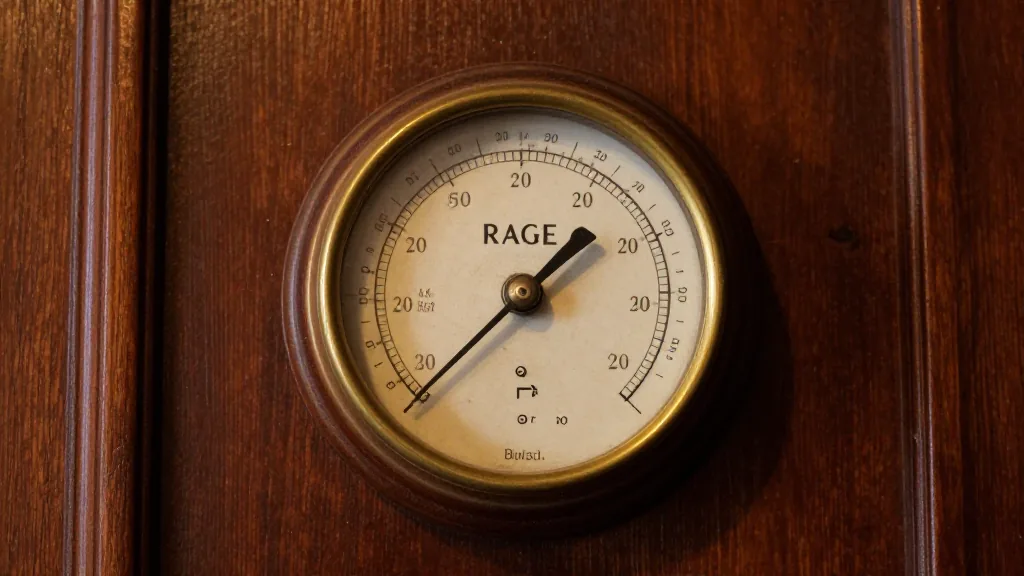
You know the moment. That familiar tightness in your chest during a work call. The rising heat when someone makes yet another "urgent" request. You think to yourself: Here we go again. I'm getting wound up.
You see it coming. You recognize the pattern. You're aware.
And then it happens anyway.
You've made real progress-your anxiety dropped from a 10 to a 7, depression from 6 to 3. You've added exercise, changed your eating habits, taken better care of yourself. You've done the work to become more aware of when frustration is building. That awareness was supposed to be the key to changing things.
So why does the frustration still escalate? Why does knowing what's happening not automatically stop it from happening?
Why Awareness Alone Never Works
When awareness doesn't translate into control, most people-including therapists-assume one of two things:
You're not aware early enough. Maybe if you caught it sooner, before it really got rolling, you'd have time to intervene. The solution: Get better at noticing the earliest signs.
You don't have enough willpower. You see it coming but you can't seem to stop it, which must mean you're not trying hard enough or you lack the discipline to override your reactions. The solution: Build more self-control.
Both of these explanations feel logical. And both of them lead to the same frustrating cycle: You work on awareness. You notice the frustration earlier and earlier. You mentally prepare yourself to "stay calm" or "not react." And when the reactive call comes or your brother contacts you about the estate, you still end up overreacting.
So you blame yourself for not being aware enough orstrong enough. You double down on trying harder.
The Intention-Action Gap Nobody Explains
Here's what's actually happening: There's a gap between knowing what to do and actually doing it. Researchers call this the intention-action gap, and it's much bigger than most people realize.
Studies consistently show that our intentions-even strong, conscious intentions-predict less than 30% of our actual behavior. That means roughly 70% of whether you actually do something is explained by factors other than knowing you should do it or even wanting to do it.
Let me put this in terms you're already familiar with. When you first became aware that exercise would help your mental health, did you automatically start exercising every day?
No. You had to plan when you'd do it, what you'd do, and how to make it fit into your schedule. Just knowing exercise was good didn't make you do it. You had to build a bridge between the knowing and the doing.
The same principle applies to managing frustration. Awareness gives you the "knowing"-you can see the frustration building, you understand it's happening. But awareness alone doesn't give you the "doing." It doesn't automatically translate into stopping the reaction.
This isn't a failure of awareness. It's not a weakness in your willpower. It's the normal structure of how human behavior actually works.
The real culprit isn't that you're not aware enough. It's that you haven't built the bridge between awareness and action.
What Your Brain Does Before You Notice
To understand why this gap exists, you need to see what's happening behind the scenes when frustration hits.
When that reactive work call comes in-someone stressed, making urgent demands-your brain is processing this situation at incredible speed. Within milliseconds, it's evaluating: Is this a threat? How urgent is it? What does this mean about me? What should I do?
All of this happens largely outside your conscious awareness. By the time you consciously think "I'm getting frustrated," your brain has already:
- Interpreted the situation ("I'm being unreasonably pressured")
- Activated your stress response
- Primed certain reactions (defensive, irritated)
- Started amplifying your emotional state
Your awareness catches this process already in motion. You notice you're frustrated, which is genuinely useful information. But noticing doesn't stop the train that's already moving down the track.
Here's the key mechanism most people miss: In the heat of the moment, your brain defaults to whatever response is most automatic. If you haven't predetermined a specific alternative response, your brain will follow its existing habit pattern-the same defensive, frustrated reaction you've had dozens of times before.
Awareness creates a moment of recognition ("This is happening again"). But without a specific, predetermined response ready to deploy, that moment of recognition just becomes a moment of helplessly watching yourself do the thing you don't want to do.
This is why trying to "stay calm" or "not overreact" doesn't work. Those aren't specific responses-they're vague intentions. And when your brain is moving at high speed under pressure, vague intentions lose to automatic habits every single time.
Research shows this pattern across dozens of behaviors. The gap between intention and action isn't closed by stronger intentions. It's closed by creating specific links between situations and responses-by building a bridge your brain can actually cross in the moment.
The Complete Guide to Implementation Intentions
The conventional approach says: Build more awareness. Get better at recognizing frustration earlier. Strengthen your willpower to resist reacting.
But here's what actually works: Stop trying to decide what to do in the moment. Decide in advance.
Instead of:
- "I need to stay aware of my frustration" → Create an if-then plan
- "I should try to stay calm" → Specify exactly what calm looks like
- "I need more willpower" → Remove the need for willpower entirely
This reversal is called an implementation intention, and it's one of the most well-researched strategies in behavioral psychology. The structure is simple:
"If [specific situation], then I will [specific response]."
For your reactive work calls, this might look like:
"If I feel frustration rising during a work call, then I will take three slow breaths and ask myself: what's another way to view this?"
Notice what this does. It doesn't rely on awareness (though awareness triggers it). It doesn't rely on willpower (the decision is already made). It doesn't require you to figure out what to do while frustrated (you already know).
It creates a direct link between the situation and a specific response. Your brain doesn't have to improvise. It has a script to follow.
The "opposite" here is counterintuitive: Instead of trying to increase your awareness or strengthen your self-control in the moment, you're removing the need for in-the-moment decision-making entirely. You're shifting the work from the heat of frustration (when your capacity is lowest) to a calm moment beforehand (when your capacity is highest).
This same approach works for your family situation. You mentioned stepping back from trying to resolve things with your brother, but you recognized that without a plan, you might react badly if he contacts you about the estate. That's exactly right. Stepping back without a plan isn't the same as having no plan-in fact, it might make you more reactive because you haven't thought through how you want to handle unexpected contact.
The reversal applies here too: Don't rely on being calm and measured in the moment. Decide now: "If my brother contacts me about the estate, then I will [specific first response]."
The Transition You Can No Longer Ignore
Here's what this means you can no longer ignore:
Awareness alone will never be enough. You can become exquisitely aware of every nuance of your frustration-catch it earlier, understand it more deeply, recognize all the patterns-and still watch yourself overreact. Because awareness is not the same as control.
You've reached a transition point in your therapeutic progress. The foundation you've built-anxiety down from 10 to 7, depression from 6 to 3, genuine awareness of when frustration is building-is real and valuable. Without that foundation, you couldn't implement any regulation strategy. You can't intervene in something you can't see.
But you've now arrived at the gap. The space between seeing and doing. And the honest implication is this: To cross this gap, you need to build something new. Not more of what you've already been building, but a different kind of skill entirely.
Implementation strategies-if-then plans, cognitive reappraisal, predetermined responses-are not advanced versions of awareness. They're a different category of skill that sits on top of awareness. You can't skip awareness and jump straight to implementation. But you also can't stay in awareness and expect it to eventually transform into control.
This is why you've noticed that 40% improvement in frustration management, 30% in managing expectations, 30% in awareness of controlling frustration-but you still struggle to actually stop it once it starts. You've built the foundation. Now you need to build the bridge.
Your One-Week Implementation Plan
Here's what I want you to test:
Over the next week, create one implementation intention for your most common frustration trigger. Based on what you've said, that's reactive work calls.
Write it down in this exact format:
"If I feel frustration rising during a work call, then I will [your specific response]."
Make the response specific and simple. Three slow breaths and one reframing question. Or a five-second pause and a specific phrase you say to yourself. Or whatever feels most doable for you-but it must be specific enough that you could teach it to someone else in one sentence.
Then test it. Not perfectly-just try it. Once or twice is enough.
The challenge isn't to master emotion regulation. It's much simpler: Can you catch yourself during a work call and deploy your predetermined response instead of your automatic one? Even once. Even imperfectly.
This is a test of the bridge, not the destination. You're not trying to never feel frustrated again. You're trying to prove that you can insert a specific response into a moment where you previously had only automatic reactions.
What You'll Prove With One Success
If you successfully deploy your if-then plan even once, here's what you'll have demonstrated:
That the gap between awareness and control is not a gap in your willpower. It's not a failure of awareness. It's a gap in the bridge-and bridges can be built.
You'll have proof that you can interrupt frustration mid-rise with a predetermined response. Not perfectly. Not every time. But sometimes. Which is more than you could do when you were relying on awareness and willpower alone.
And you'll have discovered something most people never realize: The moment you notice frustration building is not the moment to decide what to do about it. It's the moment to execute what you already decided.
That shift-from improvising to executing-is what transforms awareness from a spectator experience ("I see it happening") into a regulation tool ("I'm doing something about it").
You've built the foundation. You're aware. You understand. You recognize the patterns.
Now build the bridge.



Comments
Leave a Comment