


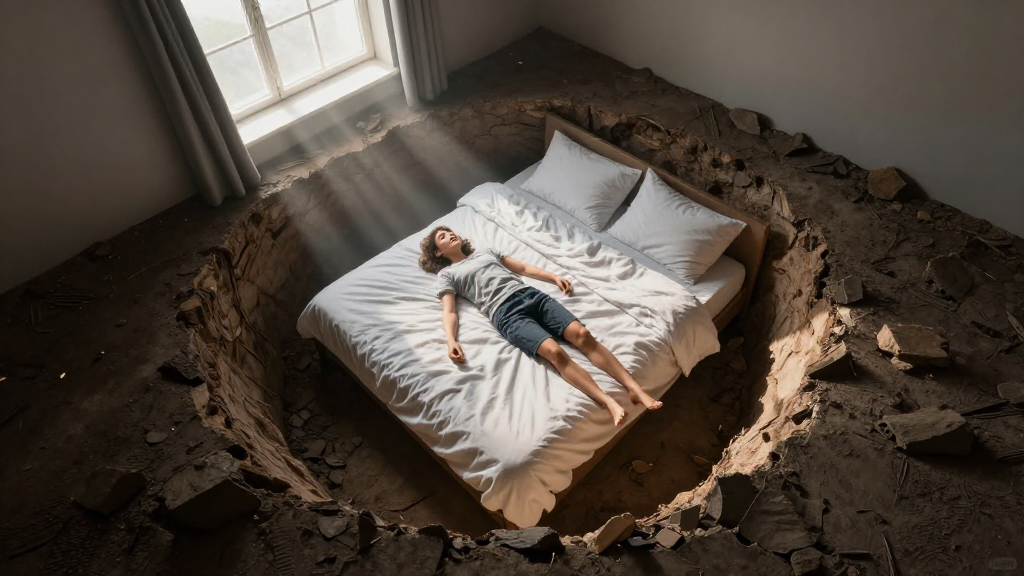
You know the cycle. You sleep for twelve, maybe fourteen hours. You wake up feeling like you never slept at all-groggy, foggy, almost drugged. You promise yourself you'll stay awake this time, do something with the day. But a few hours later, the exhaustion drags you back to bed.
And the guilt comes with it. Am I just hiding from life? Is my body broken? Am I lazy?
The more you sleep, the worse you feel. But you're also so tired you can barely function. It's a trap you can't seem to escape.
The Conventional Path
When someone is sleeping twelve to fourteen hours a day, the standard advice follows a predictable script:
Force yourself to stay awake. Set an alarm. Get out of bed. Push through the exhaustion. Use willpower to override the pull back to sleep.
Blame the behavior. You're avoiding life. You're being lazy. You're using sleep as an escape. Stop hiding.
Load up on caffeine. Drink coffee in the afternoon, the evening, even at night-whatever it takes to keep your eyes open long enough to feel like you've done something with your day.
Just reduce your sleep time. If you're sleeping too much, sleep less. Simple math.
The logic seems sound: if excessive sleep is the problem, the solution is to sleep less. Fight the urge. White-knuckle your way through it.
Why It Keeps Failing
But you've probably already tried this approach. And it didn't work.
You set the alarm. You drag yourself out of bed after eight hours instead of fourteen. You feel absolutely awful-not just tired, but cognitively impaired, emotionally raw, physically heavy.
You try to function. You can't. Everything feels impossible.
By mid-afternoon, the exhaustion is so overwhelming that you break. You go back to bed. Not for a nap-for hours. You wake up feeling guilty, defeated, and somehow more tired than before.
The caffeine you drank to stay awake? It keeps you in a restless half-sleep, never quite letting you drop into real rest.
The willpower? It runs out. You can't sustain fighting against something that feels like a physical force pulling you under.
And the self-blame-calling yourself lazy, weak, avoidant-just makes you feel worse, which makes sleep more appealing as the only escape from the emptiness and anxiety of being awake.
The standard approach fails at every turn. But why?
The Hidden Reason
Here's what most people don't realize: when you're sleeping twelve to fourteen hours a day because of depression, you're dealing with two separate problems operating simultaneously, each one feeding the other.
The first engine: biological sleep disruption.
Depression doesn't just make you want to sleep more-it fundamentally alters your sleep architecture. The structure of sleep stages you cycle through gets scrambled.
Here's the mechanism: depression changes neurotransmitters like serotonin and norepinephrine that regulate both mood and sleep stages. Specifically, it creates something called "REM sleep pressure"-you enter REM sleep too quickly and too frequently, which fragments the deeper, more restorative stages of sleep.
If you have elaborate, vivid dreams? That's a sign of this REM disruption.
The result: even though you're unconscious for fourteen hours, you're getting less restorative deep sleep than someone sleeping seven to eight hours with normal sleep architecture.
You're sleeping more but resting less.
The second engine: behavioral avoidance.
At the same time, sleep has become your escape. When you're awake, you face anxiety about trying to be productive and failing. You feel overwhelmed by basic tasks. You experience the emptiness. Your brain won't shut up.
Sleep is the only time that stops. Even if the sleep quality is poor, being unconscious is still better than being awake with all of that.
You've learned-not consciously, but your nervous system has learned-that sleep provides relief from distress.
The self-reinforcing trap:
Poor sleep quality from the biological disruption makes everything feel harder when you're awake. This increases the psychological appeal of sleep as escape. So you spend more time in bed. But excessive time in bed with fragmented sleep actually worsens your sleep quality further. Which makes waking life even harder. Which makes sleep even more appealing.
Neither engine is your fault. But together, they create a cycle that willpower alone cannot break.
This is why forcing yourself awake fails: you're not just fighting tiredness-you're fighting against biological exhaustion from genuinely disrupted sleep and the psychological pull toward the only thing that provides relief from distress. It's too much to white-knuckle through.
The Complete Flip
Now here's the paradigm shift that changes everything:
The problem isn't that you're sleeping too much. The problem is that you're sleeping poorly.
When you sleep fourteen hours and wake up exhausted, your body isn't telling you it needs fourteen hours of sleep. It's telling you that those fourteen hours aren't giving you what seven hours of healthy sleep would provide.
More sleep does not equal more rest-not when the sleep architecture is broken.
This flips the entire approach. Instead of trying to sleep less through force of will, you need to sleep better by restructuring how and when sleep happens.
There's a treatment approach called sleep restriction therapy that sounds counterintuitive: instead of trying to reduce sleep through willpower, you deliberately consolidate all sleep into a specific, shorter window-say, 11pm to 7am.
What happens? Your body knows it only has eight hours. It prioritizes the deeper, more restorative sleep stages. Sleep pressure builds up during the day. When you finally lie down, you drop into deep sleep faster and stay there longer.
The sleep becomes more efficient. You get more actual restoration in fewer hours.
But-and this is critical-you can't just restrict sleep and call it a day. Because sleep is also serving as emotional avoidance, you'd be overwhelmed by all those extra waking hours and break the sleep window immediately.
You need to address both engines of the cycle.
What You Can Now Forget
You can stop carrying these beliefs:
"I'm just lazy."
You're not. You have a biological sleep disruption and a learned behavioral pattern. Neither one is a character flaw.
"If I'm sleeping this much, my body must need it."
Your body doesn't need fourteen hours of fragmented sleep. It needs seven to eight hours of consolidated, restorative sleep.
"I need to force myself awake through willpower."
Willpower fails because you're fighting two problems at once. You need a staged approach, not brute force.
"More sleep equals more rest."
It doesn't. Not when depression has scrambled your sleep stages. Quantity and quality are different things.
"The caffeine is helping me stay awake."
That afternoon and evening caffeine has a half-life of five to six hours. It's still in your system when you sleep, fragmenting the already-disrupted architecture even more. It's making the problem worse.
You can put all of this down.
What Replaces It
Here's the new truth to hold:
Your sleep system is disrupted at two levels-biological and behavioral-and both need to be addressed, but in stages.
You don't fix this through willpower. You fix it through strategic intervention that works with how your nervous system actually functions.
Stage One: Make waking life more manageable without changing sleep duration yet.
The goal is to reduce the psychological pull of sleep-as-escape. You do this by building small, structured activities during waking hours that aren't about productivity or achievement.
Fifteen minutes of process-oriented activity. Not "create good art"-just open your digital art program and make random shapes or color palettes. No outcome required. Just a reason to be awake that doesn't involve pressure or judgment.
This reduces the avoidance function of sleep while building natural sleep pressure for nighttime.
Stage Two: Clean up what's fragmenting your sleep.
Eliminate caffeine after 2pm. That's when the half-life math stops working in your favor.
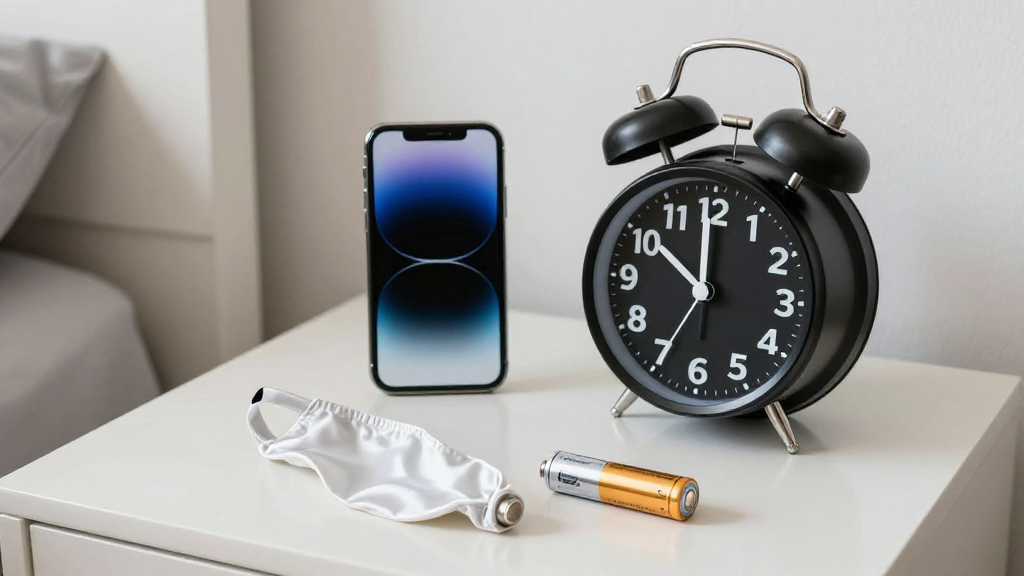
Move screens out of bed. Your bed has become associated with wakefulness-watching shows, scrolling phones. Your brain has learned that bed is a place to be awake and distracted, not a place to sleep.
Designate one of your comfort blankets for couch show-watching. Keep the cozy, lose the sleep-disrupting association.
Implement the twenty-minute rule: if you're in bed and not asleep within about twenty minutes, get up. Go to your couch nest. Do something calm and low-stimulation until you feel genuinely sleepy. Then return to bed. This retrains your brain: bed equals sleep, not anxious wakefulness.
Stage Three: Once you have momentum, gradually tighten the sleep window.
Reduce by thirty minutes every week or two. Not all at once. Slowly enough that the improved sleep quality compensates for the reduced quantity.
The metric isn't "how many hours did I sleep?" It's "how do I feel when I wake up?" If you're sleeping nine hours and waking less groggy than you did after fourteen, you're moving in the right direction.
Quality matters more than quantity. Always.
What Opens Up
When you stop trying to force yourself awake and start rebuilding sleep quality at both levels-biological and behavioral-something shifts.
Waking life stops feeling like something to escape from. Not because your circumstances changed, but because you're actually rested enough to engage with them.
You can be awake for six hours and feel more functional than you did after eighteen hours of fragmented sleep-escape-sleep cycles.
The guilt lifts. Not because you're suddenly sleeping "normal" amounts, but because you understand what's actually happening and you're addressing it strategically rather than failing at willpower.
You can experiment with your sleep window-tightening it when you're ready, easing it when you need to-without feeling like you've failed if you need more sleep some weeks.
You start to notice the difference between "I'm genuinely tired and need to sleep" and "I'm uncomfortable and want to escape." They feel different once you're not doing both simultaneously all the time.
And maybe most importantly: you stop seeing your bed as both sanctuary and prison. It becomes just a place to sleep. Which is exactly what it should be.
The trap has an exit. It's just not the one you've been trying to force open.
What's Next
In our next piece, we'll explore how to apply these insights to your specific situation.



Comments
Leave a Comment