

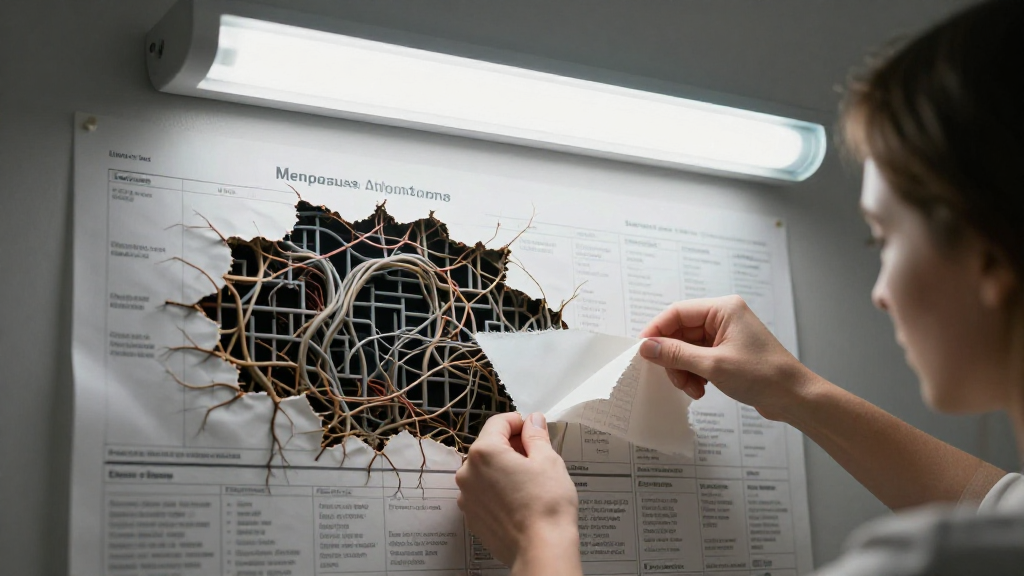
What It Means When HRT Fixes Everything But Anxiety
You started HRT in April. The hot flashes improved. The physical symptoms settled down. But the mental symptoms—the overwhelming anxiety, the tears that come without warning, the insomnia that leaves you with four hours of sleep—those didn't budge.
You've been off work since Monday. Your job requires attention to detail, the kind of focus that evaporates under pressure. And right now, pressure is all you feel.
The books you used to love sit unread. The hobbies that once filled your time have stopped. Even spending time with your adult children feels draining when you can barely hold yourself together. You've always been a sensitive person, but this is different. This is amplified beyond anything you've experienced before.
And underneath it all, a thought that terrifies you: I can't do anything. They can't help me. I can't help myself.
What Doctors Assume About Menopause Anxiety
When mental health symptoms spike during menopause, the natural assumption is simple: hormones are causing the problem.
It makes sense. Estrogen affects mood regulation. Hormonal fluctuations can trigger anxiety and depression. The timeline matches—symptoms started getting unbearable around the same time as the physical changes of menopause.
So you try HRT. And when that helps the hot flashes but not the mental anguish, the next assumption is that you need a different hormonal approach. Maybe a different dosage. Maybe additional medications. Maybe you're one of the people for whom HRT just doesn't work completely.
But here's where that explanation starts to crack.
Why the Hormonal Explanation Doesn't Add Up
If your symptoms were primarily caused by hormonal changes, the HRT that fixed your physical symptoms should have at least improved your mental ones. Hormones don't selectively target only hot flashes while leaving anxiety untouched.
And there's another clue: you mentioned you've always been a sensitive person. Always. Even before menopause. You've felt uncomfortable in social situations—tense, drained by groups, preferring quiet environments.
You labeled it sensitivity. Maybe introversion. But what if what you've been experiencing your whole adult life wasn't a personality trait at all?
What if the menopause didn't create a mental health problem—what if it simply removed your ability to suppress one that's been there for decades?
What Happens When Suppression Stops Working
Imagine you have a bottle of Coke. If you shake it and shake it but keep the lid on tight, what happens inside that bottle?
The pressure builds. As long as the lid stays on, the pressure stays contained. But the moment that lid comes off—or even loosens slightly—everything explodes outward.
Now consider: you experienced childhood sexual abuse by your stepfather. You never got the help you needed. You had to continue living with the trauma. And for decades, you managed it by staying busy—books, hobbies, family time, keeping your hands and mind occupied.
You kept the lid on tight.
But here's what research shows about hormonal transitions like menopause: they don't create new mental health problems. What they do is reduce your capacity to use the coping strategies you've relied on.
When those coping strategies have been primarily about suppression and distraction, and your capacity to suppress gets reduced, what happens to everything you've been holding down?
Why Your Nervous System Never Got the Signal
The flashes you get from childhood—the ones stuck in your brain. The recurring nightmares you've had since you were 10 or 11. The way your chest gets tight and your heart races. The way social situations make you tense and drained.
These aren't new symptoms. They're not symptoms of menopause.
They're symptoms of PTSD that's been running beneath the surface of your life, kept in check by sheer force of will and constant activity. Childhood sexual abuse is one of the most common causes of complex PTSD. When trauma happens that early, especially when it's inflicted by someone who should have protected you, your nervous system learns patterns designed to keep you safe.
Hypervigilance in social situations. Scanning for danger. Feeling uncomfortable in groups where you can't control every variable. These patterns made sense when you were a child living with your abuser.
But your nervous system—what scientists sometimes call your "second brain"—doesn't automatically update those patterns when the danger passes. It keeps running the same protective protocols it learned decades ago, reacting to perceived threats before your conscious mind even knows what's happening.
Think about soldiers coming back from war. They learned to be hypervigilant, to scan for threats, to stay in constant protective mode. Those patterns saved their lives in a war zone. But when they try to use those same patterns at home with their families, it doesn't work the same way. They see danger where there isn't any. They push away people who are trying to help.
The patterns that protected you as a child are still running. And for years, you managed them by staying busy enough that you didn't have to feel them fully.
Until menopause reduced your capacity to keep that pressure contained.
Why Staying Busy Stopped Working
This reframes everything.
You haven't suddenly become unable to cope with normal stress. You haven't failed at managing menopause. You're not broken or defective.
What's happening is that the suppression strategy that worked for decades—the constant activity, the books, the hobbies, the focus on family—has reached its capacity limit. The hormonal changes didn't create the problem; they removed the lid you've been holding down.
This is why HRT helped physically but not mentally. It addressed the hormonal symptoms, but it couldn't address the trauma breakthrough.
This is why you can't pick up a book anymore. Reading was part of the suppression system, and that system isn't working.
This is why you feel hopeless. You're trying to solve a hormonal problem with hormonal solutions, but the actual problem is unprocessed trauma that's finally demanding attention.
What You Actually Need Instead
If the real issue isn't hormones but PTSD that's been suppressed for decades, then the help you need isn't primarily medical management of menopause. It's trauma therapy.
The nightmares that started when you were 10 or 11? That's not something wrong with you. That's your brain trying to process something it didn't have the resources to process at the time. It's actually a sign your brain is trying to heal.
The social anxiety you never labeled as anxiety? That's your nervous system staying in protective mode because it never got the signal that the danger has passed.
The way everything feels amplified now? That's not new sensitivity. That's decades of pressure finally releasing because you no longer have the capacity to hold it down.
What You Can Do Right Now
First, consider explaining this to your family using that Coke bottle metaphor. They know about the abuse. They see you crying and struggling to function. But they might not understand that this isn't about them—it's pressure that's been building for decades finally releasing. That understanding can shift how they support you through this.
Second, when you notice your nervous system getting activated—the tight chest, the racing heart, the flashes from childhood—try this: Place one hand on your chest and one on your stomach. Take a slow breath and just notice which hand moves more.
Don't try to change it. Don't try to fix it. Just notice.
This simple act helps your nervous system recognize that you're safe right now, in this moment. Your "second brain" can start to distinguish between remembered danger and present safety.
Third, recognize that what you're experiencing has a name: complex PTSD from childhood trauma. This isn't vague sensitivity or hormonal dysfunction. It's a specific condition with evidence-based treatments—trauma-focused therapy approaches that help you process what happened instead of continuing to suppress it.
What Changes When You See the Real Cause
Understanding that your sensitivity isn't a weakness changes something fundamental. It means your system has been trying to alert you to something that needs attention—not that you're fundamentally broken.
It means there's a reason you feel this way. And reasons can be addressed.
The menopause didn't break you. It revealed what's been there all along, waiting for the capacity to finally be processed and healed.
You mentioned wanting tasks to do, wanting to know the next steps. That impulse—the desire to take action, to have some agency in this—that's the part of you that's been fighting to heal all along. The part that's ready to stop suppressing and start actually processing.
The comprehensive PTSD assessment you'll receive will map out the specific phases of trauma processing, show you what evidence-based treatments exist, and give you a structured path forward. Not to manage symptoms forever, but to actually address the root cause that's been hidden beneath the surface of your life.
For now, know this: the breakthrough you're experiencing isn't a breakdown. It's your system finally having permission to release what it's been holding for far too long.
And that means healing is actually possible—not just coping, but genuine healing of what's been suppressed all these years.
What's Next
Stay tuned for more insights on your journey to wellbeing.



Comments
Leave a Comment