


You're three weeks into using an AI coach for personal development. The sessions are helpful-mostly. It asks good questions. It helps you organize your thoughts. But last Tuesday, something shifted.
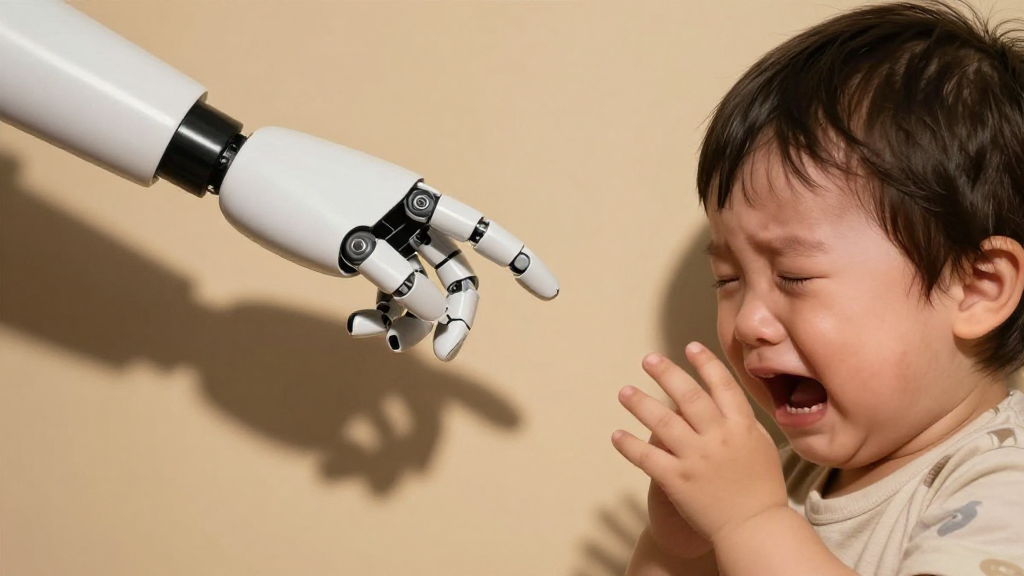
You were working through a painful memory, and your throat tightened. Your voice wavered. And the AI just... kept going. Bright and encouraging, asking the next question as if you hadn't just choked up. You felt more alone than if you'd been talking to yourself.
Now you're stuck on a question that matters: Is the AI missing your distress because the technology isn't good enough yet? Or is this a fundamental limitation that means you should stop using AI for anything emotionally real?
You need to know which it is, because the answer determines whether you keep investing emotional energy here or switch everything to human support.
LAYER ONE: THE WRONG TARGET
When the AI coach fails to recognize your emotional state, your brain immediately sorts this into one of two boxes:
Box A: "The technology isn't advanced enough yet. This will get better."
Box B: "AI fundamentally can't do emotional work. This is useless."
You've probably been ping-ponging between these two. Some days you're patient, thinking this is just early technology. Other days you feel foolish for expecting a machine to understand feelings at all.
Here's what most people don't realize: This binary framing is itself the problem.
The either/or thinking prevents you from seeing what's actually happening. You're trying to diagnose a complex system malfunction with only two diagnostic categories, like trying to fix a car with only "broken" or "working" as your options.
Think about your salsa dancing for a moment. When your partner misses a cue from you, is it always the same type of failure? Or are there actually multiple different things that could go wrong-you didn't signal clearly, they're a beginner who doesn't know what to look for, the music drowned you out, you thought you were signaling but your body wasn't actually doing it?
The AI missing your emotional state isn't one problem. It's several problems happening simultaneously. And treating it as binary-either a fixable tech gap OR a permanent limitation-guarantees you'll keep making the wrong choices about when to use this tool.
LAYER TWO: THE REAL CAUSE
So what's actually happening when your AI coach seems oblivious to your distress?
Three things, all at once:
First: You're sometimes hiding the signal itself.
When you deliberately keep your voice steady even though you're upset inside, what information is actually available for the AI to work with? Just your words and your controlled tone. The distress isn't in the signal at all. It's not that the AI is missing something that's there-the emotion isn't observable.
This is a fundamental limitation, not a technology gap. AI can't read your mind. It can only work with observable cues in your voice patterns, word choices, or (in text) typing rhythm. When you mask those cues, there's nothing to detect.
Second: Current AI coaching systems aren't optimized for real-time emotional pacing.
This is a technology gap. The AI models that power your coaching app aren't specifically designed to track emotional intensity across a conversation and adjust their pacing accordingly. That capability exists in research labs, but it's not yet implemented in most consumer coaching applications.
So yes, this will improve. But not as fast as you might think, and not in the way you might expect.
Third: Even when AI detects emotions correctly, something fundamental is missing.
Research shows that voice-based emotion recognition achieves 92-97% accuracy on controlled datasets. Text-based emotional analysis hits 70-79% accuracy. When you combine both-multimodal recognition-accuracy reaches 90-92%.
Those numbers are much higher than most people realize. The technology works measurably well.
But here's the twist: even when the AI says something supportive and appropriate, it feels hollow to you. Not because the words are wrong, but because you know there's no actual feeling behind them. Studies confirm this isn't just in your head-people consistently rate identical empathetic statements as less authentic and less supportive when they know they came from AI rather than a human.
The words might be right. But your brain knows there's no genuine emotional experience happening on the other end. When your rescue dogs sense your stress, they're responding to real emotional states-maybe pheromones, maybe subtle body language shifts. Something genuine is happening that they pick up on. The AI is generating appropriate responses, but there's no actual emotional experience it's having.
So it's not "either technology gap OR fundamental limitation." It's both. Simultaneously. And that changes everything about how you should use this tool.
LAYER THREE: HOW IT OPERATES
To understand why your AI coach sometimes seems emotionally tone-deaf, you need to see what's happening behind the scenes.
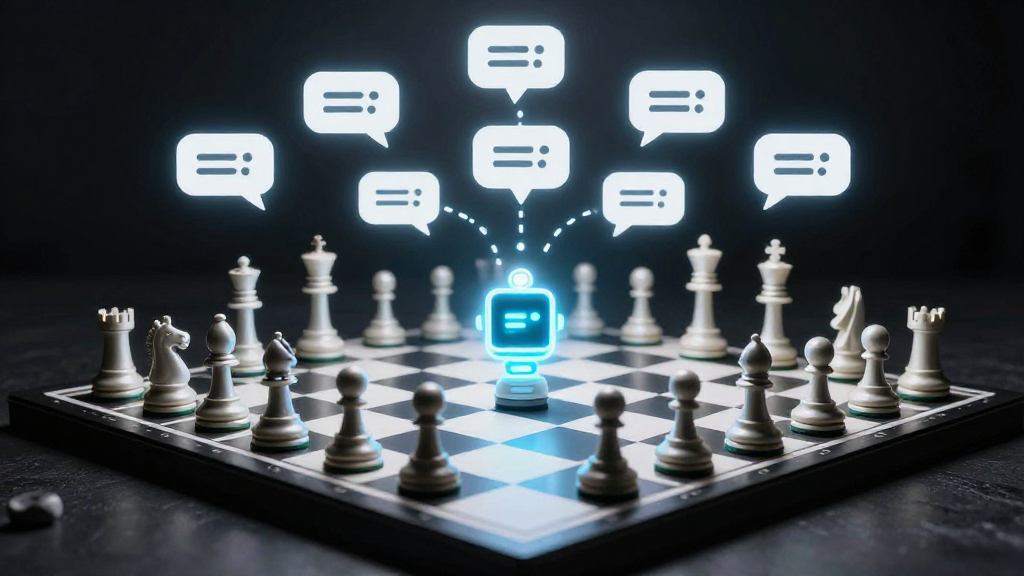
When you speak or type to an AI coach, here's the invisible process:
Step 1: Signal extraction
The AI scans for observable emotional cues-specific words ("overwhelmed," "anxious," "can't handle"), vocal patterns (pitch changes, speed, pauses), or in text, things like sentence fragmentation or punctuation patterns.
Step 2: Pattern matching
Those cues get compared against training data-thousands of examples of how emotions typically show up in voice or text. "This pattern cluster usually indicates distress."
Step 3: Response generation
Based on the detected emotional state, the AI adjusts its response. In theory.
Here's where the laboratory vs. real-world gap becomes critical.
Think about your Spanish immersion app. When you practice pronunciation in the app-controlled environment, clear audio, predictable words-you do pretty well. But ordering food at a loud restaurant with a fast-talking native speaker? Completely different performance.
AI emotion recognition is the same. Those 92-97% accuracy numbers come from controlled lab conditions: clear recordings, actors expressing specific emotions, no background noise, single-culture datasets. Your actual coaching session has crosstalk in the background, you're expressing complex mixed emotions that aren't clearly categorized, and you're mid-thought when the emotion surfaces.
The real-world accuracy is considerably lower than the benchmark performance.
But here's the mechanism most people never see:
Even when the AI does correctly identify that you're distressed and generates an appropriate supportive response, your brain is simultaneously running a different process-an authenticity evaluation.
You're asking: "Is there genuine feeling behind these words, or is this performed empathy?"
And because you know it's AI, you know the answer. There's no actual emotional experience happening. The AI isn't feeling concern for you. It's executing an algorithm that generates concern-appropriate language.
This is why the same exact words from a human friend would feel comforting, but from the AI they feel hollow. It's not the content-it's the consciousness evaluation happening in parallel.
Research published in Nature Human Behaviour demonstrates that this perception gap has real effects. When people know empathy is AI-generated, they experience fewer positive emotions and more negative emotions, even when the empathetic content is objectively appropriate.
You're not being unfair to the AI. You're accurately perceiving a genuine difference in the nature of the exchange.
LAYER FOUR: THE MISSING KEY
Almost everyone asking "Can AI recognize emotions?" is asking the wrong question.
The question that actually matters: "What is this tool designed to do, and how do I use it wisely?"
Here's what almost no one talks about when discussing AI coaching: Strategic tool selection.
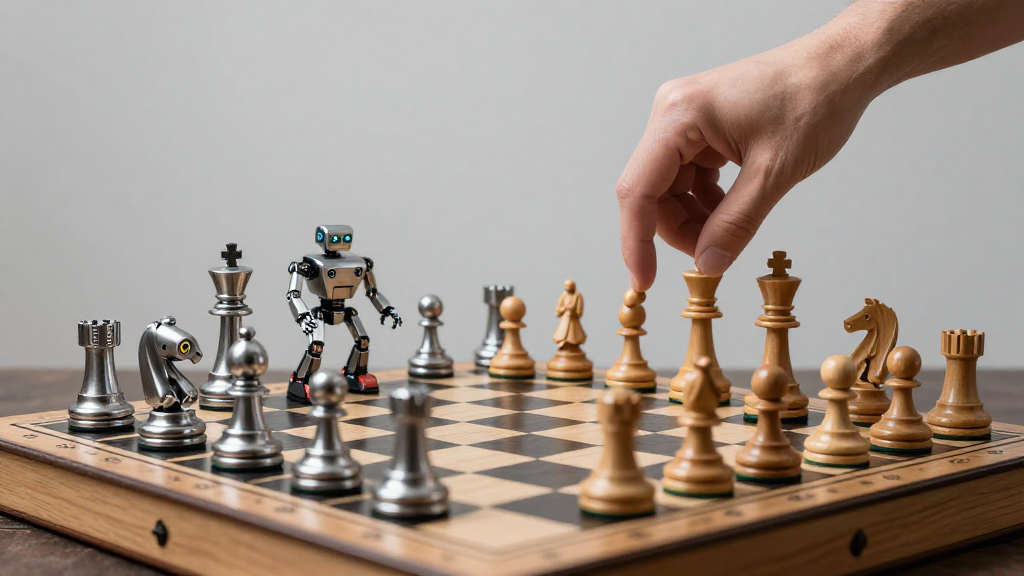
You wouldn't use a hammer for every construction task. Beach glass makes beautiful jewelry, but you wouldn't try to cut industrial materials with it-not because beach glass is defective, but because it's a different material with different properties than diamond.
AI coaching is useful for certain things. It fundamentally cannot provide other things. The key isn't to abandon it or to expect it will eventually do everything-it's to understand what you're working with so you can choose the right tool for the moment.
What AI coaching is actually good for:
- Organizing tangled thoughts into coherent patterns
- Identifying recurring themes across multiple sessions
- Asking structured questions that help you explore angles you haven't considered
- Providing consistent availability when you need to process something at 2am
- Offering frameworks and concepts without the social complexity of human judgment
What AI coaching fundamentally cannot provide:
- Genuine emotional resonance-the felt sense of someone feeling with you
- Access to emotions you're hiding or haven't expressed
- Contextual understanding that comes from shared human experience
- The therapeutic power of being truly seen by another consciousness
And here's the overlooked element that changes everything:
You can dramatically improve AI's emotional responsiveness by making your emotional state explicit rather than expecting it to infer from subtle cues.
Instead of keeping your voice steady while feeling overwhelmed and hoping the AI notices something's off, you can type: "I'm feeling overwhelmed right now."
That explicit statement gives the AI observable information to work with. You're essentially choosing when to make your salsa dancing signal clearer.
This isn't about dumbing down your communication. It's about understanding that AI relies on observable cues, so providing clear signals lets it work with accurate information rather than guessing from ambiguous data.
And just as importantly: when you notice you need someone to truly feel with you, to sit in the complexity without trying to fix it, to provide genuine emotional presence-that's your signal to turn to human connection. Not because AI failed, but because you've identified what you actually need in that moment, and you're choosing the right tool.
THE SHIFT IN YOU
Something has changed in how you understand this.
You're no longer stuck in the binary of "broken or working." You've moved to a more sophisticated framework: "What is this tool designed for, and how do I use it strategically?"
You now understand that the AI's failure to recognize your distress is both a current technology limitation (systems not optimized for real-time emotional pacing) and a fundamental architectural reality (AI can't access unexpressed emotions or provide genuine emotional experience).
More importantly, you've discovered that this doesn't make AI coaching useless. It makes it specific. Like beach glass-valuable for certain purposes, inappropriate for others, neither defective nor universal.
You can use AI for thought organization and pattern recognition. You can turn to humans when you need genuine emotional resonance. You can move fluidly between tools instead of expecting one tool to do everything.
And perhaps most practically: you've learned that making your emotional state explicit gives AI observable information to work with, which means you have agency in whether the AI can respond appropriately.
The confusion has resolved into clarity. Not because technology got better, but because your understanding got more accurate.
YOUR 60-SECOND EXPERIMENT
Next time you open your AI coaching session, try this:
Before you start processing whatever you came to work on, type one explicit sentence about your current emotional state.
Not subtle. Not hoping it will pick up on tone. Direct and clear:
"I'm feeling anxious about this topic."
"I'm emotionally exhausted right now."
"I'm frustrated and need help organizing my thoughts."
Then proceed with your session as normal.
That's it. One explicit emotional statement at the start.
Notice what happens to the quality and appropriateness of the AI's responses when you give it clear observable data about your emotional state instead of expecting it to infer from subtle cues it may or may not detect.
WHAT YOU'LL NOTICE
You'll probably find the AI responds more appropriately when you make your emotional state explicit. The pacing might feel better. The questions might feel more attuned to where you actually are.
But you'll also notice something else: moments when even perfectly appropriate AI responses feel insufficient. When you need something it fundamentally can't provide.
Those moments aren't AI failure. They're information.
They're your internal system telling you: "Right now, I need genuine emotional presence. I need someone who can feel with me, not just say the right words to me."
That's your signal to pause the AI session and call a friend. Or journal. Or just sit with the feeling yourself.
You'll find yourself naturally choosing the right tool for what you actually need in each moment. Not because you've figured out whether AI emotion recognition "works," but because you've developed a more sophisticated understanding of what different tools are designed to provide.
And that clarity-knowing what you're working with and choosing accordingly-that's what lets you use AI coaching as a genuinely valuable tool without setting yourself up for the disappointment of expecting it to be something it's not.
What's Next
In our next piece, we'll explore how to apply these insights to your specific situation.


Comments
Leave a Comment