

The check has been sitting on your desk for months. Maybe years.
You know you need to cash it. You've thought about it dozens of times. You've planned to do it. And then... nothing. The connection between wanting to do it and actually doing it just doesn't fire.
So you call yourself names. Lazy. Irresponsible. A loser. Who leaves money sitting around uncashed? What kind of person can't write a simple email?
But here's what's strange: at work, you're actually good at your job. When there's a deadline, when someone's waiting on you, when the structure is clear—you deliver.
So if you were really just "lazy," wouldn't you struggle everywhere?
Why You Excel at Work But Can't Do Simple Tasks at Home
Think about it. At work, you have:
- External deadlines
- Regular reminders
- People depending on you
- Immediate consequences if you don't deliver
And in those conditions, you function. Sometimes you even excel.
But at home, with self-directed tasks? The opposite. Simple things feel impossible. You can think about doing them. You can want to do them. But there's a wall between intention and action.
That wall has a name. And it's not "laziness."
The Truth About What's Blocking You—It's Not Laziness
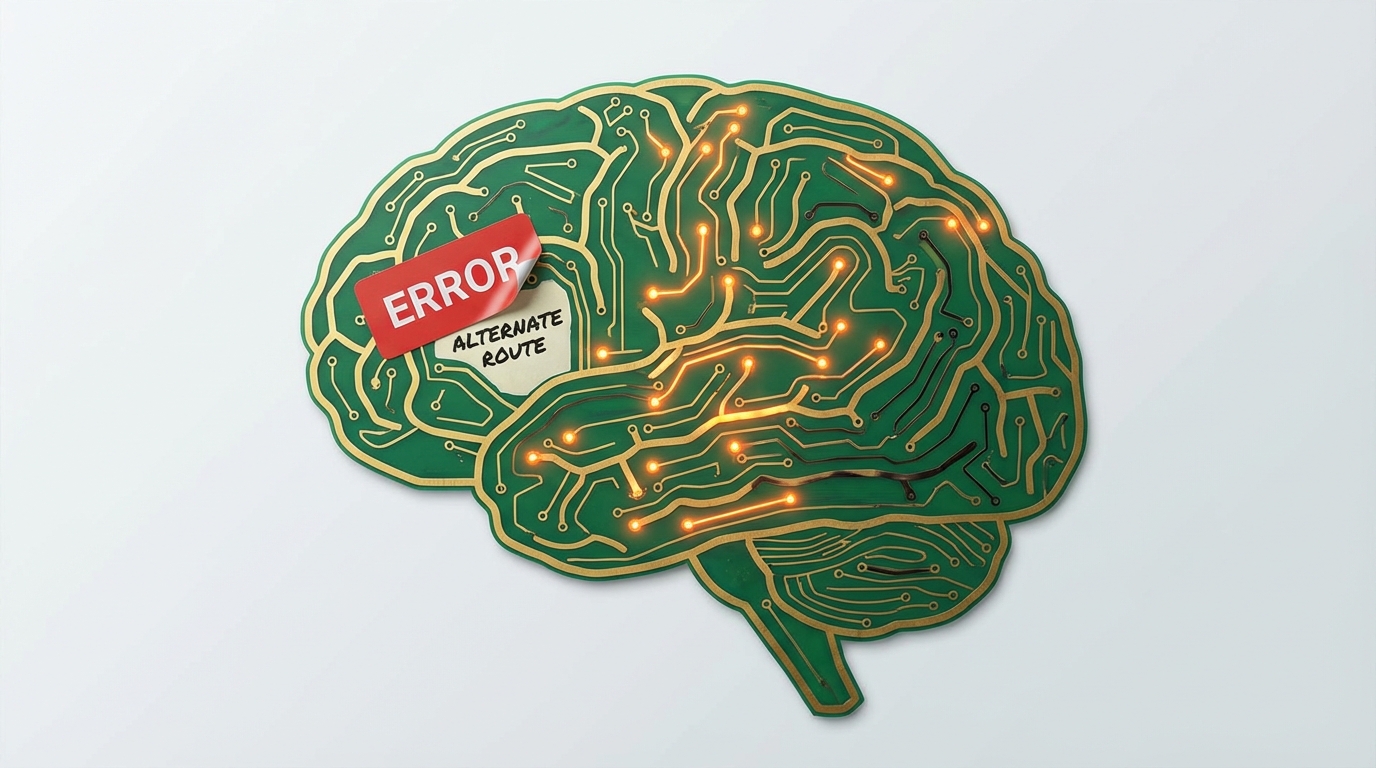
Research on bipolar disorder has identified something called executive dysfunction. It's not a personality trait. It's not a moral failing. It's a documented impairment in how the prefrontal cortex handles certain tasks.
Specifically, executive dysfunction affects:
- Initiating tasks (getting started)
- Planning activities (breaking things down)
- Following through (completing what you started)
Studies have found that this impairment persists even between mood episodes. You could be feeling relatively stable and still struggle to start a simple task—because the system that translates intention into action isn't functioning the same way.
This is why you can think about cashing that check for weeks and never do it. The problem isn't that you don't care. The problem is that the bridge between "I want to do this" and "I'm doing this" is impaired.
The Willpower Mistake That's Hurting Your Progress
When most people can't complete simple tasks, they assume the solution is more willpower. More self-discipline. More self-criticism to create urgency.
But research shows something counterintuitive: self-blame is paralyzing, not motivating.
Internalized stigma—calling yourself a "loser," thinking you're fundamentally broken—actually worsens outcomes. Studies on bipolar disorder have found that self-blame heightens self-judgment and criticism, which reduces resilience and makes it even harder to take action.
You've been trying to shame yourself into productivity. But shame doesn't light a fire under you. It pours concrete around your feet.
What Nobody Tells You About Your Medication Response
Here's something that might reframe a struggle you've had with medication.
If you've ever taken an antidepressant like Sertraline and experienced racing thoughts—your mind jumping from one thing to another, restlessness, feeling like you can't slow down—you may have assumed this was just a side effect to push through.
But in someone with bipolar disorder, those symptoms might mean something specific: the medication could be triggering what's called "switching," pushing from depression toward a manic state.
Clinical guidelines recognize this pattern. Racing thoughts, increased energy, being easily distracted—these aren't just inconveniences. In someone with bipolar taking an SSRI without a mood stabilizer, they can be warning signs that the medication approach needs adjustment.
So if you stopped your medication because something felt wrong? That instinct might have been your brain accurately sensing a real problem.
Research shows that up to 60% of people with bipolar disorder struggle with medication adherence. Stopping medications due to side effects isn't "loser behavior." It's an extremely common response—and sometimes it's the right response, if it prompts a conversation with your doctor about finding a better approach.
The problem isn't that you stopped. The problem is if you didn't tell anyone why.
Why Your Memory Lapses Aren't What You Think
There's another piece to this that rarely gets discussed.
Have you ever had a breakthrough in therapy, felt like something finally clicked, and then a week later couldn't remember what you learned? You know you discovered something useful. But the details have vanished.
This isn't lack of attention. It isn't that you weren't trying hard enough to retain it.
Memory problems are a documented symptom of bipolar disorder that persists even between mood episodes. The condition itself affects how your brain consolidates and retrieves information.
So when you blame yourself for forgetting therapy concepts? You're blaming yourself for a symptom. It's like criticizing yourself for needing glasses.
Once you know this, you can accommodate it. Take notes during sessions. Ask for written summaries. Record key insights. Stop expecting your memory to work like someone without this condition—and start building supports that work with how your brain actually functions.
What Happens When You Stop Blaming Yourself
Here's where this leads:
You've been treating yourself like someone who's failing at basic life tasks due to character flaws.
But what if you're actually someone with a neurobiological condition that affects executive function, memory, and medication response—and you've been beating yourself up for symptoms?
What would you say to someone who blamed themselves for not seeing clearly when they needed glasses? You'd say that's ridiculous. Get the glasses.
The same logic applies here. The check doesn't get cashed not because you're a loser, but because your brain needs support. Possibly the right medication. Possibly external structure. Probably both.
This isn't an excuse. It's a diagnosis. And a diagnosis is the first step toward treatment that actually works.
3 Steps to Start Working With Your Brain, Not Against It
First, change the conversation with your doctor.
If you experienced racing thoughts on an SSRI, tell your prescriber specifically what happened. Ask whether a mood stabilizer might be appropriate for your situation. The information about how you responded to medication is valuable—it can guide them toward treatment that actually fits your brain.
Second, stop the self-blame cycle in real-time.
When you notice yourself thinking "loser behavior"—pause. Reframe it: "This is a symptom I need to accommodate." You're not making excuses. You're being accurate about what's happening, which is the only way to actually address it.
Third, build external structure for tasks outside work.
You already know external structure helps you function. So create it:
- Set phone reminders for specific tasks at specific times
- Tell someone else your deadline ("I'm cashing this check by Thursday")
- Block time for single tasks rather than hoping you'll "get to it"
You're not admitting defeat by using structure. You're working with how your brain actually works instead of fighting yourself.
What Proper Treatment Can Actually Change
Here's what proper treatment can do: executive function can improve significantly when the underlying condition is properly managed.
The cognitive impairment often lessens. Tasks that feel impossible now might become merely difficult—and difficult is something you can work with. The structural accommodations will still help, but you won't be pushing uphill against an untreated condition.
You're not fundamentally broken. You have a condition that requires appropriate treatment and accommodation—like any other medical condition.
The Next Question
There's something we haven't touched yet.
If you also have PTSD alongside bipolar disorder, the interaction between those two conditions affects everything—the medication response, the executive function, the memory, all of it.
Understanding how these conditions interact might be the next piece of the puzzle. Because you're not dealing with isolated symptoms. You're dealing with a system—and when you understand the system, you can finally work with it instead of against it.
References
- Brohan, E., Gauci, D., Sartorius, N., & Thornicroft, G. (2011). Self-stigma, empowerment and perceived discrimination among people with bipolar disorder or depression in 13 European countries: The GAMIAN-Europe study. Journal of Affective Disorders, 129(1-3), 56-63. https://doi.org/10.1016/j.jad.2010.09.001





Comments
Leave a Comment