

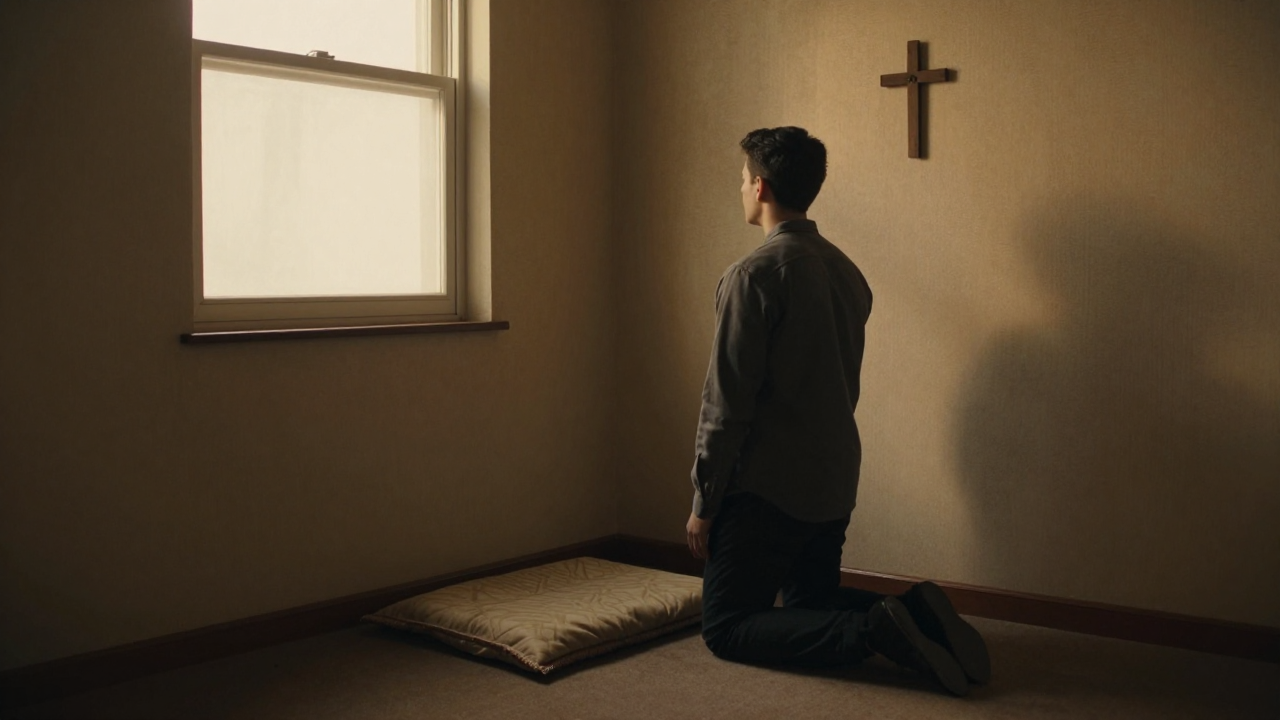
You sit down to pray, hoping for peace. Instead, your chest tightens, your mind races faster, and the anxiety you came to escape actually intensifies.
Why does the very act meant to calm you sometimes trigger more distress? This perplexing paradox affects countless people of faith who turn to prayer for relief, only to find their symptoms intensifying. Understanding this phenomenon requires examining not just what happens during prayer, but the hidden mechanisms that can transform a spiritual practice into an anxiety amplifier.
The Performance Pressure Hidden in Prayer
When you approach prayer as a spiritual task that must be executed perfectly, you unknowingly activate the same anxiety circuits that trigger before a job interview or public speaking engagement. Your brain perceives prayer as a high-stakes performance, complete with an omniscient observer evaluating your every word and thought.
This transforms what should be intimate communication into an anxiety-inducing test. You become hyper-aware of "doing it right"—choosing the correct words, maintaining proper focus, demonstrating adequate faith. Each perceived mistake triggers a cascade of self-criticism and fear that you're failing spiritually.
Research on religious perfectionism shows that individuals who view their spiritual practices through a performance lens experience significantly higher anxiety levels than those who approach faith with self-compassion. The constant monitoring of your prayer quality creates a feedback loop where anxiety about praying correctly makes prayer itself anxious.
The Cognitive Load of Suppressed Thoughts
During prayer, many people attempt to suppress intrusive or "inappropriate" thoughts—worries about daily tasks, random memories, or concerns they deem unworthy of prayer time. This mental effort to control your thought stream paradoxically increases the very thoughts you're trying to eliminate.
This phenomenon, known as thought suppression rebound, explains why telling yourself "don't think about work during prayer" makes work thoughts more persistent and intrusive. The mental energy required to monitor and suppress unwanted thoughts depletes your cognitive resources, leaving you more vulnerable to anxiety.
The irony is that authentic prayer often requires bringing your whole self—including anxious, scattered thoughts—into the conversation. When you create an artificial barrier between "acceptable prayer thoughts" and "unacceptable distractions," you fragment your mental state and increase anxiety.
The Fear of Divine Disappointment
For many, prayer carries the unspoken fear that their anxiety itself indicates spiritual failure. You may believe that "true faith" should produce peace, and when it doesn't, you conclude something is fundamentally wrong with your relationship with God. This creates a vicious cycle where anxiety about being anxious compounds the original distress.
This fear is often rooted in theological misinterpretations of passages about "casting your cares" or "being anxious for nothing." When these scriptures are presented as simple formulas—pray correctly and anxiety disappears—they inadvertently create shame around the normal human experience of persistent worry.
The reality is that many biblical figures experienced sustained periods of anxiety and distress, expressing raw emotions in prayer without immediate resolution. The Psalms alone contain numerous examples of honest, anxious prayers that don't conclude with instant peace but rather with continued trust despite ongoing difficulty.
The Stillness Paradox
Prayer often involves sitting still and quieting your mind—precisely the conditions that allow suppressed anxiety to surface. Throughout your busy day, constant activity and distraction keep anxiety at bay. When you finally slow down to pray, all the worries you've been outrunning catch up with you at once.
This isn't prayer causing anxiety; it's prayer removing the distractions that were masking anxiety already present. Your nervous system interprets the sudden awareness of these feelings as a threat, triggering further anxiety about the anxiety itself.
Additionally, for individuals with hyperactive nervous systems, extended periods of physical stillness can actually increase physiological arousal rather than decrease it. The body needs to discharge nervous energy, and forced stillness can feel like restraining a pressurized system.
The Bargaining Dynamic
When you approach prayer primarily as a means to reduce anxiety—"If I pray correctly, God will take this feeling away"—you create a transactional relationship that ironically increases pressure. Each prayer session becomes a test of whether you've "done enough" to earn relief.
When anxiety doesn't immediately dissipate after prayer, you may interpret this as evidence that you haven't prayed with sufficient faith, haven't confessed thoroughly enough, or are being divinely disciplined. This interpretation transforms prayer from comfort into condemnation.
Research on outcome-focused prayer shows that when people pray with rigid expectations about specific results, they experience higher anxiety when those outcomes don't materialize on their expected timeline. The flexibility to trust without controlling the how and when of divine response correlates with lower anxiety levels.
The Isolation of Internal Struggle
Many faith communities inadvertently promote prayer as a solitary solution to all emotional distress, creating an implicit message that if prayer doesn't resolve your anxiety, you shouldn't burden others with it. This isolates you with your struggle at the precise moment when connection could provide relief.
When you believe your anxiety represents a personal spiritual failure, you're less likely to seek support from your community or professional help. Prayer becomes a lonely battlefield where you fight internal demons without allies, a scenario that naturally intensifies distress.
The early Christian practice of communal prayer and shared burdens provides a corrective to this isolation. When prayer occurs in the context of supportive relationships rather than as a replacement for them, it often produces very different results.
What Actually Helps: Reframing Prayer and Anxiety
Understanding why prayer sometimes increases anxiety opens pathways to approaches that reduce this counterproductive response:
Embrace imperfect, honest prayer. Give yourself permission to pray with wandering thoughts, fragmented sentences, and raw emotions. Authenticity matters more than eloquence. Some of the most powerful prayers in Scripture are brutally honest expressions of doubt, fear, and confusion.
Use embodied prayer practices. Incorporate physical movement—walking prayers, breath-focused prayer, or contemplative gestures—to discharge nervous energy rather than containing it. Your body's need for movement isn't a distraction from prayer but can become part of the practice itself.
Release outcome attachment. Shift from "prayer as anxiety reduction technique" to "prayer as relationship maintenance regardless of immediate feelings." Trust that the conversation matters even when instant peace doesn't follow. This removes the performance pressure that fuels anxiety.
Practice thought inclusion rather than suppression. Instead of fighting distracting thoughts during prayer, acknowledge them briefly and return to your focus. "There's that work worry again. God, you know about that too." This reduces the cognitive load of constant mental monitoring.
Integrate prayer with professional support. Recognize that prayer and therapy, medication, or other evidence-based anxiety treatments aren't competing approaches but complementary ones. Many people find that addressing anxiety through professional means actually deepens their prayer life by removing the desperation and fear from it.
Seek communal prayer experiences. Balance private prayer with community contexts where you can hear others honestly express struggles and receive support. Being prayed for, not just praying alone, provides the relational connection your nervous system needs.
Conclusion
Prayer increasing your anxiety doesn't indicate spiritual failure or lack of faith—it reveals specific dynamics in how you're approaching prayer and what underlying factors are present. By understanding these mechanisms, you can adjust your practice to align with how your mind and nervous system actually function rather than fighting against them.
The goal isn't perfect prayer that eliminates all anxiety but authentic connection that can coexist with your human experience of worry and fear. When you release prayer from the burden of being your sole anxiety management tool and instead allow it to be one element within a comprehensive approach to wellbeing, it often becomes more genuinely helpful rather than another source of pressure.
Your anxiety during prayer isn't a wall between you and God but potentially an invitation to a more honest, less performative relationship where your whole self—including your anxious parts—is welcome in the conversation.


Comments
Leave a Comment