

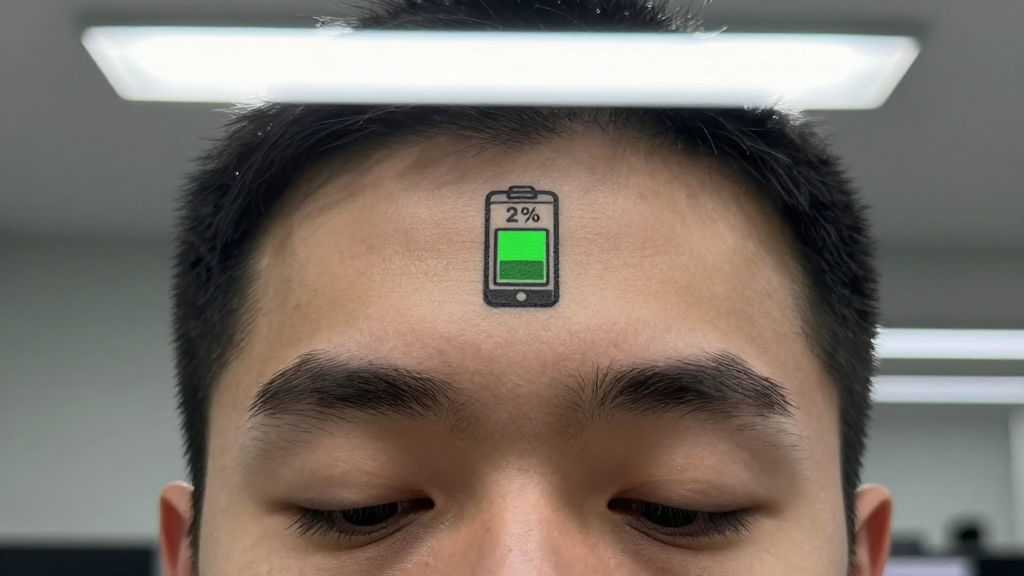
Picture this: you're watching someone you love go days without sleep, and nobody else seems worried.
Your family member is on the psychiatric ward experiencing psychosis. You've watched them go three days without sleeping. Then four. Then five. By day seven, you're struggling to understand how a human body can even function this way-and why the ward staff don't seem as alarmed as you are.
Your mind keeps circling back to the same thought: If we could just get them to sleep, maybe the psychosis would calm down.
It's a reasonable assumption. After all, everyone knows that lack of sleep makes mental health worse. You've probably read articles about the connection between sleep deprivation and psychological symptoms. The logic seems clear: fix the sleep, fix the psychosis.
But what if you've got the relationship backward?
Why Sleep Deprivation Isn't Making the Psychosis Worse
When someone with psychosis goes days without sleeping, most family members-understandably-assume the sleep deprivation is making the psychosis worse. It becomes the problem to solve. If only the person could sleep, their mental state would improve.
This makes intuitive sense because it's partially true. Research shows that severe sleep deprivation can actually trigger psychotic-like symptoms in anyone, even people without any psychiatric condition. After 24-48 hours without sleep, healthy individuals start experiencing perceptual distortions and anxiety. By 48-90 hours, complex hallucinations and disordered thinking can emerge. After 72 hours, the clinical picture can resemble acute psychosis or toxic delirium.
So yes, extreme sleep loss can cause psychotic symptoms.
But here's where the conventional wisdom breaks down: If lack of sleep were really the cause of worsening psychosis during these episodes, you'd expect that helping the person sleep would quickly resolve the symptoms. You'd also expect the ward staff to be frantically trying every intervention to get your family member to sleep.
Instead, what you often see is something different. The psychosis intensifies, the person stops sleeping, and the clinical team focuses primarily on treating the psychosis itself-not the sleep.
Why?
The Backward Relationship Between Psychosis and Sleep
Here's what's actually happening, and it's counterintuitive: During acute psychotic episodes, the psychosis itself often reduces the person's need for sleep.
Read that again, because it flips the entire framework.
The relationship between sleep and psychosis isn't one-directional-it's bidirectional. Yes, severe sleep deprivation can trigger psychotic symptoms in anyone. But when someone is experiencing acute psychosis, their brain is in a fundamentally different state. The psychotic episode itself disrupts normal sleep architecture and can dramatically reduce the body's usual requirement for rest.
This is why your family member can go seven days without sleeping and still be physically functioning-their brain, in its current psychotic state, simply isn't generating the normal sleep pressure that would force a healthy person into unconsciousness after a few days.
Research published in JAMA Psychiatry examining over 5,000 patients across 21 studies found that sleep disturbances are prevalent throughout all stages of psychosis-affecting about 50% of people across the illness course. But these sleep problems aren't separate issues running parallel to psychosis. The sleep architecture changes are intrinsically linked to the psychotic state itself.
What This Means for Your Family Member on the Ward
When you understand this bidirectional relationship, several things suddenly make sense:
Why the ward staff aren't panicking about the sleep: They're not neglecting the sleep issue-they're addressing it bytreating the underlying psychosis. As the acute psychotic symptoms respond to treatment, the sleep patterns typically begin to normalize. The sleep disturbance is a symptom of the psychosis, not a separate problem requiring independent treatment.
Why your previous attempts to "help them sleep" didn't work: During an acute episode, the brain isn't operating under normal rules. Standard sleep hygiene advice or even sleep medications may have limited effectiveness because the fundamental issue isn't insomnia in the traditional sense-it's that the psychotic state has altered the normal sleep-wake regulation.
Why focusing solely on sleep might actually be counterproductive: If you're pouring energy into trying to force sleep as a separate intervention, you're working against the neurobiological reality of what's happening. It's like trying to lower someone's fever by putting them in a cold bath while ignoring the infection causing the fever.
How to Read Sleep Patterns as Warning Signs Instead
Here's the reframe that can actually help you: Start thinking about sleep disturbance as a barometer of mental state rather than a problem to fix in isolation.
Studies show that sleep disturbance is closely associated with increased severity of psychotic symptoms. Shorter sleep duration correlates with more severe delusional ideas and hallucinations both at a single point in time and over the course of illness. But the causal arrow runs both ways-and during acute episodes, it's often the psychosis driving the sleep disturbance rather than the reverse.
This means monitoring your family member's sleep patterns can actually give you valuable information:
- Worsening sleep might signal that psychotic symptoms are intensifying, suggesting the need to communicate with the treatment team
- Improving sleep might indicate that the acute episode is beginning to respond to treatment
- Sleep changes can serve as an early warning system forpotential relapse after discharge
You're not trying to fix the sleep directly. You're reading it as one of several indicators of their overall mental state.
The Evidence-Based Support You Can Access Right Now
While you're on the ward trying to understand your family member's psychosis and sleep patterns, there's something critical that almost no one mentions: You can get help too-and that help is actually part of the evidence-based treatment.
Most family members assume that "therapy" is only for the patient. They don't realize that family psychoeducation and family intervention programs are recommended by NICE (the National Institute for Health and Care Excellence) as standard components of psychosis treatment.
Research published in 2025 examining multiple systematic reviews found that family interventions benefit both the patient and family carers compared to usual care. The studies showed:
- Moderate reduction in hospitalization rates when families received intervention
- Significant reductions in family carer psychological distress and burden
- Improvements in family communication and expressed emotion
- Better treatment adherence and functioning for patients
Think about what you need right now: You need to understand what psychosis actually is. You need to know how to talk to your family member when they're experiencing symptoms. You need to recognize warning signs that an episode might be coming. You need to know whether anything you're doing might inadvertently be making things worse.
All of those needs are exactly what family psychoeducation addresses. And here's the important part: This isn't just "nice to have" support-it's an evidence-based intervention that improves outcomes for everyone involved.
Why Your NHS Trust Might Not Offer What Research Says You Need
But there's a catch, and it's one that causes real problems for families trying to access help: There's significant variation across NHS trusts in actually delivering these recommended interventions.
Some NHS trusts are implementing NICE guidelines comprehensively and routinely offer family intervention programs. Others haven't caught up. NHS England's own implementation guidance acknowledges that currently only 0.9% of community psychosis patients are receiving psychological therapy-far below what the evidence suggests is needed.
This means you may need to actively advocate for family psychoeducation rather than waiting for it to be offered. Many families don't even know it exists, so they never think to ask for it.
The Exact Questions to Ask Your Care Coordinator Tomorrow
Here's what changes when you understand both the sleep-psychosis relationship and the availability of family support:
During your next ward visit:
- Speak directly with your family member's care coordinator
- Ask specifically about "family intervention programs" and "psychoeducation services" (use those exact terms-they reference the NICE-recommended interventions)
- If your trust doesn't currently offer structured programs, ask about alternatives: individual family sessions, carer support groups, or psychoeducation materials
When monitoring your family member's condition:
- Note sleep patterns as one indicator of overall mental state, not as a separate problem to solve
- Look for patterns: Is decreasing sleep paired with increasing symptom intensity? Is improving sleep paired with other signs of stabilization?
- Share these observations with the clinical team-they provide useful context about symptom trajectory
When gathering information:
- Ask ward staff about the treatment plan and how the family can best support during and after hospitalization
- If you need specific evidence to reference when advocating, look up the NICE guidelines on psychosis and schizophrenia (CG178) which explicitly recommend family interventions
- Connect with other families or carers' groups to learn what interventions they've successfully accessed
Reframe your understanding:
- Stop asking "How do I fix their sleep?"
- Start asking "What is their sleep pattern telling me about their mental state right now?"
- Stop waiting passively for all support to come to your family member
- Start recognizing that your own education and support is part of the evidence-based treatment approach
How Informed Advocacy Replaces Midnight Panic
The panic you feel when your family member goes seven days without sleep is completely understandable. The human body isn't supposed to work that way under normal circumstances.
But psychosis isn't normal circumstances. During acute episodes, the brain's regulation systems-including sleep-wake cycles-are fundamentally disrupted. The sleep disturbance isn't an independent problem making everything worse. It's part of the psychotic state itself.
When you grasp this bidirectional relationship, several things shift:
You stop fighting to solve the "sleep problem" as if it were separate from the psychosis. Instead, you trust that as the psychosis responds to treatment, the sleep will follow. You use sleep patterns as information-a window into what's happening with the illness-rather than as a crisis requiring independent intervention.
You also stop assuming you have to navigate this alone. Family psychoeducation exists precisely because research shows that when family members understand psychosis better and learn effective ways to respond, everyone benefits-both you and your family member.
The path from helplessness to empowerment isn't about finding the magic intervention that makes your family member sleep. It's about understanding what's actually happening neurobiologically, knowing what support you can access, and learning how to advocate effectively within a system that has significant variation in delivering evidence-based care.
Your family member's sleep will most likely normalize as the acute psychoticepisode responds to treatment. In the meantime, you have specific things you can do: request family psychoeducation, monitor sleep as one indicator of mental state, gather information from the clinical team, and educate yourself about the bidirectional relationship between sleep and psychosis.
That's not helplessness. That's informed advocacy. And research shows it makes a measurable difference.
What's Next
Stay tuned for more insights on your journey to wellbeing.




Comments
Leave a Comment