

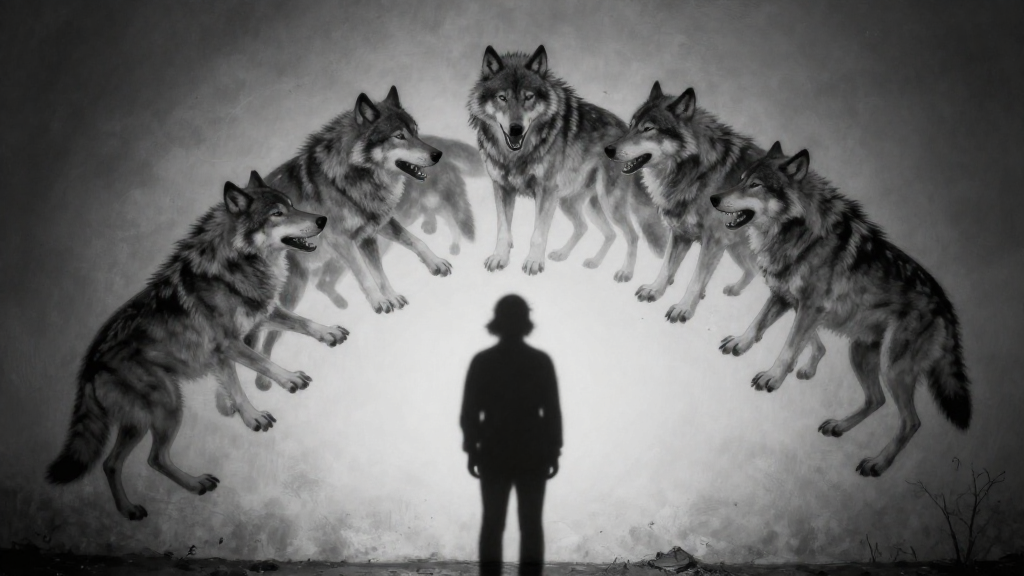
It usually begins with something small-a mistake that never actually happened.
The Self-Criticism That Turns Anxiety Into a Spiral
You catch yourself just in time. The caravan wasn't properly hitched-you noticed before pulling onto the highway. Crisis averted. Nothing actually happened.
So why are you shaking in the passenger seat? Why are the tears coming? And why, more than anything, are you furious with yourself for falling apart over something that almost happened but didn't?
Then comes the second wave: frustration that you're frustrated. Upset that you're upset. The original emotion was manageable, but now you're caught in something else entirely-a spiral that feeds on itself, getting worse the harder you fight it. Your friend witnesses the whole thing, and that adds another layer: embarrassment about the breakdown, frustration about the embarrassment, anxiety about the frustration.
You tell yourself to stop. It doesn't work. You tell yourself it's ridiculous. That makes it worse.
This isn't just about one incident. It's the pattern that shows up everywhere-lying awake at night, frustrated about being awake, then anxious about being frustrated, then more awake because of the anxiety. Half your nights are good. Half are caught in this same trap.
What the Anxiety Spiral Looks Like From Inside
On the surface, it looks straightforward: you're having emotional reactions that seem disproportionate to the situation.
You get anxious, and that's uncomfortable. You get frustrated, and that's unpleasant. You have trouble sleeping, and that's exhausting. These are the visible symptoms-the feelings you can name and describe.
But then there's the second layer, and this is where things get confusing. You're not just anxious-you're frustrated about being anxious. You're not just awake-you're upset about being awake. You're not just shaken by a near-miss-you're angry at yourself for being shaken.
This second layer feels like it should help. After all, you're trying to correct the problem, right? Trying to get yourself to calm down, to be reasonable, to stop overreacting. It feels like self-discipline, like taking yourself in hand.
But here's what you've noticed: the more you fight the initial emotion, the worse everything gets. The spiral tightens. What started as simple nervousness becomes a full breakdown. What started as mild frustration becomes hours of sleeplessness.
You end up shaking and crying in front of a friend over something that didn't happen. You spend half your nights wide awake, watching the clock, knowing you should be asleep but unable to stop the cascade of feelings about feelings.
The Hidden Mechanism Behind Your Emotional Spiral
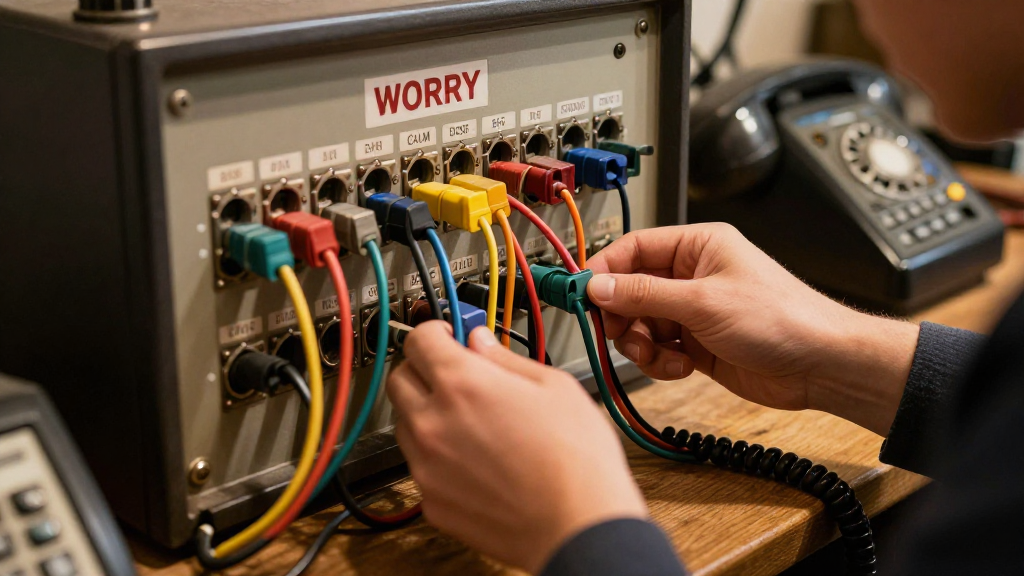
What most people don't see when they experience this pattern is the invisible mechanism operating behind every spiral: you're not dealing with one emotional response. You're dealing with two completely separate systems that are talking to each other.
Here's how it actually works.
The first system is your threat detection. When the caravan wasn't properly hitched, your brain registered genuine danger. This wasn't ridiculous-a loose caravan on the highway could cause a fatal accident. Your nervous system did exactly what it's designed to do: it fired a fear response. Your body prepared to deal with a real threat.
This is the primary emotion. It's direct, it's functional, and it has a natural arc-it rises, it peaks, it falls. Left alone, this emotional response would have moved through your system in minutes.
But then the second system kicks in: your evaluation of that emotion.
Your brain starts generating thoughts about the fear response itself. "This is ridiculous." "Nothing actually happened." "Why am I falling apart?" "I should be over this by now." "What's wrong with me?"
This creates what researchers call a secondary emotional response-you're having feelings about your feelings. And here's where the invisible mechanism gets dangerous: these secondary emotions don't replace the primary ones. They stack on top of them.
Now you're dealing with the original fear response, plus frustration about having that response, plus anxiety about the frustration, plus shame about losing control in front of someone. Each layer adds intensity. Each judgment creates new emotional content to manage.
What you experience as one overwhelming spiral is actually this layering mechanism working exactly as designed-except it's designed to make things worse, not better.
Research on what's called "experiential avoidance" shows this isn't a personal failing. It's a fundamental mechanism of how human psychology works: when we try to suppress, avoid, or control our emotional responses, we paradoxically intensify the very distress we're trying to eliminate.
The criticism itself becomes the fuel. Every time you tell yourself "stop crying," "this is stupid," or "get it together," you're adding another layer to the spiral. The mechanism feeds on your attempts to fight it.
Why Fighting Anxiety Makes It Worse Every Time
The standard approach to overwhelming emotions follows a logical sequence: identify the emotion, evaluate whether it's reasonable, and if it's not, suppress it or talk yourself out of it. This is what most people do instinctively. It's probably what you were doing in that car.
"Nothing happened, so I shouldn't be upset."
"This fear isn't logical, so I need to stop it."
"If I just calm down and think rationally, this will go away."
This approach makes intuitive sense. Unreasonable emotions should respond to reasonable arguments, right? If you can just get your brain to recognize that the threat has passed, the fear should stop.
But here's what actually happens when you try this method: the shaking gets worse. The crying intensifies. The anxiety expands instead of shrinking.
In the moment you were telling yourself to stop, were you stopping? When you labeled your response as "ridiculous," did that reduce the response or amplify it?
Extensive research on thought suppression reveals something counterintuitive: trying to avoid or control internal experiences like emotions or thoughts doesn't make them smaller. It makes them larger, more persistent, and more intense.
This is documented across multiple studies as a transdiagnostic mechanism-meaning it shows up in anxiety disorders, depression, trauma responses, and stress reactions. It's not specific to your situation. It's how human minds work.
When you fight against an emotional response, you create what researchers call "unproductive repetitive thinking"-your mind keeps circling back to the thing you're trying to stop thinking about. When you criticize yourself for having an emotion, you generate new emotions to manage. When you demand that you calm down, you activate your stress response.
The method itself is the problem. Fighting the emotion requires you to stay focused on the emotion, to monitor whether it's still happening, to evaluate whether your fighting is working. This sustained attention keeps the emotional content active instead of allowing it to naturally dissipate.
And there's a deeper failure point: this approach treats your nervous system like it's malfunctioning when it's actually functioning exactly as designed. Your anxious brain is biased toward detecting threats in uncertain situations-that's not a bug, that's a feature. When something almost goes catastrophically wrong, your system doesn't neatly distinguish between "almost" and "actually." It processes threat.
So when you tell yourself the fear is ridiculous, you're essentially telling your protection system that it's wrong for doing its job. That creates internal conflict, and internal conflict generates more emotional distress to manage.
The spiral continues because you're using a method that feeds the very mechanism you're trying to stop.
How to Stop the Spiral Without Fighting Your Emotions
After testing thousands of cases, researchers discovered something counterintuitive: when you reverse the process and start with acceptance instead of suppression, the spiral doesn't just slow down-it stops creating new layers.
Here's what the reversed approach looks like.
Instead of "This is ridiculous, nothing happened, stop crying," you try: "I'm shaking because I just caught a potentially fatal mistake. This is a normal fear response."
Instead of fighting the emotion, you acknowledge it. Instead of criticizing the response, you validate it. Instead of demanding it stop, you let it be there.
This sounds like it should make things worse. If you're not fighting the anxiety, won't the anxiety just grow? If you accept the fear, won't you stay afraid?
But that's not what the research shows. Studies on self-compassion-being kind toward ourselves and accepting our emotional responses as part of human experience-demonstrate that this approach actually reduces anxiety by interrupting what you've been calling the spiral.
The technical mechanism: self-compassion breaks the creation of secondary emotions. When you accept the first emotion, you don't create the second and third layers.
You still have the initial fear from the caravan incident. That's real, and it has a natural duration. But you don't add the frustration about having fear. You don't add the anxiety about the frustration. You don't add the shame about losing control.
One emotion is manageable. It's the layers that become overwhelming.
The reversed method works because it works with your nervous system instead of against it. Your brain registered a real threat and produced a protective response. When you acknowledge "yes, that was genuinely frightening, my body is reacting to actual danger," you're confirming what your system already knows to be true. There's no conflict. No internal argument. No need to generate additional emotional content.
Meta-analyses examining this approach show that acceptance-based interventions have moderate to large effects in reducing symptoms of anxiety, depression, and stress. The mechanism is consistent: stop fighting the experience, and the experience stops fighting back.
You've probably already noticed this pattern in your exposure work. You mentioned being more confident going into difficult thoughts because you know how to get out of them now. That's the same skill-not avoiding the experience, but moving through it without adding layers of self-criticism.
What changes with this reversed approach: you still get anxious sometimes. You still have nights when sleep doesn't come easily. You still have emotional responses to frightening situations. But instead of those single emotions becoming multi-hour spirals, they stay single emotions. They rise, they peak, they naturally fall.
The drive home from the caravan incident could have been ten minutes of shaking followed by calm. Instead, it became an extended breakdown-not because the initial fear was so intense, but because the fighting made it worse.
The Real Cause of Emotional Spirals Nobody Talks About
But here's what almost no one realizes about this pattern: the real problem was never the initial emotion at all.
When most people experience emotional spirals, they immediately blame their sensitivity, their anxiety disorder, their inability to handle stress. They assume the root cause is that they feel too much, react too strongly, or can't regulate properly.
This is what you were doing when you said "I'm frustrated with myself for getting upset about something that nearly happened but did not." You were identifying your emotional response as the problem.
But in the vast majority of cases like yours, the real culprit is actually the judgment about having the emotion. The criticism is the cause. The fighting is what creates the spiral.
Think about what happened in that car. The initial fear response to the caravan incident was appropriate-you caught a genuine safety hazard. That fear probably lasted a few minutes at most. But the breakdown lasted much longer. The shaking continued. The tears came.
What extended the distress wasn't the fear. It was your response to the fear: "This is ridiculous. Why am I falling apart? I should be over this. What's wrong with me?"
Every one of those thoughts generated new emotional content. The frustration about being scared. The shame about crying. The anxiety about your friend seeing you like this. The anger at yourself for not being stronger.
This hidden cause explains why previous attempts to "just calm down" or "be more rational" have failed. You weren't addressing the actual source of the spiral. You were trying to eliminate the primary emotion when the real problem was the secondary judgment.
It explains why your sleep difficulties persist. Lying awake isn't the problem-it's uncomfortable, but manageable. The problem is the meta-emotional cascade that follows: frustration about being awake, worry about being tired tomorrow, anxiety about the frustration, more wakefulness from the anxiety. The judgment creates the spiral.
Research on meta-emotional processes confirms this pattern: it's not the emotions themselves that maintain psychological distress. It's our emotional responses to our emotions-the feelings about feelings-that paradoxically keep us stuck.
You've been treating the symptom (the initial emotion) while the cause (the self-criticism) kept generating new symptoms. This is why the pattern repeats everywhere: same hidden cause, different triggers.
The armor analogy you've been working with captures this perfectly. You thought accepting your anxiety made you more vulnerable, so you fought it. But the fighting was what actually created vulnerability. The criticism opened you up to prolonged distress. The acceptance-recognizing "yes, I'm frightened, and that's a reasonable response to this situation"-would have been the armor.
There's wisdom in recognizing your limitations instead of demanding you shouldn't have them.
What Happens When You Keep Fighting Your Emotions
You keep trying to fix the emotions themselves. Every time anxiety shows up, you fight it. Every time frustration appears, you criticize yourself for feeling it. Every time you can't sleep, you add layers of judgment about being awake.
The caravan incident becomes the template: a manageable moment of fear becomes an extended breakdown because you can't stop telling yourself it's ridiculous to be scared. Your friend witnesses not the initial emotion but the spiral that follows.
The sleep pattern continues exactly as it is now-half your nights lost to the cascade. You lie there, frustrated about being awake, then upset about being frustrated, then anxious about being upset. The fighting keeps you wired. The self-criticism keeps generating new emotional content to manage.
Your exposure work hits a ceiling. You can tolerate difficult thoughts briefly, but the moment you start judging yourself for having anxiety during exposure, the meta-emotional spiral kicks in. You're fighting the very thing the exposure is supposed to teach you to accept.
Every new situation becomes an opportunity for the pattern to repeat. A mistake at work, a social awkwardness, a physical symptom-each one carries the potential for the same cascade. The initial feeling is bearable. The hours of distress-about-distress that follow are what make life smaller.
You stay stuck in the belief that the problem is how much you feel, when the actual problem is how much you fight what you feel.
The cost compounds: energy spent managing spirals instead of living, relationships strained by breakdowns over seemingly small triggers, confidence eroded by the sense that you can't handle normal stress, nights lost to rumination about your own rumination.
You keep looking for ways to eliminate anxiety, to stop having fear responses, to control your emotions better-never realizing that the controlling itself is what's making everything worse.
What Changes When You Stop Judging Your Emotions
You start noticing the difference between the primary emotion and the secondary criticism.
The caravan incident happens. You feel the fear spike-your heart races, your hands shake. But this time, instead of "this is ridiculous," you think: "I just caught a potentially fatal mistake. Of course I'm shaken. This is my body doing its job."
The fear is there. It's uncomfortable. But it's just fear, not fear plus frustration plus shame plus anxiety about the frustration. It rises. It peaks. It falls. Ten minutes later, you're breathing normally again.
Your friend asks if you're okay. "Yeah, that really scared me for a minute" is the whole story. No breakdown. No spiral. No hours of distress to process later.
The sleep pattern changes because you change what happens when you can't sleep. You notice you're awake. You notice the frustration appearing. And instead of fighting both, you observe: "I'm awake, and I'm feeling frustrated. That's what's happening right now."
You don't add "this is terrible, I should be asleep, what's wrong with me, I'll be exhausted tomorrow, why can't I just sleep like a normal person." You stop creating the layers. The frustration doesn't have additional frustration to feed on. It stays frustration-unpleasant, but finite.
Some nights you still don't sleep well. But those nights don't include hours of meta-emotional warfare. The difficult night is just difficult, not catastrophic.
Your exposure work accelerates because you stop fighting the anxiety that shows up during exposure. You expect it, you acknowledge it, you let it be there while you stay with the difficult thought. The anxiety about having anxiety disappears. What's left is more manageable than you expected.
You catch yourself starting to spiral-you feel the frustration about being frustrated beginning-and you recognize it. That recognition itself interrupts the mechanism. You see the secondary criticism forming, and you choose not to engage it. The spiral stops before it builds momentum.
You have the same triggers. The same situations that used to launch cascades still create initial emotions. But those emotions stay single-layer. They pass through instead of building up.
What becomes possible: emotional responses that match the actual situation instead of spiraling beyond it, nights where sleep difficulty is just sleep difficulty instead of an hours-long battle, interactions where people see your genuine emotion instead of your breakdown about having the emotion, confidence that you can handle what you feel because you're not simultaneously fighting yourself for feeling it.
The acceptance you've been practicing with vulnerability applies everywhere. The strength isn't in eliminating the emotions. The strength is in not creating wars about having them.
Your First Step to Breaking the Self-Criticism Spiral
Tonight, or tomorrow, or the next time you notice yourself having an emotional response-any emotional response-pause and check: am I about to criticize myself for this feeling?
If the answer is yes, try something different.
Instead of "I shouldn't feel this way," try: "I'm feeling this way."
Instead of "This is ridiculous," try: "This is uncomfortable, and it's here."
Instead of "What's wrong with me," try: "My body is responding. This is what bodies do."
You're not trying to make the emotion disappear. You're not trying to talk yourself out of it or fix it or control it. You're just acknowledging it exists without adding judgment about its existence.
This is the skill you've been building in your exposure work. This is the wisdom in the armor analogy. This is the recognition that accepting your vulnerability-your capacity to feel fear, frustration, anxiety, all of it-is actually what makes you less vulnerable to the spirals.
Start with something small. Maybe tonight's sleep. When you notice you're awake and the frustration starts, catch the moment before you start being frustrated about the frustration. Name what's there: "I'm awake. I'm frustrated. That's the current situation."
Then notice what doesn't happen. The layers don't build. The spiral doesn't start. The frustration is just frustration, and frustration eventually gets boring when you're not feeding it.
This is the difference between the two paths: one keeps creating layers until you're overwhelmed by feelings about feelings about feelings. The other lets the single feeling exist, and then lets it go.
The move is simple. The mechanism it interrupts is powerful.
You already know your emotions aren't the enemy-your brain trying to protect you isn't a malfunction. Now you're learning that your criticism of those emotions is what's been creating the real problem.
Stop fighting. Start noticing. Let the single emotion be single.
That's where it begins.
What's Next
Stay tuned for more insights on your journey to wellbeing.
References
- MacBeth, A., & Gumley, A. (2012). Exploring compassion: A meta-analysis of the association between self-compassion and psychopathology. Clinical Psychology Review, 32(6), 545-552. https://doi.org/10.1016/j.cpr.2012.06.003



Comments
Leave a Comment