


You check on them in the garden. Again. That's the third time in five minutes.
Your rational mind knows this is excessive. You can see them through the window. There are other parents around. The gate is locked. But your chest tightens anyway, and suddenly you're picturing someone jumping the fence, the nursery door left open, an intruder reaching the children before you can stop them.
So you check. And for about thirty seconds, maybe a minute, the anxiety drops. Then it starts climbing again, and you need to check once more.
If this sounds familiar, what I'm about to tell you will probably surprise you: the checking isn't what's keeping your children safe. In fact, it's the checking itself that's making everything worse.
Why Constant Checking Doesn't Keep Them Safe
When most parents experience intense anxiety about their children's safety, they do what seems completely logical: they stay vigilant. They monitor. They check.
The reasoning makes perfect sense. If you're alert to threats, you can respond faster. If you scan the environment constantly, nothing will catch you off guard. If you check frequently, you'll know immediately if something is wrong.
You might check on your children in the garden twenty, thirty, even forty times an hour. You might watch men walking past the nursery, analyzing their body language for signs of threat. You might inspect the nursery door, making sure it's properly closed, running through worst-case scenarios every time you see it ajar.
And here's what reinforces this approach: it feels like it's working. After all, nothing bad has happened. The checking must be preventing catastrophe.
But there's something happening behind the scenes that changes this entire equation.
The Hidden Reason Checking Escalates
Here's what actually happens every time you check:
Your anxiety spikes. You check on the children. The anxiety drops immediately-relief floods through you. This feels like confirmation that the threat was real and the checking saved you.
But neurologically, something very different just occurred.
Your brain just received a powerful message: "The danger was real. Checking was the only thing that kept us safe. We need to check more often."
Each check doesn't just relieve anxiety temporarily-it teaches your brain to be more anxious next time. The relief you feel is actually reinforcing the exact pattern you're trying to escape.
This is why the checking escalates. You might have started with twelve checks an hour-a number your rational mind says is appropriate. But over time, it creeps up. Fifteen checks. Twenty. Thirty. Forty.
The pattern isn't random. Research on safety behaviors shows that each time you perform a checking behavior, you create what's called a "reinforcement loop." The temporary relief acts as a reward that strengthens the anxiety signal. Your brain turns up its sensitivity, demanding more frequent checks to get that same relief.
What you think is the solution is actually the cause of the intensification.
And there's more: over twelve years of monitoring men near the nursery, watching for threats, staying hypervigilant-how many actual dangers have you prevented?
If the answer is zero, that's not because the checking worked. That's because the threat level was never what your anxiety told you it was.
The Truth About Your Threat Detection System
So why does this happen? Why does your body insist so strongly that danger is present when logically you know it's not?
The answer lies in something most people don't see: your brain has a threat detection system that operates automatically, scanning for danger twenty-four hours a day. Think of it as a smoke detector that's always running in the background.
Under normal circumstances, this system has a calibrated threshold. It distinguishes between burnt toast and an actual fire. Between a raised voice and genuine threat. Between an open door and an intruder attack.
But here's what happens after you experience a genuine life-threatening event:
The threshold gets fundamentally recalibrated.
If you were on the London tube during the bombings twelve years ago, your threat detection system was calibrated during an actual fire. Your hypervigilance in that moment was completely adaptive-it might have saved your life. Being alert, scanning for abandoned bags, knowing where the exits were-that vigilance was appropriate to the genuine threat level.
Your brain created what researchers call a "safety behavior pattern," and it worked. You survived.
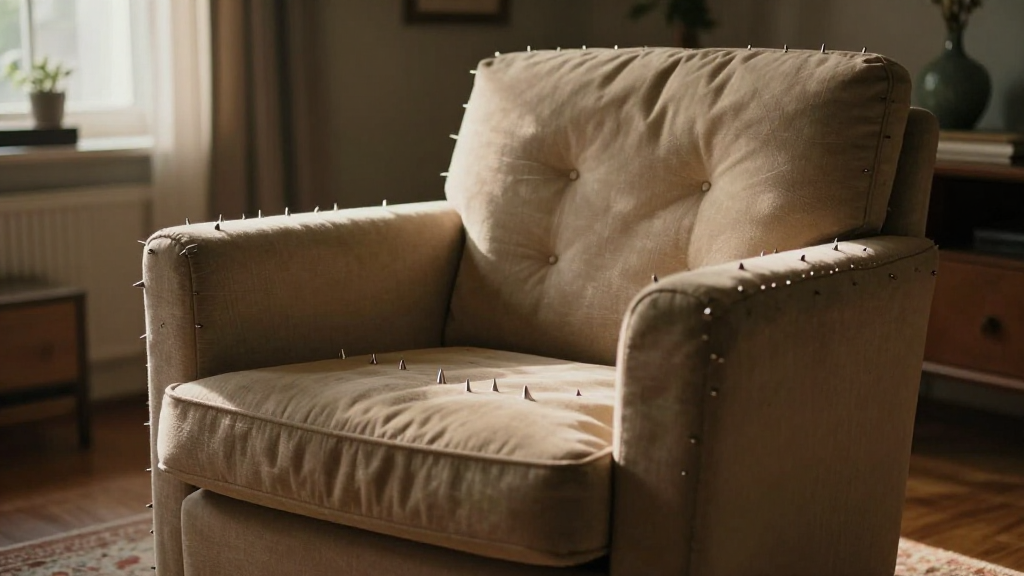
The problem is that twelve years later, that same smoke detector is still calibrated to fire-level sensitivity. It's now triggering the same alarm for burnt toast-for an open nursery door, for men walking past on the street, for children playing in a secure garden.
The technical term for this is amygdala sensitization. Your amygdala-the part of your brain that detects threats-now fires before your prefrontal cortex can even assess the actual probability of danger. That's why you feel the chest tightness first, before any rational thought. The alarm is sounding before your thinking brain can evaluate whether there's actually smoke.
This isn't a personal failing. Your nervous system is designed to prioritize false alarms over missed threats. It's better to jump at ten shadows than to miss one real danger. But when the sensitivity is set to "active fire" levels permanently, you end up jumping at every shadow for the rest of your life.
The Hypervigilance That's Teaching Them Fear
Here's something that might sound counterintuitive: hypervigilance doesn't actually improve your ability to protect your children.
Studies of soldiers and first responders-people whose jobs require genuine threat awareness-show something surprising. Exhausted, hypervigilant individuals have slower and less effective responses to real threats compared to those who maintain baseline alertness.
Think about it: after forty checks in an hour, how sharp is your actual threat assessment? How much attention can you give to genuinely connecting with your children when you're scanning the perimeter every ninety seconds?
And here's the part that might be hardest to hear: your children are learning from watching you.
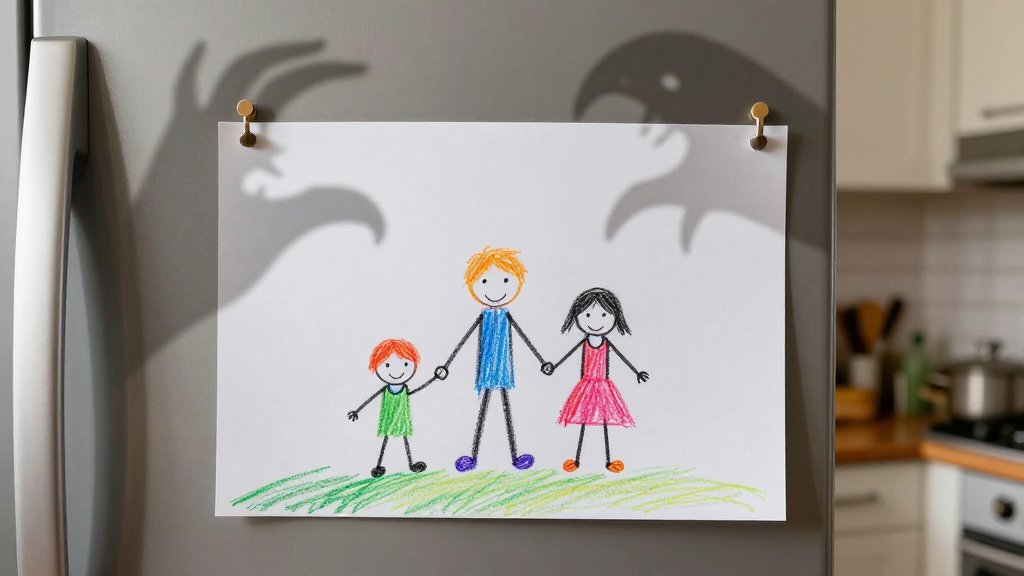
When they see you checking constantly, scanning for threats, unable to relax in the garden with them, what are they learning about the world? They're learning that the garden isn't safe. That being outside requires constant vigilance. That the world is terrifying.
Your superpower-your fierce instinct to protect them-is real. But right now, it's pointed inward, damaging you and inadvertently teaching them fear instead of resilience.
The Secret to Understanding Your Anxiety
So if you're not broken, not insane, not failing as a parent-if this is actually a smoke detector that was calibrated during a genuine fire-what does that mean?
It means your body is giving you real information. It's just outdated information.
The chest tightness you feel when you see the nursery door open? That's a genuine alarm signal. But it's an alarm from twelve years ago, when you genuinely were in danger and genuinely were helpless to control the threat.
The catastrophic images that flood your mind? Those aren't predictions of the future. They're echoes of the past-your brain trying to make sure you never feel that helpless again.
You're not experiencing current danger. You're experiencing the aftereffects of past danger that never got fully processed.
This reframe matters because it changes what you need to do next. You don't need to check more carefully or scan more thoroughly or stay more alert. You need to teach your smoke detector the difference between the tube platform twelve years ago and your children's garden today.
How to Start Recalibrating Tomorrow
Here's where this gets practical.
You can't just decide to stop being anxious. You can't think your way out of an amygdala that's been sensitized for twelve years. But you can start creating what researchers call "prediction errors"-moments when your brain predicts catastrophe and it doesn't happen.
These prediction errors are how you recalibrate the smoke detector. But you have to start microscopically small.
Tomorrow, when you walk your children to nursery, there's a moment halfway through the route where you pass a cherry tree. Here's your first experiment: when you reach that tree, deliberately pause for thirty to sixty seconds and notice something specific about it. The texture of the bark. The way the branches spread. Whether there are blossoms.
Your anxiety will spike when you do this instead of scanning the street for threats. That spike is not danger. That spike is your amygdala protesting the change. The spike itself means the recalibration is working.
Expect the chest tightness. Expect the catastrophic images. Your brain will scream at you that you're being irresponsible, that this is the moment something terrible will happen.
And when nothing terrible happens, your brain receives new data.
For the garden checks: over the next three days, delay one check per hour by exactly two minutes. Set a timer. Document what happens-the intensity of the chest tightness, what catastrophic images arise, and what actually occurs when you finally do check.
You're not eliminating checking. You're creating a measurable gap between the predicted catastrophe and the actual outcome. Two minutes feels manageable. Two minutes also feels terrifying. That's exactly right.
Track three metrics daily:
- Total garden checks per hour (use tally marks like you've been doing)
- Number of times you successfully delayed a check by two or more minutes
- How long the anxiety spike lasts after each delayed check
Success in the first week isn't dropping from forty checks to twelve. Success is dropping from forty to thirty, and noticing that the anxiety spikes start to decrease in duration-not necessarily intensity, but duration. Your brain is learning that the predicted outcome doesn't match the actual outcome.
This is different from white-knuckling through anxiety. This is systematically feeding your nervous system evidence that the threat level is different than it believes.
What Happens When You Process the Trauma
Once you understand that your smoke detector can be recalibrated, a question emerges:
If a genuine trauma twelve years ago can set your threat detection to maximum sensitivity, and if that sensitivity has been maintained through checking behaviors that reinforce the pattern-what would it take to fully process that original trauma instead of continuing to relive it?
The tube bombing memories are still driving your daily life. The image of helplessness in the face of threat is still playing out every time you see that open nursery door. Your brain is trying to rewrite the ending-to make sure you're never helpless again-but it's doing so by keeping you trapped in perpetual alarm.
There are specific techniques for processing those memories in ways that allow your nervous system to finally file them as "past" instead of "ongoing threat." But first, you need to understand that recalibration is possible. That the smoke detector isn't permanently broken. That the checking loop can be interrupted.
The cherry tree and the delayed checks are your proof of concept. They're showing your brain-and showing you-that catastrophic predictions don't equal catastrophic outcomes.
And once you have that evidence, the real work of processing the trauma that started all of this can begin.
What's Next
Stay tuned for more insights on your journey to wellbeing.


Comments
Leave a Comment