

Why "growing up" about parental stress backfires-and what actually increases your capacity
Your daughter starts school in three days. You're waking up early, your mind spinning through scenarios. By evening, you're emotionally checked out, snapping over small things. And somewhere in the back of your mind, a voice keeps saying: Grow up. This shouldn't be such a big deal. Other parents don't fall apart over this.
If that voice sounds familiar, here's what you need to know: it's not helping. In fact, it's making everything worse.
For years, the conventional wisdom about parental anxiety has followed a simple logic: anxiety about normal transitions means you're not handling things well. The solution? Push through. Be stronger. Tell yourself to get over it.
But here's what research in attachment psychology and neuroscience actually shows: the parents who experience more anxiety during major child transitions often demonstrate deeper emotional attunement with their children. Your nervous system isn't failing-it's registering that something significant is changing.
The Self-Criticism Mistake That Doubles Your Anxiety
When you tell yourself to "grow up" about the anxiety, what happens to it?
It doesn't disappear. It sits there-and now you're dealing with two problems instead of one. The original anxiety about your daughter starting school, plus shame about having that anxiety in the first place.
Stress psychologists call this secondary suffering: the additional pain we layer on top of our original experience. You're anxious about Thursday's drop-off. That's the primary experience. But then you judge yourself for feeling anxious, interpret it as weakness, and feel embarrassed about your emotional response. That's secondary suffering.
Here's what makes this particularly insidious: while you're busy criticizing yourself for being anxious, your body is still managing the actual load. The early waking. The irritability. The emotional exhaustion by bedtime. Your father-in-law's recent cancer diagnosis. The reduction in family support. All of this creates what researchers call allostatic load-the cumulative burden of chronic stress on your system.
The "grow up" approach doesn't reduce this load. It just adds judgment to the pile.
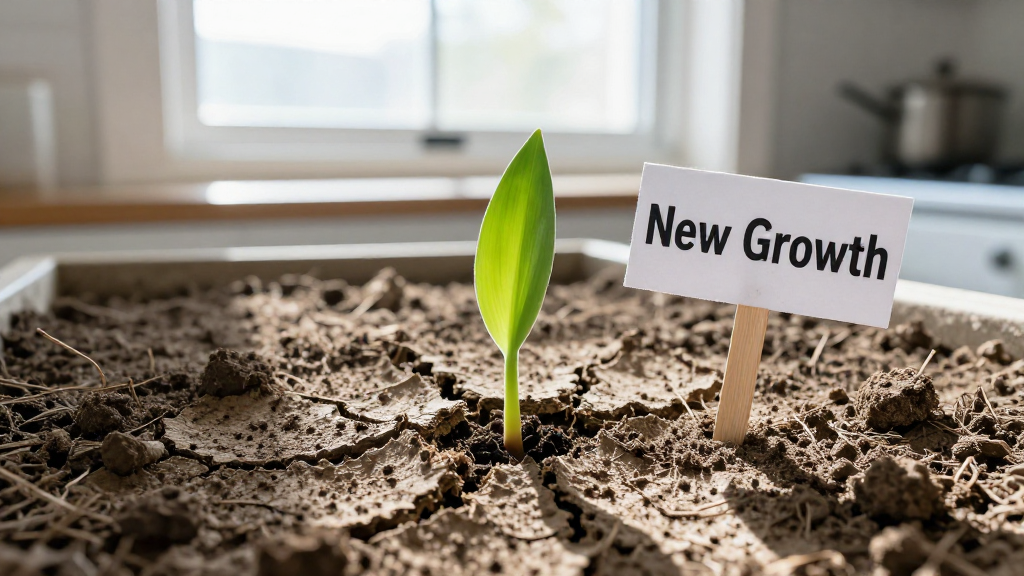
What If Your Anxiety Means You're Growing?
Think back to other anxieties you've worked through this year. Bath time-you used to be unable to answer the door while your children were in the tub. Now you can leave them there comfortably. Solo childcare with your husband-once impossible, now manageable. Even riding the tube alone while reading felt like progress.
A friend recently validated how intense your constant fear used to be. You described feeling like a different person now, like weight had been lifted from your shoulders. You've moved from that state of perpetual vigilance to what you call "normal parenting anxiety level."
So what's different now compared to those earlier anxieties?
Here's what neuroscience research reveals: every time you successfully navigate a fear, your brain doesn't just register "that wasn't dangerous." It actually builds new neural pathways for tolerating uncertainty. The "different person" feeling you described? That's literal brain change. Physical restructuring of how your nervous system processes unfamiliar situations.
This reframes everything about the school anxiety you're experiencing now.
The Truth About Discomfort and Growth
Consider how muscles grow stronger. The process isn't comfortable. First, the muscle fibers experience micro-tears from the resistance. It's uncomfortable. It feels like damage. But those micro-tears are the mechanism through which the muscle builds greater capacity.
The discomfort isn't a sign something's wrong. It's a sign the growth process is working.
Your anxiety about your daughter starting school isn't regression. It's not evidence that you haven't made progress. It's your system preparing for the next level of growth-exactly like it did with bath time independence, exactly like it did with solo childcare, exactly like it did with the tube journey.
You've already adopted this framework in one area: you mentioned the crystal ball metaphor, where anxiety predicts growth opportunities. Dark clouds warning of incoming "growth rain." The same principle applies here.
The anxiety about Thursday isn't telling you you're weak. It's telling you something significant is about to shift.
What Your Anxiety Is Really About
When you break down the school anxiety, there are actually three distinct concerns:
1. What if she needs me and I'm not there?
2. What if something happens and I can't protect her?
3. What if I can't handle the separation myself?
The first two are about her wellbeing. The third-the one parents often feel most embarrassed about-is about your own capacity.
Here's the question that matters: how much of your energy right now is going toward managing everyone else's needs versus acknowledging your own emotional load?
If you're like most parents in this situation, the answer is: almost all of it. You push through. And then you snap at home and feel terrible about it. The early waking continues. The emotional exhaustion by evening persists.
These aren't character flaws. They're signals that your system's load is high.
What Research Shows About Self-Compassion
Here's where the research gets really interesting-and directly contradicts what most people assume.
When parents practice self-compassion during stressful transitions, they actually have more emotional resources available for their children, not less.
This seems backward. It feels like acknowledging your own struggle is self-indulgent. Like you should just focus on being strong for your daughter.
But think about what happens when you take a walk alone in your neighborhood, or read on the tube by yourself. These aren't frivolous activities-they give your nervous system a break from vigilance. When you're alone reading or walking, you're not monitoring anyone else's needs. That recovery time actually increases your capacity for the challenging moments.
The same principle applies to how you talk to yourself about the anxiety.
Imagine a friend came to you experiencing this same anxiety about their child starting school. Would you tell them to grow up? Or would you say something like: "This is a big change, and it makes sense to feel anxious about it. Look at how far you've come with the other things you were worried about."
That's not just being nice. That's being accurate.
How to Handle the Anxiety This Week
Between now and Thursday, when you notice the anxiety rising-especially the early waking or irritability at home-try this sequence:
Step 1: Name it specifically
"This is anticipatory anxiety about Thursday's school drop-off."
Not "I'm anxious" (too vague). Not "I'm being ridiculous" (judgment). Just the specific, factual naming of what you're experiencing.
Step 2: Normalize it as appropriate to the situation
"This makes sense given how significant this transition is."
Your daughter is going out into the world without you. That's a real shift in your role as a parent. Of course your system is responding to it.
Step 3: Anchor it in your established growth pattern
"In a month, this will likely be conquered territory, just like bath time and the tube journey."
You have evidence now. You know how this process works for you.
Notice the difference in how this feels compared to "grow up." It's gentler-and more truthful.
What to Do Right Now
Here's what's practical between now and Thursday:
Discharge the accumulated stress. Schedule a solo walk in your neighborhood or a tube ride with your book. Not as a reward, but as a functional tool for reducing your vigilance load. You've seen that these work.
Reframe Thursday morning. What would self-compassion look like in that specific moment of drop-off? Maybe acknowledging that it's okay if you feel emotional. That it doesn't mean something's wrong-it means you care deeply about her.
When you catch yourself snapping at home. Instead of adding "now I'm a bad parent for being irritable," recognize it as a signal that your system needs a break. That's information, not failure.
You're not starting from the place of constant fear anymore. You described being at "normal parenting anxiety level" now. This anxiety about school isn't regression-it's your system appropriately responding to a real transition while you practice relating to it differently.
What This Reveals About What's Next
In a month, Thursday's drop-off will likely feel like old news. Your crystal ball was right-the dark clouds did predict incoming growth rain.
But here's the question this raises: your father-in-law's cancer diagnosis means reduced family support. The stress isn't just about one school transition. How do you maintain these practices-the self-compassion, the nervous system recovery, the reframing of anxiety as growth signal-across multiple simultaneous stressors rather than isolated events?
That's not a question you need to answer right now. But it points to something important: the difference between managing individual anxious moments and building a sustainable approach to parental stress during ongoing challenges.
For now, you have what you need for Thursday. The anxiety you're feeling? It's not weakness. It's your system doing exactly what it's designed to do when something significant is about to change.
What's Next
Stay tuned for more insights on your journey to wellbeing.





Comments
Leave a Comment