

You've been trying so hard.
You've bent over backward to be understanding when your adult daughter goes cold. You've bitten your tongue when her moods swing from warm to icy without warning. You've rearranged your life around her unpredictable availability, convinced that if you could just be less needy, more patient, more accommodating-then maybe she'd want to be around you.
And yet here you are, exhausted and facing the holidays alone, wondering if wanting to see your own children makes you a failure as a mother.
What if I told you that the very strategy you're using to hold onto connection is the thing pushing it further away?
What Everyone Says: Just Try Harder and Be More Understanding
When adult children become distant or difficult, the conventional wisdom is clear:
Try harder. Be more understanding. Put their needs first.
The logic seems airtight: They're stressed with their own lives. They need space. If you push back or set boundaries, you'll drive them away completely. So you stay endlessly available. You absorb their mood swings without complaint. You reorganize your plans when they cancel last-minute. You never say no, never express hurt, never enforce consequences.
You tell yourself that their wellbeing comes first. That wanting time with them is selfish. That a good mother should be grateful for whatever crumbs of connection they offer.
This approach is based on a seemingly reasonable belief: More accommodation = more connection.
The more you sacrifice, the more understanding you are, the more you demonstrate unconditional availability-surely they'll eventually feel safe enough, loved enough, to reciprocate.
Why Sacrificing Yourself Actually Pushes Her Further Away
But here's what actually happens:
You have a painful interaction with your daughter. She's cold, critical, or simply unavailable. You spend the next three days trying to recover emotionally. During that time, you cancel plans with your sister. You're distant with the person you're dating. You snap at friends who are trying to help.
You're so drained from managing her unpredictable moods that you have nothing left for the people who actually do show up consistently.
And your daughter? She still fluctuates between warm and cold with no discernible pattern. Sometimes she's present and lovely, and you think, "This is it, we've turned a corner." Then she goes ice-cold again, and you're devastated all over again.
The trying-harder strategy promises that your sacrifice will eventually be rewarded with connection. But if that were true, you'd see steady improvement by now. Instead, you're exhausted, she's no more consistent, and your other relationships are suffering from neglect.
Here's the uncomfortable question: What if the problem isn't that you haven't sacrificed enough-but that you're using the wrong strategy entirely?
The Research That Flips Everything: Boundaries Create More Connection, Not Less
Research on parent-adult child relationships reveals something that sounds backward:
Parents who protect themselves with clear boundaries actually report more satisfying long-term relationships with their adult children than parents who remain endlessly available and accommodating.
Not less connection. More.
And studies on estranged families show an even more surprising pattern: Parents who respect their adult children's autonomy while maintaining stable boundaries have higher rates of relationship repair over time than those who stay enmeshed and reactive.
The strategy that works is the reverse of what you've been doing:
Instead of sacrificing yourself to maintain connection, protect yourself to make connection sustainable.
This means:
- Setting boundaries before you're depleted
- Investing your energy in relationships that are actually reciprocal
- Saying no when the cost to your wellbeing is too high
- Letting your daughter experience the natural consequences of her choices
It sounds like giving up. It feels like admitting defeat.
But here's what's actually happening: you're changing the terms of connection so it doesn't destroy you in the process.
The Invisible Process: How Relational Depletion Destroys What You're Trying to Save
There's an invisible process at play that explains why the standard approach fails-and why the reversal works.
Think of your emotional resources like a bank account. You have a finite amount of energy, patience, and warmth to distribute across all your relationships.
When you over-invest in a relationship with poor return-pouring 80% of your emotional energy into someone who gives back 10%-something happens behind the scenes that you can't immediately see:
You experience what researchers call "relational depletion."
You literally have less to give to the relationships that are reciprocal. Your sister gets the exhausted, irritable version of you. The person you're dating gets the distracted, emotionally unavailable version. Your friends get cancellations and withdrawal.
Meanwhile, your daughter's hot-and-cold pattern operates on a principle psychologists call "intermittent reinforcement"-the same mechanism that makes gambling addictive.
She's warm sometimes, cold others, and you never know which you'll get. Those unpredictable moments of warmth are precious precisely because they're rare. They give you hope that "this time will be different," so you keep investing.
But intermittent reinforcement doesn't lead to stable connection. It leads to addiction to the possibility of connection while the actual relationship stays unpredictable.
Here's the mechanism you couldn't see:
When you maintain no boundaries, you become depleted, which makes you less appealing to everyone (including your daughter). Your desperate energy, your reactivity to her moods, your willingness to abandon your own needs-these actually push people away more than boundaried consistency does.
When you reverse the strategy and protect yourself first, this is what happens behind the scenes:
- You stop depleting yourself, so you have energy for relationships that are reciprocal
- Those reciprocal relationships fill you up, which makes you less desperate
- Your daughter encounters a version of you that's stable, consistent, and not emotionally reactive
- You become safer to approach because you're not a swirling mess of need
You're not withholding love. You're making yourself into someone who can offer love sustainably.
The Paradigm Shift: You're Not Choosing Between Love and Boundaries
This isn't just about relationship tactics. This is about what you believe love requires.
You've been operating from a paradigm that says: Good mothers sacrifice themselves. Boundaries mean failure. If they don't want to be with you, you're not enough.
But watch what happens when you examine that belief:
You said you're "facing Christmas alone." But when you listed the people in your life, you named your sister, someone you're dating, friends. You're not alone. You're without your daughters.
There's a massive difference.
The old paradigm measures your worth by one relationship dynamic-one that involves another person's agency, which you cannot control. It makes your daughters' presence the only thing that counts toward "not being alone," as if every other relationship is just a consolation prize.
The new paradigm recognizes something different:
You can love your daughters deeply AND protect yourself simultaneously. These are not in opposition.
Think about the relationship that feels mutual-the one where you don't feel needy for wanting their company. That's what reciprocity feels like. The need itself isn't the problem. What makes it feel "needy" is the absence of reciprocity.
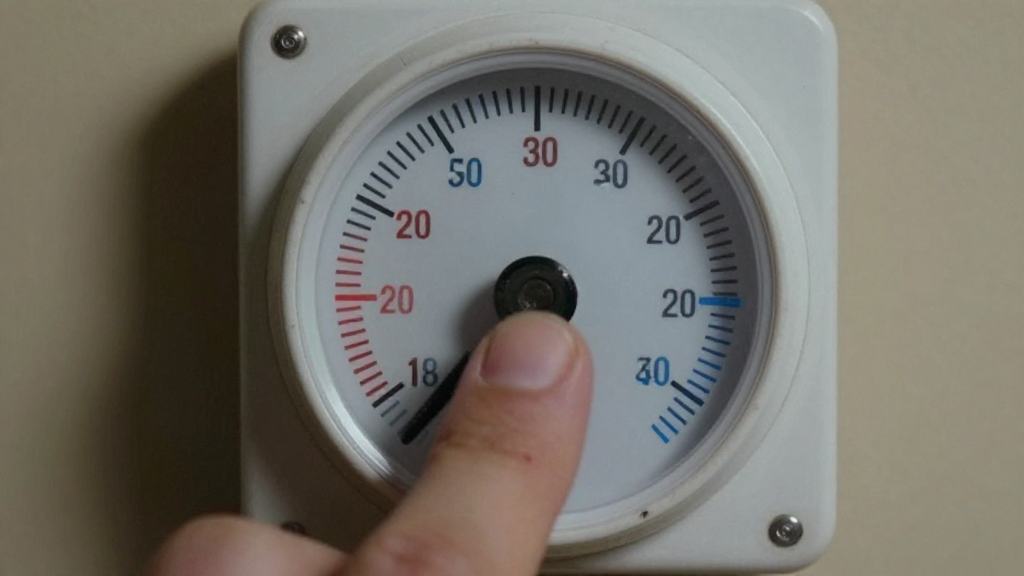
You don't have a character flaw. You have a daughter with a broken thermostat who gives inconsistent signals.
And here's the paradigm shift that changes everything:
By protecting yourself with boundaries, you're not just saving yourself-you're modeling for your daughters what healthy love actually looks like.
Right now, you're teaching them that love means accepting toxicity. That your worth is determined by others' approval. That boundaries mean rejection.
But if you model that you can love someone AND maintain your dignity, that you deserve respect even from family, that your wellbeing matters-you show them a template for their own relationships.
You're not choosing between loving them and protecting yourself.
You're choosing between unsustainable love that exhausts everyone, and boundaried love that can actually last.
What Changes When You Stop Performing the Role
Something has already changed.
You now understand that the voice saying "a good mother would keep trying, would be more patient, would figure out how to fix this"-that's not wisdom. That's an old script from a role that no longer fits your life.
You understand the difference between having needs (which is human) and making one person solely responsible for meeting them (which depletes you both).
You can see the mechanism now: relational depletion isn't a metaphor. It's a real process draining your capacity for the relationships that actually fill you up.
And you've glimpsed a different version of yourself-the one who walks the dogs each morning, present and peaceful, not performing a role or managing anyone's emotions. The version you actually like best.
That version isn't worthless because your daughters aren't there. She's the foundation you've been neglecting.
The shift is this: You're moving from trying to hold onto a structure that no longer exists, to building a life based on what's actually real and reciprocal right now.
Try This Right Now: What Would You Actually Want for the Holidays?
Right now, before you close this article, do this:
Get a piece of paper or open a notes app.
Write down this sentence stem and complete it:
"If I weren't trying to be the family organizer, what I'd actually want for the holidays is..."
Don't edit. Don't judge. Don't qualify it with "but that's selfish" or "but they probably won't want to." Just write what you want.
Maybe it's Christmas music and special food with your sister. Maybe it's real, undistracted time with the person you're dating. Maybe it's something you haven't let yourself imagine because it felt like betraying the role.
Write it down. Make it specific. Name the people, the activities, the feeling you want.
That's not a backup plan. That's your primary plan.
You just went from passive victim of circumstances to active agent of your own life in sixty seconds.
What Happens When You Stop Depleting Yourself for One Relationship
Once you start designing your life around what you actually want instead of what role you think you should fill, watch for this:
You'll have moments where the old guilt surges up. Where the voice says, "You're being selfish. You're giving up. A real mother would..."
When that happens, you'll catch yourself asking: "Whose voice is this? Is this my wisdom, or is this the old script?"
And you'll notice something surprising.
The relationships that are reciprocal-your sister, your new partner, your friends-they'll get a version of you with more energy. More presence. More warmth.
Because you're not depleted anymore.
And your daughter? She might not change immediately. She might stay unpredictable.
But you'll notice that her temperature swings don't flatten you the way they used to. You'll have built something stable that doesn't depend on her thermostat.
That's not giving up on connection.
That's building the kind of foundation that makes real connection possible.
What's Next
Stay tuned for more insights on your journey to wellbeing.





Comments
Leave a Comment