

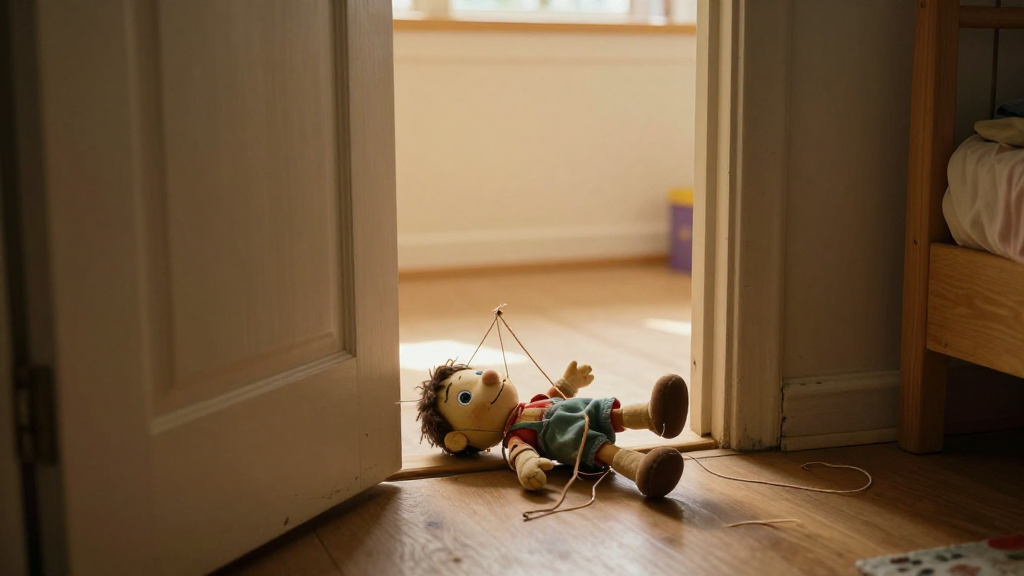
It usually begins with a message, a look, or silence-and that instant tightness in your chest.
Your chest tightens. The text from your daughter was curt-again. You feel that familiar surge of panic: What if she cuts me off from the grandchildren? Your fingers hover over your phone. Maybe if you send a thoughtful gift. Maybe if you explain yourself better. Maybe if you just try a little harder, she'll finally see how much you care and treat you with basic respect.
You've been doing this dance for 13 years. Since your first grandchild was born, you've sent expensive gifts, maybe even up to £1000 at Christmas-despite being treated poorly. You've written long texts explaining yourself. You've accepted harsh words and gaslighting. You've watched her be cruel to her own children and said nothing because speaking up might mean losing access to them.
And yet, somehow, the more you give, the worse it gets.
There's a reason for this. And it's not what you think.
The Hidden Machinery You Can't See
What you can't see in the moment when your chest tightens and your mind screams do something now is the invisible machinery operating behind the scenes.
Your brain has a threat detection system that's been running continuously for 13 years. It scans for signs of abandonment the way a smoke detector scans for fire. When your daughter sends that curt text or threatens to limit your access to the grandchildren, this alarm system activates.
But here's what's happening that you don't see: the moment that alarm fires, your nervous system floods with stress hormones. Your prefrontal cortex-the part of your brain responsible for rational decision-making-goes partially offline. Your amygdala, the fear center, takes over. In this state, you're not thinking clearly. You're in survival mode.
In survival mode, your brain offers a solution: Appease the threat. Give something. Fix this NOW.
So you send the expensive gift. You write the apologetic text. You offer to do whatever she needs. And sometimes-not always, but sometimes-she responds positively. She's nice for a bit. The threat subsides. The relief floods in.
Your brain logs this: Gift → Relief. Do this again.
What you don't realize is that you've just been caught in one of the most powerful psychological mechanisms known to behavioral science: intermittent reinforcement.
This is the same mechanism that makes gambling addictive. When a slot machine pays out unpredictably-sometimes after one pull, sometimes after fifty-your brain gets more hooked than if it paid out every single time. The unpredictability creates a compulsion.
Your daughter's occasional niceness after you've over-given works exactly the same way. She doesn't have to be nice consistently. In fact, the unpredictability makes the pattern stronger. You keep trying-keep sending gifts, keep over-explaining-hoping that this time, it will finally earn you the respect and connection you're desperately seeking.
But it won't. Because you're not just dealing with intermittent reinforcement. There's a second invisible process happening simultaneously.
Every time you over-give, over-explain, and accept poor treatment without boundaries, you're teaching her something: This is how you treat me. I have no limits. You can exploit me, and I'll accept it.
Research on relationship dynamics consistently shows that people lose respect for those who have no boundaries. It's counterintuitive, but it's true. The friends in your life who genuinely care about you-how do they treat you? With respect. With give-and-take. You don't walk on eggshells. You don't buy their affection.
The relationship you're desperately trying to maintain through people-pleasing doesn't even resemble a healthy relationship.
What's Really Happening When You People-Please
So you're caught in an invisible cycle. Fear triggers the alarm. The alarm triggers people-pleasing. People-pleasing sometimes gets rewarded (intermittent reinforcement), which makes you try harder. But simultaneously, people-pleasing erodes respect, which leads to worse treatment, which triggers more fear.
The cycle feeds itself. And after 13 years, it's not getting better-it's getting worse.
Here's where the mechanism malfunctions completely: You think you're preventing abandonment through people-pleasing. But people-pleasing is actually inviting exploitation, which leads to resentment on both sides, which increases the likelihood of the very abandonment you're terrified of.
You've been trying to put out a fire by pouring gasoline on it.
And now there's a new baby coming in six weeks. You can already feel the pattern gearing up. You're anticipating exclusion. You're probably already thinking about what elaborate gift to send, how to make yourself indispensable, how to prove your worth.
But what if the thing you've been doing to protect yourself is the thing that's destroying you?
The People-Pleasing Secret Nobody Mentions
Here's the part that almost no therapist explains clearly enough:
When you feel that chest tightness-that panic urge to do something right now-your anxiety doesn't just sit at that peak intensity forever. It follows a predictable biological timeline.
Your panic response peaks at around 20 minutes. Then, even if you do nothing, it naturally starts to decrease. Your nervous system can't maintain that level of activation indefinitely. Within about two hours, your prefrontal cortex-your rational brain-comes back online fully.
This is why the two-hour delay technique your therapist suggested is so strategically powerful. You're not just "waiting it out." You're letting your biology reset. You're allowing the part of your brain that can think clearly to come back online before you make a decision.
In that moment of panic, you can't see that buying another £1000 gift won't actually protect you. You can't see that you're trying to control something you can't control. But after two hours, you can.
There's a second thing almost no one tells you, and this one is critical:
When you first start setting boundaries with someone who has had none, their behavior gets worse before it gets better.
In behavioral psychology, this is called an extinction burst. Think of it like this: imagine you've been pressing an elevator button for years and it's always worked. Then one day, you press it and nothing happens. What do you do? You press it harder. You press it repeatedly. You press it frantically.
That's an extinction burst. When a behavior that used to get rewarded suddenly stops working, the behavior temporarily intensifies as the person tries to get the old system back in place.
So when you stop over-functioning-when you send a modest gift instead of an extravagant one, when you don't send multiple apologetic texts, when you set a boundary-your daughter will likely escalate. She might threaten to limit your access to the grandchildren even more. She might give you the silent treatment. She might ramp up the gaslighting.
Most people interpret this escalation as evidence that boundary-setting has failed. See? I set a boundary and now she's even worse. I was right to people-please.
But the escalation isn't evidence of failure. It's evidence that the pattern is being disrupted. It means the old system is breaking down. And that's exactly what needs to happen before anything can change.
No one warns you about this. So when it happens, you panic and go right back to people-pleasing. The extinction burst worked-she got you back in line.
The People-Pleasing Reversal That Changes Everything
The standard approach to difficult family relationships follows this logic:
1. Be nicer
2. Give more
3. Explain yourself better
4. Try harder to earn respect
5. Do whatever it takes to maintain the connection
You've been following this approach for 13 years. And the relationship has gotten progressively worse.
Here's the counterintuitive reversal: The less you people-please, the more respect you can earn.
Instead of acting immediately when the panic hits, you wait. Two hours. During that time, you don't send the gift. You don't write the text. You go for a dog walk. You write down what you're feeling. You let your rational brain come back online.
Then-and only then-you respond. Not with an elaborate gesture, but with something appropriate. A modest gift. A simple congratulations. Boundaries held calmly.
Instead of accepting gaslighting and twisting yourself into knots, you recognize it for what it is. When your daughter says you're remembering wrong or being oversensitive, you don't argue. You don't defend. You simply acknowledge: "We remember it differently," and you hold onto your own reality.
Instead of trying to control her response through over-giving, you control the only thing you actually can control: your own behavior. You behave with dignity, regardless of how she responds.
This reversal feels terrifying because your 13-year-old pattern is screaming that you're about to lose everything. But here's what the research shows: people-pleasing doesn't prevent abandonment. It invites exploitation, erodes respect, and ultimately damages the relationship more than boundaries ever could.
You're not trying to make her treat you better. You can't control that. You're trying to retrain your automatic reaction so that you're no longer handing over your self-respect in exchange for scraps of approval.
Each time you implement the two-hour delay, you're building new neural pathways. Your brain is literally learning: I can feel the fear without immediately acting on it. The fear won't kill me. I can tolerate this discomfort.
The Truth About People-Pleasing and Control
You cannot control whether your daughter treats you with respect.
You cannot guarantee access to your grandchildren through people-pleasing.
You cannot make her see your worth by giving expensive gifts or over-explaining.
For 13 years, you've been operating as though your behavior could determine her response. But it can't. The only thing you can control is whether you behave with dignity. Whether you teach people how to treat you through boundaries. Whether you act from fear or from self-respect.
People-pleasing has been inviting the very exploitation and rejection you're terrified of. The pattern won't change by doing more of what's already failing.
And when you do start setting boundaries, she will likely escalate. That's not punishment. That's not evidence you're doing it wrong. That's the extinction burst-the old pattern fighting to survive.
You'll have to tolerate that discomfort. There is no guarantee of a better outcome on the other side. But there is a guarantee that continuing the current pattern will produce more of the same: more exploitation, more pain, more erosion of your self-respect.
What I Discovered After Two Hours of Waiting
In six weeks, your daughter will have her baby.
You're going to feel that chest tightness. The urge to send an elaborate gift basket, to offer to do everything, to prove your worth, to prevent being excluded.
Here's your challenge: Don't.
When you feel that panic-and you will-notice it. Name it. "There's the fear. There's the alarm going off." Feel the chest tightness. Don't run from it.
Then wait. Two hours. Go for a dog walk. Clear your mind. Write down what you're feeling and what your people-pleasing brain is urging you to do. Let the panic peak and then let it naturally decrease.
After two hours, when your rational brain is back online, respond appropriately. A modest gift. A simple congratulations text. Nothing over-the-top. Nothing designed to earn approval.
Then brace yourself. Because she might escalate. She might be colder. She might limit your access. That's the extinction burst. That's the old pattern trying to get you back in line.
Your challenge is to not go back. To hold the boundary. To lean on your supportive friends. To keep that paper with the cycle mapped out in front of you so you can see what's really happening when your fear is telling you to give in.
Can you tolerate short-term discomfort for the possibility of long-term change?
Can you behave with dignity even when your 13-year-old pattern is screaming that you're about to lose everything?
That's the test.
The People-Pleasing Pattern You're About to Break
If you can implement the two-hour delay when that baby arrives-if you can let the panic peak and subside without acting on it-you'll prove something crucial:
You'll prove that you can feel fear without being controlled by it.
You'll prove that your worth isn't determined by her response.
You'll prove that you can break a 13-year-old automatic reaction.
You won't prove that she'll change. You might not prove that the relationship will improve. But you will prove that you are no longer handing over your self-respect in exchange for scraps of unpredictable approval.
You'll have the evidence-written on that paper, experienced in your body-that the cycle can be interrupted. That fear doesn't have to lead to people-pleasing. That there's a line you can draw between feeling the fear and acting on it.
And you'll have the beginnings of an answer to a question you've been asking for 13 years:
What does it feel like to behave with dignity, regardless of how someone else responds?
There's only one way to find out.
What's Next
Stay tuned for more insights on your journey to wellbeing.
References
- Exline, J. J., & Zell, A. L. (2009). Empathy, self-affirmation, and the sunk cost effect. Basic and Applied Social Psychology, 31(4), 277-285. DOI
- Mathe, J. R., & Kelly, W. E. (2023). Mental Boundaries Relationship with Self-Esteem and Social Support: New Findings for Mental Boundaries Research. Psychological Reports. https://doi.org/10.1177/02762366231158274
- Zeigler-Hill, V., & Shackelford, T. K. (2017). Encyclopedia of Personality and Individual Differences. Springer. [Entry on intermittent reinforcement and relationship dynamics]



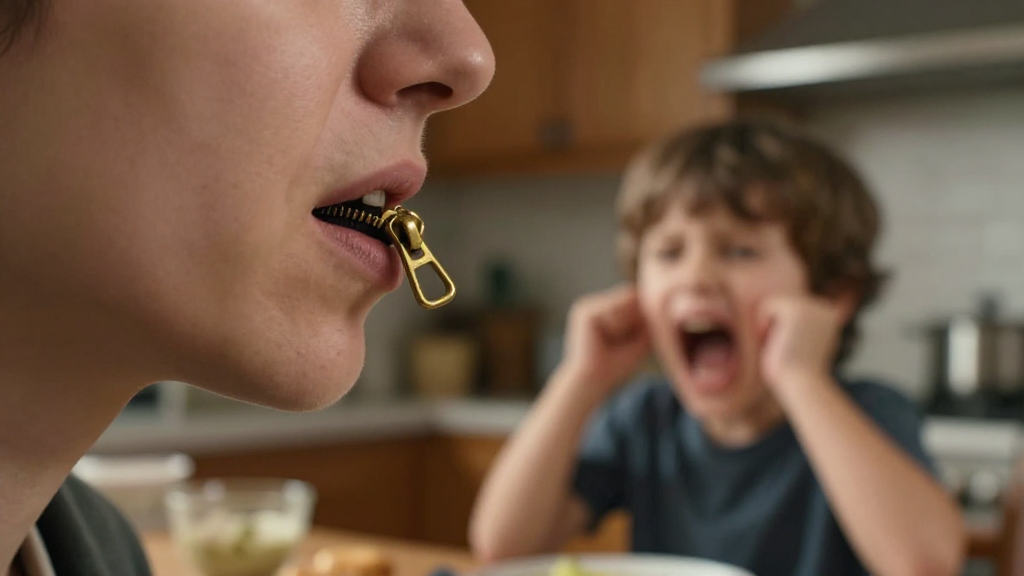

Comments
Leave a Comment